Mango Curry
Lunch • India
How to Make Mango Curry (Traditional & Healthy Version)
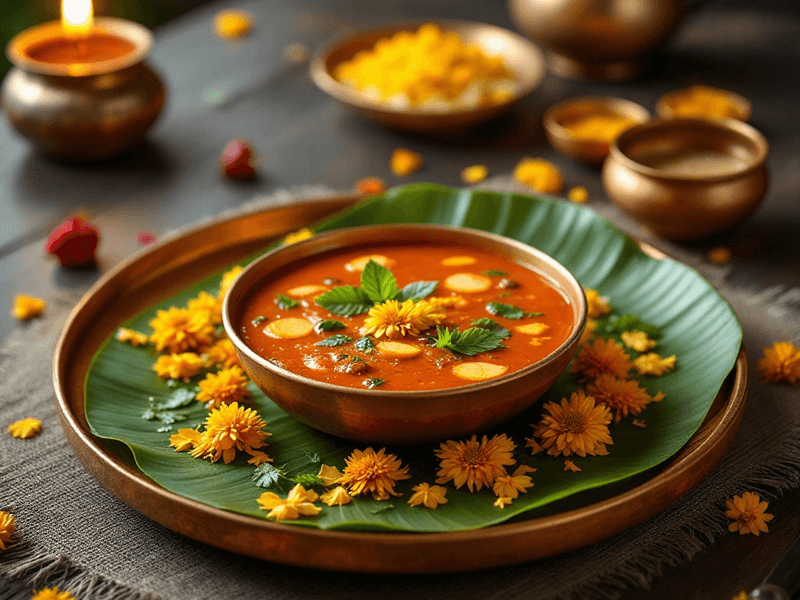
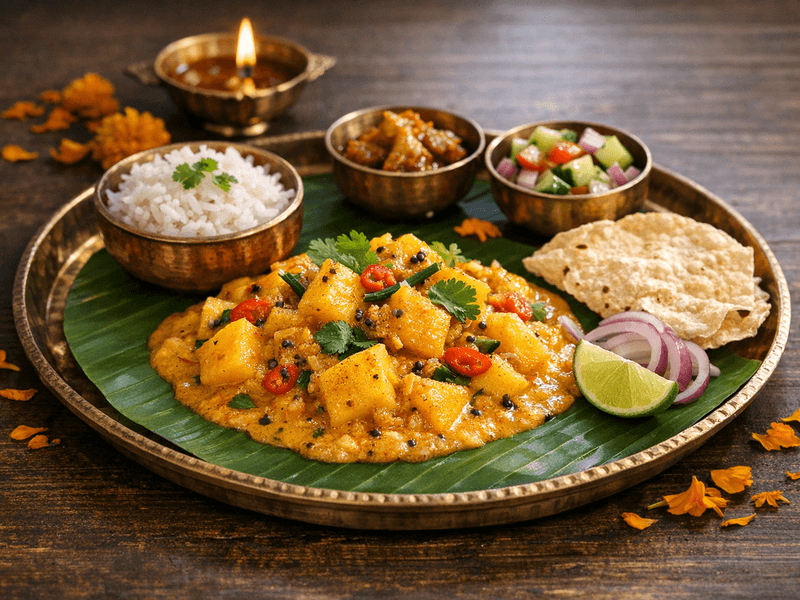
Mango Curry, known as 'Mambazha Pulissery' in Kerala and 'Ambe Upkari' in coastal Karnataka, is a cherished South Indian vegetarian dish that beautifully combines the tangy sweetness of ripe mangoes with the subtle heat of spices and creamy coconut. Traditionally prepared during the mango season, this curry is a staple at Onam Sadhya and other regional feasts, bringing together family and friends to celebrate the bounty of summer. The marriage of ripe mangoes with coconut, mustard seeds, and aromatic curry leaves offers a unique balance of flavors—sweet, tangy, and spicy. This healthy Mango Curry recipe uses minimal oil, fresh ingredients, and skips heavy cream to keep it light and nutritious. It’s perfect for those tracking calories, as it’s naturally gluten-free, vegetarian, and can be made vegan. The dish is not just delicious but also a flavorful way to incorporate fruits and vegetables into your lunch. Relished with steamed rice, Mango Curry is a vibrant addition to your Indian lunch menu, especially during festivals or family get-togethers, making every meal memorable.
Ingredients(for 1 small katori (bowl) per serving)
- 2 medium Ripe mangoes (preferably Banganapalli or Alphonso (Aam))
- 1/2 cup Fresh coconut (grated (Nariyal))
- 1 tsp Cumin seeds (Jeera)
- 2 Green chilies (Hari mirch, adjust to taste)
- 1/4 tsp Turmeric powder (Haldi)
- 1/2 cup Yogurt (Dahi, whisked (use vegan yogurt if needed))
- 1/2 tsp Mustard seeds (Rai)
- 8-10 Curry leaves (Kadi patta)
- 1 tsp Coconut oil (for tempering)
- to taste Salt (Namak)
Instructions
- 1
Wash, peel, and cut the ripe mangoes into medium cubes, reserving the seed (gutli) with some pulp attached. Set aside.
5 minutes
Use semi-ripe mangoes for a perfect balance of sweetness and tang.
- 2
Grind fresh grated coconut, cumin seeds, green chilies, and a little water into a smooth paste.
4 minutes
Blend until velvety to avoid gritty texture in the curry.
- 3
In a pan (kadhai), add the mango cubes, reserved seed, turmeric powder, salt, and 1 cup water. Simmer for 5-7 minutes until the mango is just soft.
7 minutes
Do not overcook mangoes to maintain their shape.
- 4
Add the coconut paste to the cooked mangoes. Mix well and cook on low flame for 3-4 minutes, stirring gently.
4 minutes
Stir gently to prevent mango pieces from breaking.
Why This Dish is Healthy
This Mango Curry is a healthy choice as it uses natural, whole ingredients and very little oil. The sweetness comes from ripe mangoes, avoiding added sugars. Fresh coconut and yogurt make it creamy without the need for heavy cream or butter. It’s low in calories, high in vitamins, and can be adapted for vegan or low-fat diets, making it ideal for anyone seeking nutritious and delicious Indian food.
Mango Curry is packed with vitamin C and A from ripe mangoes, which support immunity and eye health. The use of fresh coconut provides healthy fats and dietary fiber, while yogurt adds probiotics for gut health and protein. Minimal oil and absence of processed ingredients make this curry light and heart-friendly. The dish is naturally gluten-free and suitable for vegetarians. Its combination of fruits, spices, and dairy delivers a range of minerals like potassium, magnesium, and calcium.
Pro Tips
- 💡Tip 1: Use fully ripe, non-fibrous mangoes for the best texture and flavor.
- 💡Tip 2: Always whisk yogurt well to avoid curdling when adding to the hot curry.
- 💡Tip 3: Tempering with coconut oil is essential for authentic South Indian aroma.
Storage & Serving
Store leftover Mango Curry in an airtight container in the refrigerator for up to 2 days. Reheat gently on low flame, avoiding boiling to prevent yogurt from splitting.
Best served: Lunch
Nutrition Facts
| Nutrient | Per 100g |
|---|---|
| Energy | 180.0 kcal |