Jowar Bhakri Without Ghee Or Oil
Lunch • India
How to Make Jowar Bhakri Without Ghee Or Oil (Traditional & Healthy Version)
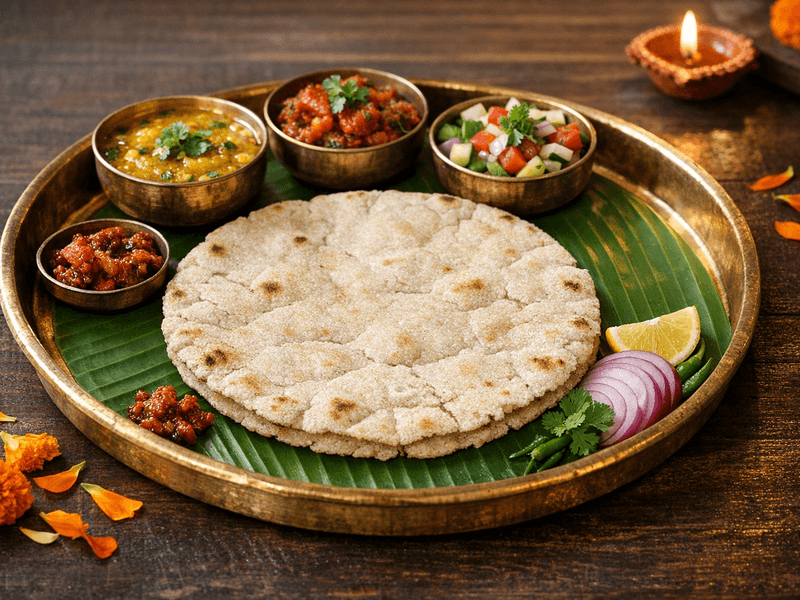
Jowar Bhakri, a staple flatbread from Maharashtra, is a wholesome and nutritious choice for lunch. Traditionally made using only jowar atta (sorghum flour) and water, this bhakri is naturally gluten-free and vegan, making it suitable for a variety of dietary needs. Its rustic, earthy flavor pairs beautifully with regional Maharashtrian curries, chutneys, and the classic thecha. Jowar Bhakri is especially enjoyed during the harvest festival of Makar Sankranti, reflecting its deep roots in Indian agrarian culture. Unlike wheat rotis or parathas, this oil-free version of Jowar Bhakri is cooked without any ghee or oil, making it exceptionally light and easy to digest. Its soft yet slightly chewy texture, when eaten hot off the tawa, provides a comforting and satisfying meal. Jowar is renowned in India for its ability to keep you full for longer, support digestive health, and provide sustained energy, making this bhakri the perfect addition to a health-conscious Indian lunch. This recipe honors the simplicity and authenticity of rural Maharashtrian cuisine while meeting modern dietary preferences.
Ingredients(for 1 medium bhakri (approx. 6 inches diameter))
- 1 cup Jowar atta (sorghum flour)
- approx. 3/4 cup Hot water (as needed for dough)
- 1/4 tsp Salt (namak) - optional
- 1 tbsp Fresh coriander leaves (hara dhania, finely chopped) - optional
- 1 Green chilli (finely chopped (optional)) - optional
- 1/4 tsp Ajwain seeds (carom seeds (optional)) - optional
- as needed Water for sprinkling (for shaping)
- 2 tbsp Dry jowar atta (for dusting)
Instructions
- 1
In a wide bowl, add jowar atta and salt. Mix well. Gradually add hot water and mix with a spoon initially to avoid burning your hands.
3 minutes
Use hot water to make the dough soft and pliable.
- 2
Once the mixture is cool enough to handle, knead it into a soft, smooth dough. Cover it with a damp cloth and let it rest for 5-7 minutes.
7 minutes
Resting allows the flour to absorb the water, making rolling easier.
- 3
Divide the dough into two equal portions. Take one portion and dust it with dry jowar atta. Flatten gently with your fingers or palms to form a disc.
3 minutes
Use your palms to gently tap and shape the bhakri, as rolling pins may break the dough.
- 4
Continue patting and stretching the dough, rotating as needed, until you get a round bhakri about 6 inches in diameter. Use water to smooth cracks, if needed.
3 minutes
If cracks appear, wet your fingers and smooth the edges.
Why This Dish is Healthy
This oil-free Jowar Bhakri is a healthy choice as it eliminates unnecessary fats, focusing on whole grain nutrition. It helps manage weight, supports stable blood sugar levels, and provides essential minerals like iron and magnesium. The absence of refined flour and additives ensures maximum nutrient retention, making it ideal for those seeking a wholesome and balanced Indian meal. Pairing with vegetable curries increases its nutritional profile.
Jowar (sorghum) is a powerhouse of nutrients, rich in dietary fiber, iron, magnesium, and B vitamins. It is naturally gluten-free, making it suitable for those with gluten intolerance. The high fiber content aids digestion and promotes satiety, while complex carbohydrates provide sustained energy. This bhakri is low in fat and free from cholesterol, supporting heart health. When made without ghee or oil, it becomes an excellent option for calorie-conscious eaters. Jowar is known to have a low glycemic index, making it suitable for diabetics.
Pro Tips
- 💡Tip 1: Always use hot water for kneading to get a soft, pliable dough.
- 💡Tip 2: Cover the dough with a damp cloth to prevent it from drying out.
- 💡Tip 3: Pat the bhakri with wet fingers to avoid cracks and improve texture.
Storage & Serving
Jowar Bhakri is best eaten fresh. If needed, wrap in a clean cloth and store in an airtight container for up to 8 hours. Reheat on a tawa before serving to restore softness.
Best served: Breakfast or Lunch
Nutrition Facts
| Nutrient | Per 100g |
|---|---|
| Energy | 120.0 kcal |
| Protein | 3.0 g |
| Carbohydrates | 23.0 g |
| Total Fat | 1.0 g |
| Fiber | 3.0 g |