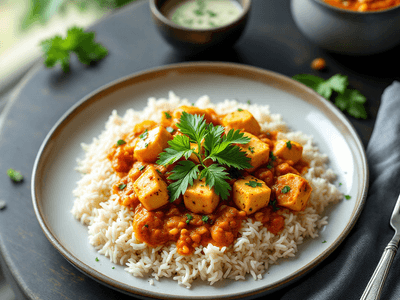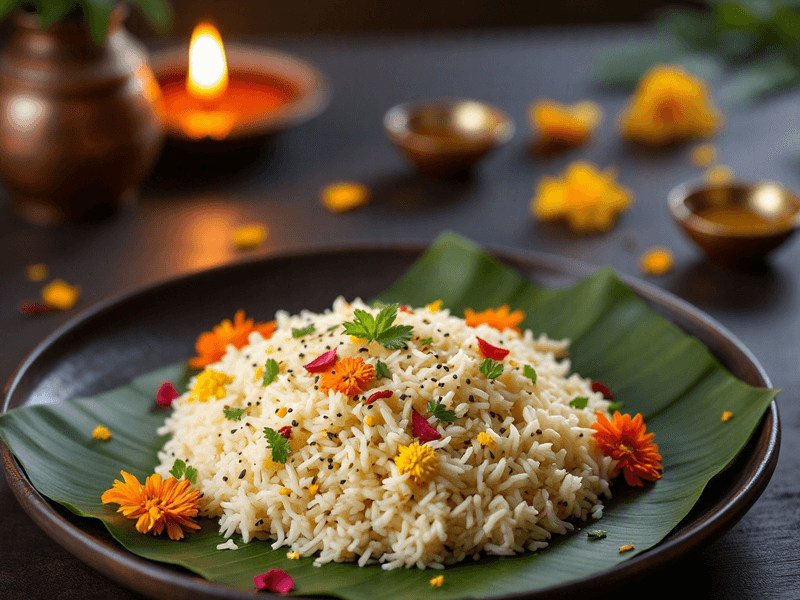
Jeera Rice with Dal
Lunch • India
How to Make Jeera Rice with Dal (Traditional & Healthy Version)
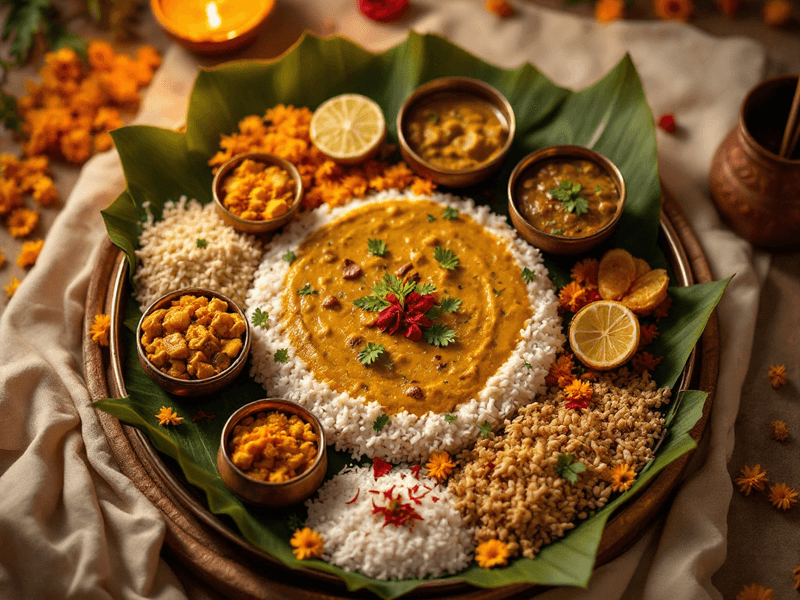
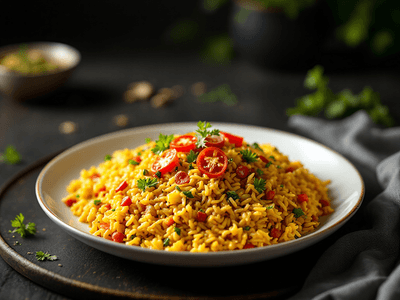
Jeera Rice with Dal is a classic North Indian lunch staple, celebrated for its comforting flavors and nourishing qualities. The aromatic basmati rice, infused with the earthy fragrance of jeera (cumin seeds), pairs beautifully with protein-rich dal (lentils). This dish has deep cultural roots in Indian households, where it is often served as a wholesome meal during festivals like Diwali and Holi, or as a daily lunch in Punjabi and UP kitchens. The subtle spices and the creamy texture of dal make it a favorite among all age groups, providing both satisfaction and nutrition in every bite. The beauty of Jeera Rice with Dal lies in its simplicity and versatility. While each region adds its own touch—like adding tadka (tempering) with desi ghee, or incorporating local lentils such as moong or masoor—the fundamental recipe remains unchanged. The jeera (cumin) not only enhances the aroma but also aids digestion, making it a healthy choice. This dish is perfect for calorie-conscious individuals, offering a balanced combination of carbs, proteins, and essential vitamins. Whether served at festive gatherings or enjoyed as a weekday lunch, Jeera Rice with Dal stands out as a nourishing, flavorful, and authentic Indian meal.
Ingredients(for 1 bowl of Jeera Rice (150g) with 1 bowl of Dal (150g))
- 1 cup Basmati Rice (चावल (Basmati Chawal))
- 1/2 cup Moong Dal (मूंग दाल)
- 1 tsp Cumin Seeds (Jeera)
- 1 tbsp Desi Ghee (Optional: use oil for vegan version)
- 1 small Onion (प्याज (finely chopped))
- 1 medium Tomato (टमाटर (finely chopped))
- 1 Green Chillies (हरी मिर्च (finely chopped)) - optional
- 1/2 inch Ginger (अदरक (grated))
- 1/2 tsp Turmeric Powder (हल्दी)
- to taste Salt (नमक)
- 1 tbsp Coriander Leaves (धनिया (chopped)) - optional
- 3 cups Water
Instructions
- 1
Rinse basmati rice thoroughly and soak for 15 minutes. Simultaneously, rinse moong dal and keep aside.
5 minutes
Soaking rice ensures fluffiness and reduces cooking time.
- 2
In a pressure cooker, add moong dal, turmeric, salt, and water. Cook for 2-3 whistles until dal is soft.
10 minutes
Do not overcook dal to retain texture.
- 3
Heat desi ghee in a kadhai. Add cumin seeds and let them splutter. Add chopped onion, ginger, and green chillies; sauté until golden.
5 minutes
Use mustard oil or regular oil for vegan adaptation.
- 4
Add tomatoes and cook till soft. Pour cooked dal into the kadhai; simmer for 5 minutes. Adjust salt and garnish with coriander leaves.
5 minutes
Simmering enhances flavor integration.
Why This Dish is Healthy
This dish is an excellent choice for those seeking a healthy, calorie-controlled Indian lunch. The combination of rice and dal delivers essential amino acids, making it a complete protein source for vegetarians. Using desi ghee sparingly keeps fat content moderate, while fiber from lentils aids digestion and keeps you full longer. It’s low in cholesterol and suitable for weight management, diabetes, and heart health.
Jeera Rice with Dal is a balanced vegetarian meal, rich in plant-based protein from moong dal and complex carbohydrates from basmati rice. The dish is low in saturated fat, especially when cooked with minimal ghee or oil. Cumin seeds aid digestion, turmeric offers anti-inflammatory benefits, and coriander leaves provide antioxidants. Moong dal is also a good source of dietary fiber, iron, and B vitamins. This meal supports energy levels and muscle repair, making it ideal for lunch or recovery meals.
Pro Tips
- 💡Tip 1: Use aged basmati rice for best aroma and fluffiness.
- 💡Tip 2: Add a pinch of hing (asafoetida) during tadka for enhanced digestive benefits.
- 💡Tip 3: Let dal rest for a few minutes after cooking for optimal flavor integration.
Storage & Serving
Store any leftover rice and dal separately in airtight containers in the refrigerator for up to 2 days. Reheat gently on the stove or microwave before serving. Avoid freezing as texture may degrade.
Best served: Lunch
Nutrition Facts
| Nutrient | Per 100g |
|---|---|
| Energy | 320.0 kcal |