Jain Bateta Pauva
Lunch • India
How to Make Jain Bateta Pauva (Traditional & Healthy Version)
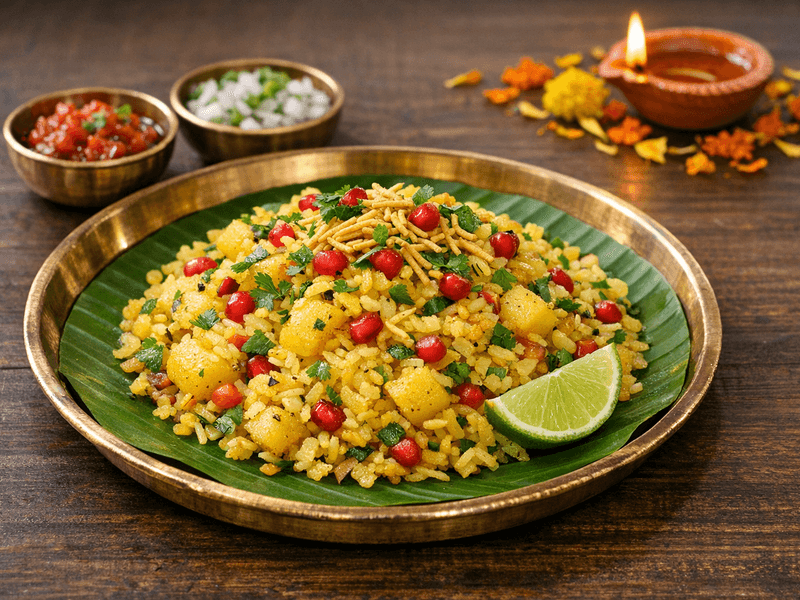
Jain Bateta Pauva is a beloved breakfast and lunch dish from Gujarat, cherished for its simple yet aromatic flavors. This dish is a Jain adaptation of the classic Bateta Poha, omitting onion and garlic to adhere to Jain dietary principles. It uses flattened rice (pauva/poha), potatoes (bateta), and a blend of Indian spices, resulting in a light yet satisfying meal. The subtle seasoning and fresh coriander make it a favorite during festivals like Paryushan and family gatherings. Gujarati cuisine is known for its balanced combination of sweet, savory, and tangy flavors, and Jain Bateta Pauva is no exception. It is quick to prepare, making it ideal for busy weekdays or as a wholesome snack. The absence of onion and garlic not only makes it suitable for Jain households but also easier to digest. Traditionally, it is served with hot masala chai, especially during festive mornings, and is enjoyed across Gujarat and by Jain communities throughout India. Choosing Jain Bateta Pauva for lunch is a smart, health-conscious decision. It is naturally low in fat, uses minimal oil, and relies on whole, plant-based ingredients. Its mild yet flavorful taste appeals to all age groups, making it a regular feature in both home kitchens and tiffin boxes. This dish is perfect for anyone seeking an authentic, nutritious Indian meal that aligns with vegetarian and Jain values.
Ingredients(for 1 medium bowl per serving)
- 1 cup Pauva (flattened rice) (medium thickness; poha)
- 1 medium Bateta (potatoes) (peeled and diced)
- 1-2 Green chilies (finely chopped; hari mirch)
- 8-10 Curry leaves (kadi patta)
- 1/2 tsp Mustard seeds (rai)
- 1/4 tsp Turmeric powder (haldi)
- to taste Salt (sendha namak for Jain fasting)
- 1/2 tsp Sugar (optional; for mild sweetness) - optional
- 1 tbsp Lemon juice (nimbu ras)
- 1.5 tsp Oil (preferably groundnut or sunflower)
- 2 tbsp Fresh coriander leaves (hara dhania; chopped)
- 2 tbsp Peanuts (roasted; optional for crunch) - optional
Instructions
- 1
Rinse the pauva (flattened rice) gently under running water in a sieve until just softened. Drain thoroughly and set aside.
5 minutes
Do not over-soak pauva to prevent mushiness.
- 2
Heat oil in a kadhai or nonstick tawa on medium flame. Add mustard seeds and let them crackle.
2 minutes
Wait for the mustard seeds to pop fully for best flavor.
- 3
Add curry leaves and chopped green chilies. Sauté for 1 minute until aromatic.
1 minute
Add more or less chili as per spice preference.
- 4
Add diced potatoes and turmeric powder. Stir well and cover. Cook on low flame for 7-8 minutes until potatoes are soft.
8 minutes
Stir occasionally to ensure even cooking without burning.
Why This Dish is Healthy
This recipe avoids deep frying, uses minimal oil, and includes nutrient-rich ingredients like pauva, potatoes, and fresh herbs. Being onion- and garlic-free makes it gentler on digestion, especially during fasting. The dish provides sustained energy without being heavy, making it ideal for weight management and an active lifestyle. Its balanced macros and low calorie count make it a smart, health-conscious choice for daily Indian meals.
Jain Bateta Pauva is a wholesome Indian dish made with pauva (flattened rice), which provides complex carbohydrates and energy. Potatoes add potassium and vitamin C, while curry leaves and coriander contribute antioxidants and essential micronutrients. Minimal oil is used, making it low in saturated fat. Including peanuts offers healthy fats and plant-based protein. This meal is free from cholesterol, rich in fiber, and suitable for those seeking a balanced vegetarian diet.
Pro Tips
- 💡Tip 1: Use medium-thick pauva for the best texture; thin poha can become mushy.
- 💡Tip 2: Always add lemon juice at the end to maintain freshness and tang.
- 💡Tip 3: For a festive touch, add a pinch of saffron soaked in warm water.
Storage & Serving
Best consumed fresh. If needed, store in an airtight container in the refrigerator for up to 1 day. Reheat on a tawa or microwave before serving; avoid freezing.
Best served: Breakfast or Lunch
Nutrition Facts
| Nutrient | Per 100g |
|---|---|
| Energy | 210.0 kcal |
| Protein | 3.0 g |
| Carbohydrates | 30.0 g |
| Total Fat | 3.0 g |
| Fiber | 2.0 g |