Homemade Curd
Lunch • India
How to Make Homemade Curd (Traditional & Healthy Version)
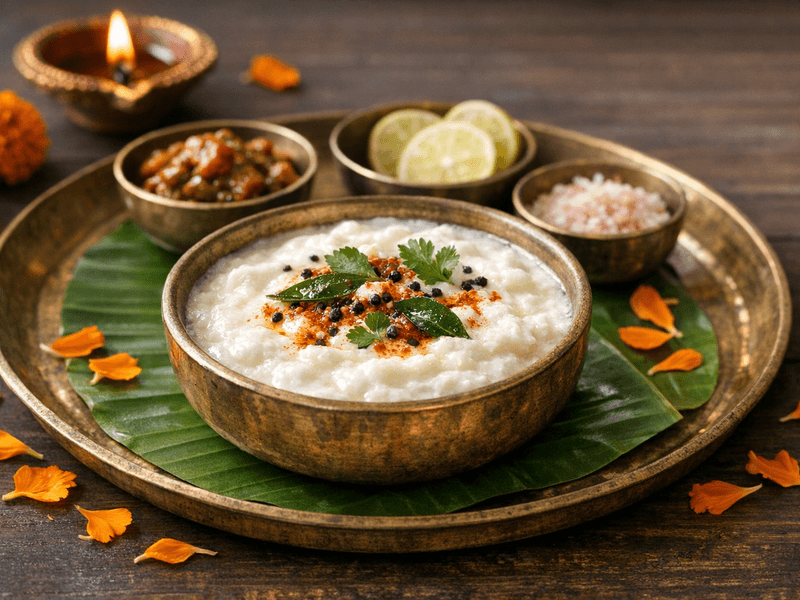
Homemade curd, known as 'dahi' in Hindi, is a quintessential Indian staple enjoyed across all regions and communities. This probiotic-rich dairy product is cherished for its smooth, creamy texture and soothing taste, making it an essential accompaniment to Indian thalis, rice dishes, and even as a standalone snack. With origins deeply rooted in Indian households, curd is not just food—it's a tradition passed down through generations, often made fresh every day in Indian kitchens. Its versatility is evident during Indian festivals like Makar Sankranti, where dahi is paired with 'poha' or 'gur', and in daily meals, especially in the sweltering Indian summers, when its cooling properties are most appreciated. Homemade curd is far superior to store-bought versions, as it contains no additives or preservatives and can be customized in thickness and tanginess. The process is simple, requiring just two ingredients, and offers a sense of nostalgia—reminding many of their mothers or grandmothers setting dahi in earthen pots ('matka') for a distinct flavor. Embracing this healthy, vegetarian recipe not only connects you with Indian culinary heritage but also supports mindful eating.
Ingredients(for 1 small katori (120 ml) per serving)
- 500 ml Full cream milk (doodh)
- 1 tablespoon Curd starter (previous day's dahi or store-bought plain curd)
- 1 Earthen pot (matka for traditional flavor) - optional
- 1/2 teaspoon Sugar (optional, for mild sweetness) - optional
- 1/4 teaspoon Cardamom powder (elaichi, optional for aroma) - optional
- few strands Saffron strands (kesar, optional for richness) - optional
- 1 Warm cloth (for wrapping in winters) - optional
Instructions
- 1
Boil the milk (doodh) thoroughly in a heavy-bottomed pan. Simmer for 2-3 minutes, then let it cool till it’s just warm to touch (lukewarm, not hot).
10 minutes
Don’t add starter to hot milk, or the curd may split.
- 2
Pour the lukewarm milk into a clean bowl or traditional matka. You can add optional sugar or elaichi at this stage for flavor.
2 minutes
Matka dahi has a superior earthy aroma and thicker texture.
- 3
Add the curd starter (dahi from previous day) and mix gently with a spoon. Stir in one direction for even mixing.
2 minutes
Use fresh, active starter for best fermentation.
- 4
Cover the bowl/matka with a lid. In cooler weather, wrap with a warm cloth or keep in a warm spot (like inside an oven or casserole).
1 minute
Warmth is key for proper setting, especially in winters.
Why This Dish is Healthy
Curd is a healthy dish because it is naturally probiotic, helping improve digestion and immunity. It is free from preservatives and artificial additives, especially when made at home. The ingredients are customizable—using low-fat milk reduces calories, making it suitable for weight watchers and those on a diabetic-friendly diet. Its cooling property helps regulate body temperature, especially in Indian summers.
Homemade curd is an excellent source of high-quality protein, calcium, and essential vitamins like B12 and riboflavin. Its probiotic content aids digestion and boosts gut health, making it a functional food in Indian diets. Being naturally low in carbohydrates and fat (when made with toned milk), it supports weight management and heart health. Curd also provides important minerals like magnesium and phosphorus, supporting bone strength.
Pro Tips
- 💡Tip 1: Always use fresh, active curd starter for best results.
- 💡Tip 2: For thicker dahi, boil milk for a few extra minutes to reduce water content.
- 💡Tip 3: Use an earthen pot (matka) for natural cooling and enhanced flavor.
Storage & Serving
Store homemade curd in the refrigerator and consume within 2-3 days for best taste and freshness. Keep covered to prevent absorbing odors. Do not freeze.
Best served: Breakfast or Lunch
Nutrition Facts
| Nutrient | Per 100g |
|---|---|
| Energy | 110.0 kcal |
| Protein | 3.0 g |
| Carbohydrates | 4.0 g |
| Total Fat | 3.0 g |
| Fiber | 0.0 g |