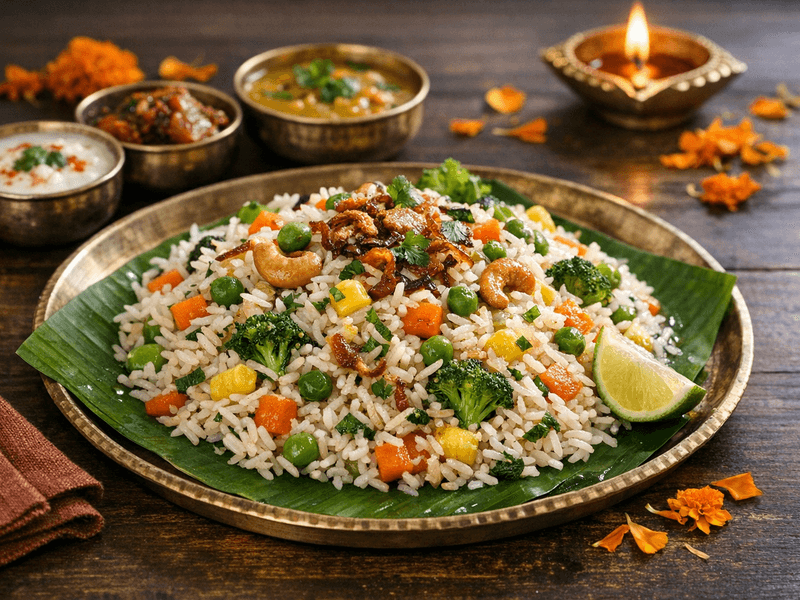
Ghee Rice with Mixed Vegetables
Lunch • India
How to Make Ghee Rice with Mixed Vegetables (Traditional & Healthy Version)
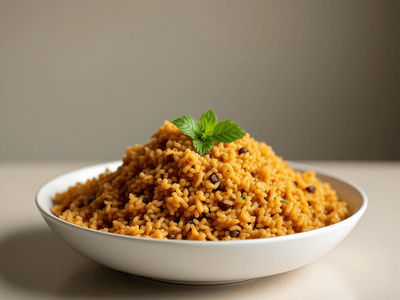
Ghee Rice with Mixed Vegetables is a beloved South Indian dish that combines the rich aroma of desi ghee with the vibrant flavors of fresh seasonal vegetables and fragrant basmati chawal (rice). Traditionally prepared in homes across Karnataka, Kerala, and Tamil Nadu, this dish is a staple for festive occasions like Onam, Ugadi, and family gatherings, but is also popular as a wholesome, everyday lunch. The subtle nuttiness of ghee infuses the rice, while the medley of carrots, beans, peas, and capsicum adds color, nutrition, and a delightful crunch. This vegetarian Ghee Rice recipe is a healthier alternative to heavy biryanis, using minimal ghee without sacrificing flavor. It’s easy to digest, quick to prepare, and perfectly suited for calorie-conscious individuals. The addition of whole spices like dalchini (cinnamon), elaichi (cardamom), and lavang (cloves) gives it a gentle warmth and an inviting aroma. Served with a side of plain dahi (curd) or a simple raita, Ghee Rice with Mixed Vegetables is a complete, satisfying meal that is both nourishing and comforting. Perfect for lunchboxes, festive thalis, or as a light main course, this dish represents the simplicity and wholesomeness of South Indian cuisine. Its versatility allows you to use local, fresh produce, and the preparation is straightforward, making it accessible to home cooks of all levels.
Ingredients(for 1 bowl (approx. 200g cooked rice with vegetables))
- 1 cup Basmati rice (chawal)
- 1.5 tablespoons Desi ghee (clarified butter)
- 1/2 cup Carrot (finely chopped (gajar))
- 1/3 cup French beans (finely chopped)
- 1/3 cup Green peas (matar, fresh or frozen)
- 1/4 cup Capsicum (shimla mirch, chopped)
- 1 small Onion (thinly sliced (pyaaz))
- 1 teaspoon Ginger (finely grated (adrak))
- 1 Green chili (slit, hari mirch)
- 1 inch Cinnamon stick (dalchini)
- 3 Cloves (lavang)
- 2 Green cardamom (elaichi)
- 1 Bay leaf (tej patta)
- as required Salt
- 2 tablespoons Fresh coriander (hara dhania, chopped) - optional
Instructions
- 1
Rinse basmati chawal under running water until water runs clear. Soak for 15 minutes, then drain.
15 minutes
Soaking rice ensures even cooking and fluffier grains.
- 2
Heat desi ghee in a thick-bottomed kadai or handi. Add dalchini, lavang, elaichi, and tej patta. Sauté for 30 seconds until aromatic.
2 minutes
Avoid overheating ghee to prevent burning the spices.
- 3
Add sliced pyaaz, grated adrak, and slit hari mirch. Sauté on medium flame until onions turn light golden.
3 minutes
Stir continuously for even browning.
- 4
Mix in carrots, beans, peas, and capsicum. Cook for 3-4 minutes until vegetables are slightly tender but still crisp.
4 minutes
Do not overcook vegetables to retain nutrients and color.
Why This Dish is Healthy
This recipe is a healthier alternative to traditional pulao or biryani, using less ghee and no deep-frying. The emphasis on fresh, seasonal vegetables increases fiber and vitamin content, supporting digestive health and satiety. The use of whole spices helps boost metabolism and digestion. This dish is naturally gluten-free and can be adapted further for various dietary needs, making it a smart choice for calorie-conscious and health-focused eaters.
Ghee Rice with Mixed Vegetables offers a balanced profile of carbohydrates, dietary fiber, and essential micronutrients. The combination of basmati rice and a variety of vegetables provides complex carbs, vitamins A and C, potassium, and antioxidants. The moderate use of desi ghee adds healthy fats and aids in the absorption of fat-soluble vitamins. The inclusion of peas and beans boosts plant protein content, making the dish filling and supportive of muscle health.
Pro Tips
- 💡Rinse and soak rice for fluffier, non-sticky grains.
- 💡Use only fresh, seasonal vegetables for maximum nutrition and flavor.
- 💡Do not over-fry spices and vegetables to retain their aroma and nutrients.
Storage & Serving
Cool leftover Ghee Rice completely and store in an airtight dabba (container) in the refrigerator for up to 2 days. Reheat gently with a sprinkle of water to restore moisture. Best enjoyed fresh.
Best served: Lunch
Nutrition Facts
| Nutrient | Per 100g |
|---|---|
| Energy | 280.0 kcal |