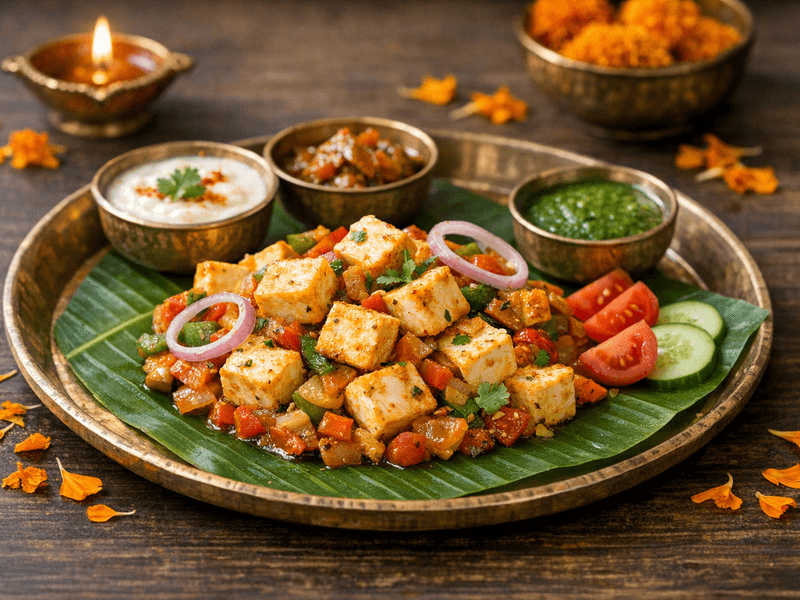
Fresh Cow Paneer Cubes
Lunch • India
How to Make Fresh Cow Paneer Cubes (Traditional & Healthy Version)
Fresh Cow Paneer Cubes are a beloved staple in Indian vegetarian cuisine, cherished for their soft, creamy texture and rich taste. Originating from the heart of North India, paneer is made by curdling cow's milk with a natural acid like lemon juice or vinegar. The result is a fresh, non-aged cheese that's used in countless Indian recipes, from palak paneer to paneer tikka. Paneer is not just a culinary delight but also a symbol of auspiciousness in Indian homes, often prepared during festivals like Holi, Diwali, and Navratri. Paneer holds a special place in traditional Indian thalis, temple offerings (prasad), and festive lunches. Making paneer at home ensures purity, freshness, and health benefits that packaged varieties cannot match. Its mild flavor, delicate texture, and adaptability to various spices and herbs make it a favorite for people of all ages. Whether enjoyed plain, tossed in a salad, or cooked in vibrant curries, Fresh Cow Paneer Cubes offer a wholesome, protein-rich option that fits perfectly into a balanced Indian diet.
Ingredients(for 100g fresh paneer cubes per serving)
- 1 litre Fresh cow milk (doodh)
- 2 tablespoons Lemon juice (nimbu ka ras)
- 1/4 cup Water (pani)
- 5-6 Ice cubes (optional, for quick cooling) - optional
- 1 large piece Muslin cloth (malmal ka kapda)
- a pinch Salt (namak, optional) - optional
Instructions
- 1
Pour fresh cow milk (doodh) into a heavy-bottomed pan and bring to a gentle boil over medium heat, stirring occasionally to prevent burning.
10 minutes
Always use fresh, full-fat milk for best texture and yield.
- 2
Once the milk starts boiling, reduce the heat to low. Mix lemon juice (nimbu ka ras) with water and add slowly to the milk, stirring continuously until the milk curdles and separates into chhena (curds) and whey.
3 minutes
Add the acidic mixture slowly for soft paneer and avoid over-stirring.
- 3
Turn off the heat immediately. Add ice cubes if desired to stop the cooking process and keep paneer soft.
2 minutes
Ice cubes help keep paneer tender and prevent it from becoming chewy.
- 4
Line a colander with muslin cloth (malmal ka kapda) and pour the curdled milk through it. Rinse the chhena with cold water to remove lemon flavor.
2 minutes
Rinsing helps achieve a neutral taste and smooth texture.
Why This Dish is Healthy
This dish is wholesome and health-conscious because it uses fresh cow’s milk with no preservatives or artificial additives. Paneer is low in carbohydrates, making it suitable for weight management and diabetic diets. It provides long-lasting satiety and sustains energy levels throughout the day. Since the recipe uses minimal additional fat and salt, it supports heart health and fits well into balanced Indian meals.
Fresh Cow Paneer Cubes are an excellent source of high-quality vegetarian protein, making them ideal for muscle repair and growth. Paneer is rich in calcium, which supports strong bones and teeth, and provides essential nutrients like phosphorus, selenium, and vitamin B12. With minimal added fat and sodium, homemade paneer is lower in calories compared to store-bought varieties. Paneer is also naturally gluten-free and suitable for most vegetarian diets.
Pro Tips
- 💡Tip 1: Use only fresh, unboiled cow milk for the softest paneer.
- 💡Tip 2: Press paneer for longer if you prefer firmer cubes for grilling or tikka.
- 💡Tip 3: Save leftover whey to knead atta for rotis or add to dal for extra nutrition.
Storage & Serving
Store Fresh Cow Paneer Cubes in an airtight container in the refrigerator for up to 2 days. Keep the paneer submerged in water to retain softness. Do not freeze, as texture may change.
Best served: Breakfast or Lunch
Nutrition Facts
| Nutrient | Per 100g |
|---|---|
| Energy | 270.0 kcal |