Falooda Only
Lunch • India
How to Make Falooda (Traditional & Healthy Version)
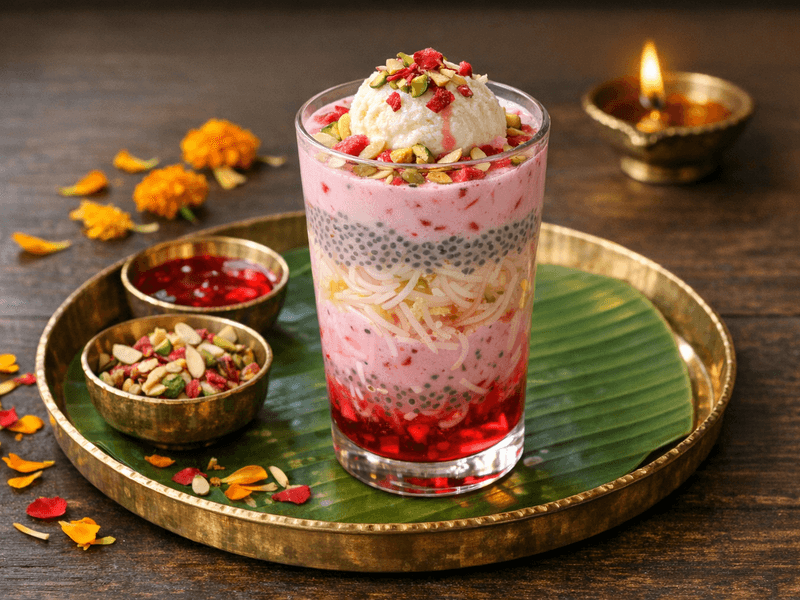
Falooda is a beloved North Indian dessert beverage known for its vibrant layers, delightful texture, and cooling taste. Traditionally enjoyed during the hot summer months, Falooda combines silky vermicelli (sevaiyan), rose syrup, sabja (basil) seeds, chilled milk, and a medley of toppings like dry fruits and fresh fruit. Originating from the royal Mughal kitchens, Falooda has become a staple in Indian households, especially during festivals like Ramzan and Holi when refreshing treats are cherished. Its unique blend of flavors and textures—creamy, floral, and lightly sweet—makes it a festive favorite across North India. What sets Falooda apart is its versatility and its ability to adapt to modern health-conscious lifestyles. With simple tweaks, this classic can be made lighter and more nutritious without compromising on taste. Perfect for a wholesome lunch dessert or a special treat, Falooda is a crowd-pleaser at family gatherings, Iftar parties, and festive occasions. It offers a satisfying end to a meal, leaving you refreshed and content, making it a must-try for anyone exploring authentic Indian cuisine.
Ingredients(for 1 large glass (approx. 300 ml))
- 2 tablespoons Sabja seeds (basil seeds) (soaked in water)
- 1/4 cup Sev or falooda vermicelli (preferably made from cornflour or arrowroot)
- 2 cups Chilled low-fat milk (doodh)
- 3 tablespoons Rose syrup (gulab sharbat)
- 1/2 cup Chopped mixed fruits (apple, pomegranate, mango, or seasonal) - optional
- 2 tablespoons Chopped nuts (pista, badam, cashew) - optional
- 1 tablespoon Chia seeds (for extra nutrition) - optional
- 1 teaspoon Stevia or honey (optional, for sweetness) - optional
- as needed Ice cubes (baraf)
- 2 small scoops Low-fat vanilla kulfi or ice cream (optional, for garnish) - optional
Instructions
- 1
Soak sabja seeds in water for 15 minutes until they swell and become gelatinous. Drain and set aside.
15 minutes
Use cold water for soaking to get the perfect jelly-like texture.
- 2
Boil falooda sev (vermicelli) in water for 4-5 minutes until soft. Drain, rinse with cold water, and set aside.
7 minutes
Rinsing in cold water prevents the sev from sticking together.
- 3
Chill low-fat milk in the refrigerator. Optionally, sweeten with stevia or honey for extra taste.
5 minutes
Use toned or double-toned milk for a lighter version.
- 4
In tall glasses, pour 1-2 tablespoons rose syrup at the bottom. Add a layer of boiled sev, then a spoonful of soaked sabja seeds.
3 minutes
Layer carefully for a visually striking presentation.
Why This Dish is Healthy
This Falooda recipe is a healthier alternative to the traditional version, using low-fat milk, minimal sweeteners, and nutrient-dense toppings. The inclusion of sabja seeds aids satiety and metabolism, while fruits and nuts boost protein and micronutrient content. It provides a guilt-free treat that fits well into vegetarian and weight management meal plans without sacrificing authentic North Indian flavors.
Falooda, when made with low-fat milk and moderate sweeteners, is a nutrient-rich beverage-dessert. Sabja seeds are high in fiber, omega-3 fatty acids, and antioxidants, supporting digestive health and hydration. The addition of fruits and nuts supplies vitamins A, C, E, and essential minerals like magnesium and potassium. Using sev made from cornflour or arrowroot keeps it light on the stomach. This version limits added sugars, making it suitable for calorie-conscious diets.
Pro Tips
- 💡Tip 1: Pre-soak sabja seeds and keep them chilled for quick assembly.
- 💡Tip 2: Use seasonal fruits for natural sweetness and nutrition.
- 💡Tip 3: Layer ingredients gently for a visually appealing presentation.
Storage & Serving
Falooda is best served fresh. The soaked sabja seeds and boiled sev can be stored separately in the refrigerator for up to 1 day. Assemble just before serving to maintain texture.
Best served: Lunch
Nutrition Facts
| Nutrient | Per 100g |
|---|---|
| Energy | 350.0 kcal |