Egg Parantha
Lunch • India
How to Make Egg Parantha (Traditional & Healthy Version)
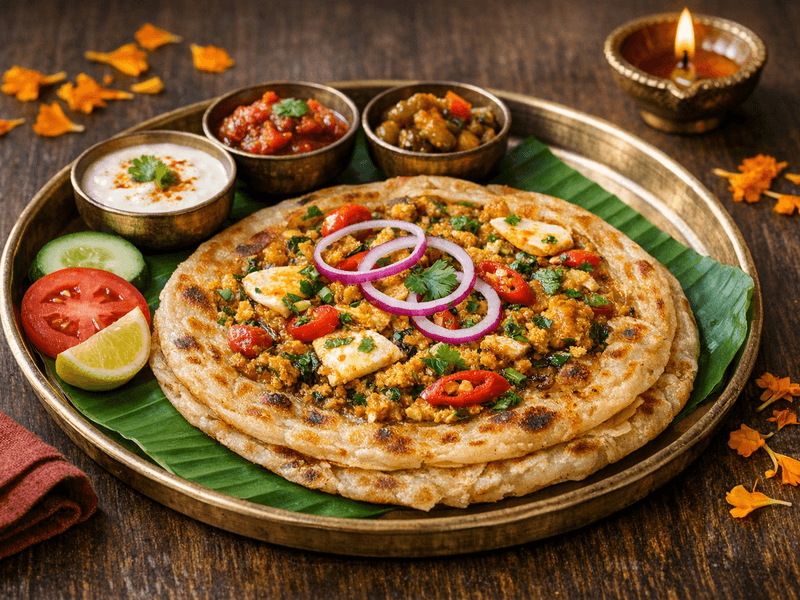
Egg Parantha is a beloved North Indian flatbread that beautifully marries the wholesomeness of whole wheat atta with the rich protein of eggs. Rooted in Punjabi kitchens and dhabas, Egg Parantha is a staple for a hearty lunch or brunch, especially during the cooler months. Its soft, flaky layers are filled with a spiced egg mixture, making every bite satisfying and flavorful. This dish is often enjoyed with a side of homemade dahi (curd), tangy pickle, or fresh salad, creating a balanced, nourishing Indian meal. Egg Parantha holds a special place in Indian households, especially during festivals like Lohri and Baisakhi, when families gather to relish traditional foods. Its versatility makes it popular not just in Punjab, but across North India, with subtle variations in spices and fillings. The aroma of paranthas roasting on the tawa is synonymous with comfort and celebration. Choosing a health-conscious approach, this recipe uses minimal oil and a generous serving of vegetables, making it suitable for calorie trackers and fitness enthusiasts alike. The balance of complex carbs, lean protein, and fiber ensures that Egg Parantha is both delicious and nutritious, perfect for anyone seeking authentic Indian flavors without compromising on health.
Ingredients(for 1 medium Egg Parantha per person with a side of dahi or salad)
- 1 cup Whole wheat flour (atta)
- 2 Eggs (organic if possible)
- 1 small, finely chopped Onion (pyaz)
- 1, finely chopped Green chilli (hari mirch) - optional
- 2 tbsp, finely chopped Fresh coriander leaves (dhaniya)
- 2 tbsp, grated Carrot (gajar) - optional
- 1/4 tsp Red chilli powder (lal mirch)
- to taste Salt (namak)
- 1/4 tsp Cumin powder (jeera powder)
- 2 tsp Oil or ghee (for roasting (use kachi ghani mustard oil or cow ghee))
- as needed Water (for kneading dough)
Instructions
- 1
In a large mixing bowl, add whole wheat atta and a pinch of salt. Gradually add water and knead to form a soft, pliable dough. Cover and let it rest for 10 minutes.
10 minutes
Resting the dough ensures softer paranthas.
- 2
Crack the eggs into a bowl. Add chopped onion, green chilli, coriander leaves, grated carrot, red chilli powder, cumin powder, and salt. Whisk well to combine.
5 minutes
Beat eggs until frothy for fluffier filling.
- 3
Divide the dough into 2 equal-sized balls. Roll each ball into a small disc using a rolling pin and a little dry atta.
3 minutes
Dust lightly to avoid sticking, but don’t use excess flour.
- 4
Place one rolled disc on the tawa over medium heat. Let it cook partially for about 20 seconds, then carefully pour half the egg mixture on top, spreading evenly.
3 minutes
Pour egg mixture slowly to avoid overflow.
Why This Dish is Healthy
This Egg Parantha recipe is made with whole wheat flour for slow-digesting carbs, making it a healthier alternative to maida-based paranthas. The inclusion of eggs boosts protein content, vital for muscle repair and satiety. Minimal oil usage and the addition of vegetables further reduce calorie density, making this a wholesome, nutrient-dense meal ideal for calorie-conscious eaters.
Egg Parantha offers an excellent balance of protein from eggs, complex carbohydrates from whole wheat atta, and dietary fiber from added vegetables. Eggs provide essential amino acids, vitamin B12, and healthy fats, while vegetables like carrot and onion contribute vitamins A and C, potassium, and antioxidants. Using minimal oil and adding fresh herbs like dhaniya enhances flavor without extra calories. This lunch option keeps you full longer, helps manage blood sugar, and is packed with micronutrients.
Pro Tips
- 💡Tip 1: Use fresh eggs and chop vegetables finely for an even filling.
- 💡Tip 2: Roll the dough evenly; too thin may cause tearing, too thick may remain uncooked.
- 💡Tip 3: For extra softness, add a teaspoon of curd while kneading the atta.
Storage & Serving
Egg Paranthas are best enjoyed fresh, but can be wrapped in foil and stored in the refrigerator for up to 1 day. Reheat on a tawa before serving. Avoid storing for longer as the texture and flavor may deteriorate.
Best served: Breakfast or Lunch
Nutrition Facts
| Nutrient | Per 100g |
|---|---|
| Energy | 250.0 kcal |
| Protein | 7.0 g |
| Carbohydrates | 28.0 g |
| Total Fat | 8.0 g |
| Fiber | 2.0 g |