Dry Rang Paneer
Lunch • India
How to Make Dry Rang Paneer (Traditional & Healthy Version)
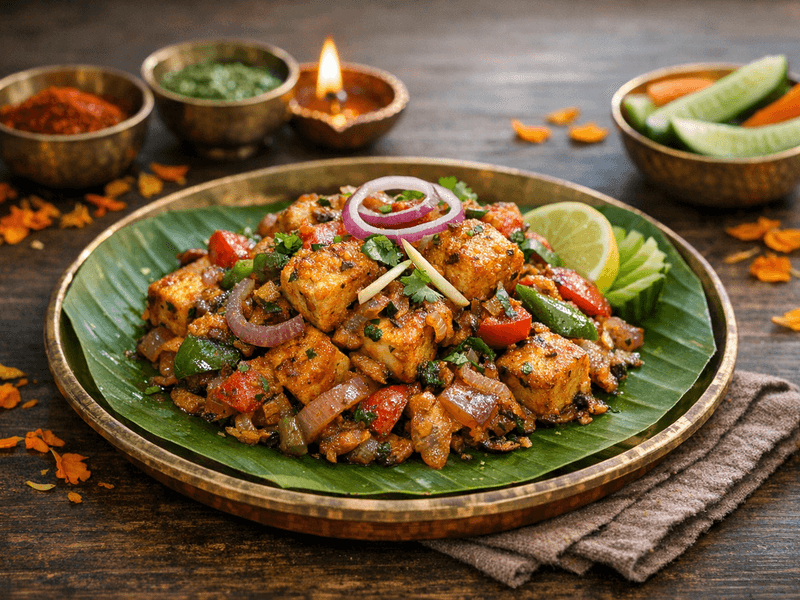
Dry Rang Paneer is a vibrant North Indian vegetarian dish, celebrated for its rich colors and aromatic flavors. Paneer, India's beloved cottage cheese, is tossed with assorted vegetables and traditional masalas, creating a dry sabzi that's both visually appealing and satisfying. This recipe is rooted in Punjabi cuisine, where paneer dishes are a staple at lunch tables, especially during festive gatherings such as Holi, when colorful foods are enjoyed in abundance. The term 'Rang'—meaning 'color' in Hindi—reflects the medley of vegetables and spices used, making this dish a feast for the senses. Dry Rang Paneer stands out for its versatility and health-conscious approach. Unlike gravied paneer preparations, this dry variant uses minimal oil and incorporates nutrient-rich vegetables like capsicum (shimla mirch), carrots (gajar), and onions (pyaaz), making it ideal for calorie tracking and balanced diets. The dish is typically served with roti (atta flatbread) or paratha, and fits perfectly into the Indian lunch routine. Its mildly spiced, aromatic profile appeals to a wide range of palates, making Dry Rang Paneer a family favorite across generations. Whether prepared for a festive thali or as a nutritious everyday meal, Dry Rang Paneer offers a wholesome option that celebrates India's culinary heritage. Its quick cooking time, use of local ingredients, and adaptable recipe make it popular among health-conscious home cooks. Enjoy the authentic flavors and cultural significance of this North Indian classic, especially during festivals like Holi and Diwali, when colors and flavors take center stage.
Ingredients(for 1 bowl (approx. 200g) per person)
- 200 grams Paneer (cottage cheese) (fresh homemade paneer preferred)
- 1 medium Capsicum (Shimla Mirch) (Green or mixed colors)
- 1 small Carrot (Gajar) (julienned)
- 1 medium Onion (Pyaaz) (sliced)
- 1 small Tomato (deseeded and chopped)
- 1 teaspoon Ginger (Adrak) (finely chopped)
- 1 teaspoon Garlic (Lahsun) (minced)
- 1 tablespoon Oil (Sarson ya Tel) (mustard oil or sunflower oil)
- 1/4 teaspoon Turmeric Powder (Haldi)
- 1/2 teaspoon Red Chili Powder (Lal Mirch) (adjust to taste)
- 1 teaspoon Coriander Powder (Dhania)
- 1/2 teaspoon Garam Masala
- to taste Salt
- 1 tablespoon Fresh Coriander Leaves (Hara Dhania) (chopped) - optional
Instructions
- 1
Cut paneer into cubes and lightly toss them in a tawa (griddle) with a few drops of oil until golden. Remove and set aside.
5 minutes
Shallow fry paneer for a crisp texture without excess oil.
- 2
Heat oil in a kadhai (wok), add ginger and garlic. Sauté until fragrant.
2 minutes
Use mustard oil for authentic North Indian flavor.
- 3
Add sliced onions and capsicum. Stir-fry on medium flame until onions turn translucent and capsicum softens.
5 minutes
Don't overcook vegetables; retain their crunch and color.
- 4
Add carrots and tomatoes. Sprinkle turmeric, red chili powder, coriander powder, and salt. Mix well and cook for 3-4 minutes.
4 minutes
Add tomatoes later to prevent mushiness.
Why This Dish is Healthy
This dish is a healthy choice because it combines protein-rich paneer with fresh, low-calorie vegetables, ensuring balanced nutrition. Minimal oil usage reduces unnecessary calories, and the absence of heavy gravies keeps the dish light. The variety of spices aids digestion and metabolism. Dry Rang Paneer is ideal for weight management, muscle building, and maintaining energy throughout the day, making it a favorite among health enthusiasts.
Dry Rang Paneer is packed with protein from paneer and fiber from vegetables like capsicum, carrots, and onions. Paneer offers essential amino acids, calcium, and vitamin D, supporting bone health and muscle repair. The assortment of vegetables adds vitamins A, C, and K, while spices like turmeric provide anti-inflammatory benefits. Using minimal oil keeps the fat content in check, making it suitable for calorie-conscious diets. The dish is gluten-free if paired with rice, and is rich in antioxidants due to its colorful ingredients.
Pro Tips
- 💡Tip 1: Use homemade paneer for best texture and nutrition.
- 💡Tip 2: Add vegetables as per season for freshness and variety.
- 💡Tip 3: Cook on medium flame to preserve paneer softness and vegetable crunch.
Storage & Serving
Store leftovers in an airtight container in the refrigerator for up to 2 days. Reheat on a tawa or in a microwave. Avoid freezing, as paneer texture may change.
Best served: Breakfast or Lunch
Nutrition Facts
| Nutrient | Per 100g |
|---|---|
| Energy | 260.0 kcal |