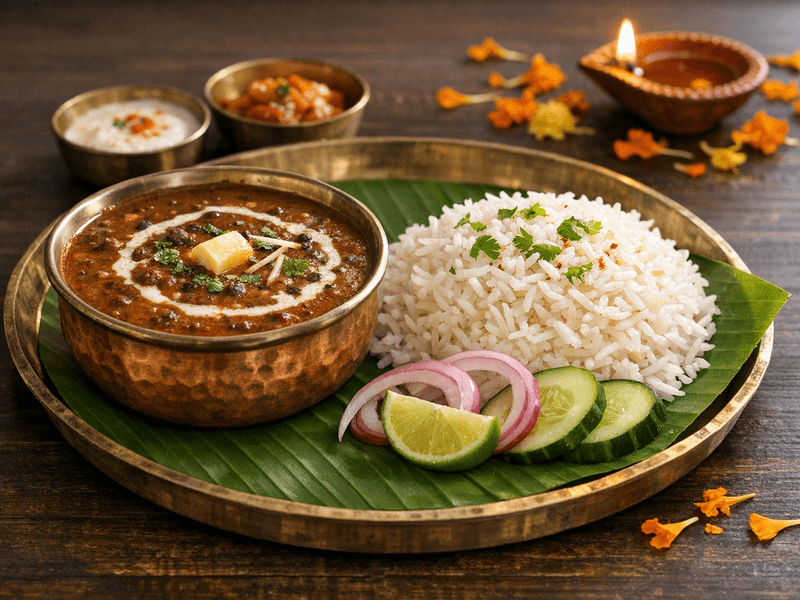
Dal Makhni with Rice
Lunch • India
How to Make Dal Makhni with Rice (Traditional & Healthy Version)
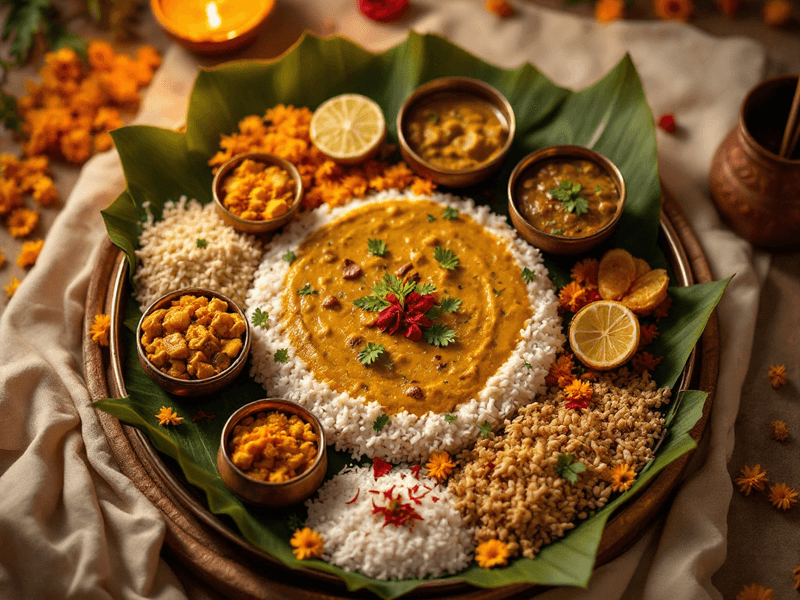
Dal Makhni with Rice is a celebrated North Indian dish, often associated with Punjabi cuisine and enjoyed across India, especially during festivals and family gatherings. The creamy, rich flavors of 'dal makhni'—made from whole urad dal (sabut urad) and rajma (kidney beans)—are balanced beautifully with fragrant steamed rice. Traditionally, this dish is prepared with generous amounts of makhan (butter) and malai (cream), but our health-conscious version uses minimal oil and low-fat dairy to retain the authentic taste while keeping calories in check. Dal Makhni is a staple at Indian weddings and festivals like Lohri, Diwali, and Vaisakhi, where it’s served with rice or 'roti' on a tawa. Its slow-cooked, smoky flavor comes from simmering spices, ginger, garlic, and tomato, making it hearty and comforting. The pairing with rice, especially basmati, enhances the meal’s nutritional value and makes it a complete lunch option. This dish is perfect for those seeking a vegetarian protein source and is loved by adults and kids alike for its mild yet rich taste. Indian households cherish Dal Makhni for its deep cultural roots, and its popularity spans across regions from Punjab to Delhi. The recipe adapts beautifully to modern health needs without compromising on authentic flavors. Whether for a festive meal or a weekday lunch, Dal Makhni with Rice remains a top choice for anyone looking to savor Indian cuisine in a nutritious, balanced way.
Ingredients(for 1 bowl dal makhni with 1 cup steamed basmati rice)
- 1/2 cup Sabut urad dal (whole black lentils) (Soaked overnight)
- 1/4 cup Rajma (kidney beans) (Soaked overnight)
- 1 medium Onion (Finely chopped)
- 2 medium Tomato (Pureed)
- 1 tablespoon Ginger-garlic paste (Adrak-lehsun paste)
- 2 tablespoons Low-fat milk or cream (Dahi can be used as substitute)
- 1 tablespoon Ghee or oil (Preferably mustard oil)
- 1/2 teaspoon Cumin seeds (Jeera)
- 1/2 teaspoon Red chili powder (Lal mirch)
- 1/4 teaspoon Turmeric powder (Haldi)
- 1/2 teaspoon Garam masala
- to taste Salt
- 1 cup Basmati rice (Washed and soaked 15 min)
- 1 tablespoon Coriander leaves (Hara dhania, chopped) - optional
Instructions
- 1
Soak sabut urad dal and rajma overnight. Drain and rinse before cooking.
5 minutes
Long soaking helps soften beans and reduce cooking time.
- 2
Pressure cook dal and rajma with 3 cups water, salt, and turmeric for 10-12 minutes until soft.
12 minutes
Ensure beans are fully cooked for creamy texture.
- 3
Heat ghee/oil in a kadhai. Add jeera, then sauté onions until golden. Add ginger-garlic paste and cook till aroma releases.
5 minutes
Use a heavy-bottomed kadhai to prevent burning.
- 4
Add tomato puree, red chili powder, and cook until oil separates. Stir in cooked dal and rajma.
5 minutes
Simmer on low for authentic slow-cooked flavor.
Why This Dish is Healthy
This health-conscious version of Dal Makhni with Rice offers a nutritious balance of protein, fiber, and complex carbs without excessive fat. Using minimal oil, low-fat cream, and whole lentils makes it suitable for weight-watchers and diabetic-friendly diets. The dish is filling yet light, ideal for lunch and for those seeking wholesome, traditional Indian food with modern nutritional benefits.
Dal Makhni with Rice is rich in plant-based protein from urad dal and rajma, making it a great choice for vegetarians. The dish provides complex carbohydrates, dietary fiber, and essential minerals like iron, potassium, and magnesium. Using low-fat dairy and minimal ghee keeps saturated fat levels in check. Basmati rice adds energy, while spices like jeera and haldi have anti-inflammatory properties. The meal is balanced and nourishing for all age groups.
Pro Tips
- 💡Tip 1: Soak beans overnight for creamy, soft texture.
- 💡Tip 2: Simmer dal on low for authentic Punjabi flavor.
- 💡Tip 3: Use fresh garam masala for best aroma and taste.
Storage & Serving
Store leftover dal makhni in an airtight container in the refrigerator for up to 2 days. Reheat gently on the stove with a splash of water. Rice should be stored separately and consumed within a day for best taste.
Best served: Lunch
Nutrition Facts
| Nutrient | Per 100g |
|---|---|
| Energy | 470.0 kcal |