Boondi Laddu
Lunch • India
How to Make Boondi Laddu (Traditional & Healthy Version)
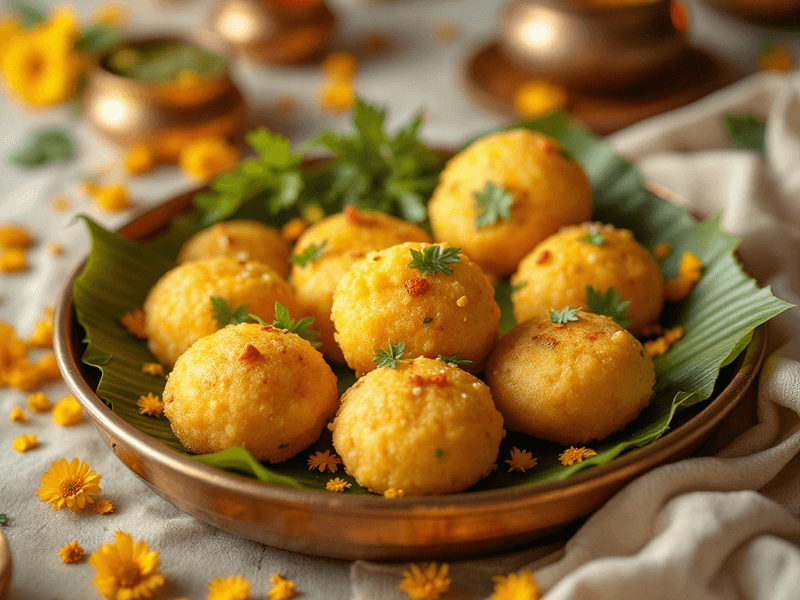
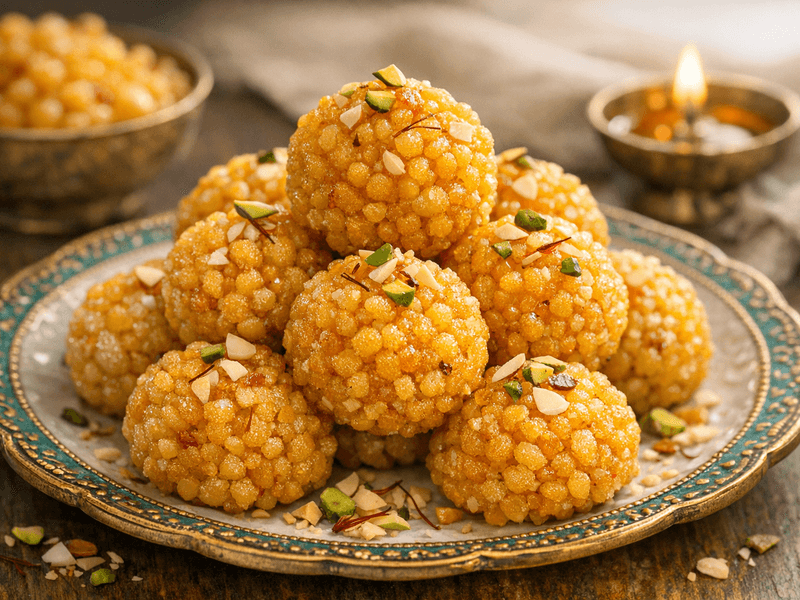
Boondi Laddu is a beloved sweet delicacy, originating from South India, with deep roots in Indian festivals and celebrations such as Diwali, Ganesh Chaturthi, and weddings. This classic mithai is crafted from tiny, golden droplets of besan (gram flour) batter, which are fried and then bound together with aromatic sugar syrup, creating soft, melt-in-the-mouth laddus. The authentic South Indian style brings forward the delicate flavors of cardamom (elaichi) and the crunch of roasted nuts, making Boondi Laddu a festive treat that appeals to both young and old. In many Indian households, preparing Boondi Laddu is a cherished ritual, especially during auspicious occasions. Its vibrant appearance and rich taste symbolize prosperity and joy. By choosing a health-conscious recipe, you can enjoy this traditional sweet without compromising on nutrition. This version uses minimal ghee, incorporates dry fruits for added protein, and controls sugar levels for a balanced calorie count. The cultural importance and regional variations, such as the addition of saffron or coconut, make Boondi Laddu a truly versatile dessert, reflecting the diverse culinary heritage of India.
Ingredients(for 1 medium laddu (approx. 50g))
- 1 cup Besan (gram flour) (Chickpea flour)
- 3/4 cup Water (For batter)
- 3/4 cup Sugar (Use raw cane sugar for healthier option)
- 2 tbsp Ghee (Clarified butter)
- 1/2 tsp Cardamom powder (elaichi) (Freshly ground)
- 2 tbsp Cashews (Chopped) - optional
- 1 tbsp Raisins (Kishmish) - optional
- 10 strands Saffron strands (Optional for aroma and color) - optional
- a pinch Baking soda (For fluffiness) - optional
- for deep frying Oil (Use sunflower or groundnut oil)
Instructions
- 1
Sieve besan (gram flour) into a mixing bowl. Add a pinch of baking soda and gradually pour in water, whisking to make a smooth, lump-free batter.
5 minutes
Ensure the batter is neither too thick nor too thin for perfect boondi texture.
- 2
Heat oil in a kadhai (deep pan) on medium flame. Hold a perforated ladle (jhara) over the hot oil and pour batter to create tiny droplets.
5 minutes
Fry boondi in small batches to avoid overcrowding and maintain crispiness.
- 3
Fry boondi until golden, then drain on paper towels to remove excess oil. Repeat until all batter is used.
5 minutes
Do not over-fry; boondi should remain soft for easy binding.
- 4
In a separate pan, dissolve sugar in 1/2 cup water. Add saffron strands and cardamom powder. Cook until you get a one-string consistency syrup.
5 minutes
Check syrup consistency by stretching it between fingers; it should form a thin thread.
Why This Dish is Healthy
This healthy Boondi Laddu recipe replaces refined sugar with raw cane sugar and limits ghee usage, reducing saturated fat and calories. Besan is naturally gluten-free, rich in protein and fiber, and helps regulate blood sugar. The inclusion of nuts and raisins increases micronutrient content, making it a balanced sweet treat for lunch or festive occasions. It’s suitable for vegetarians and can be adapted for vegan diets.
Boondi Laddu, when prepared with minimal ghee and natural sweeteners like raw cane sugar, offers a moderate calorie count. Besan is high in protein and dietary fiber, supporting digestive health and muscle repair. The use of dry fruits like cashews and raisins adds essential vitamins, minerals, and healthy fats. Cardamom provides antioxidants, while saffron contains mood-enhancing compounds. This version avoids excess sugar and oil, making it suitable for calorie-conscious individuals.
Pro Tips
- 💡Tip 1: Sieve besan well for smooth batter and uniform boondi.
- 💡Tip 2: Use a jhara (perforated ladle) for perfect, tiny boondi droplets.
- 💡Tip 3: Allow laddus to rest before serving for optimal texture and flavor.
Storage & Serving
Store Boondi Laddu in an airtight container at room temperature for up to 5 days. For longer shelf life, refrigerate and bring to room temperature before serving. Avoid moisture to prevent spoilage.
Best served: Breakfast or Lunch
Nutrition Facts
| Nutrient | Per 100g |
|---|---|
| Energy | 180.0 kcal |
| Protein | 5.2 g |
| Carbohydrates | 56.0 g |
| Total Fat | 20.5 g |
| Fiber | 2.1 g |
| Sugars | 38.0 g |
| Iron | 2.4 mg |
| Calcium | 48.0 mg |
| Sodium | 120.0 mg |
| Potassium | 110.0 mg |
| Cholesterol | 0.0 mg |
| Vitamin A | 10.0 IU |
| Vitamin C | 0.0 mg |
| Magnesium | 32.0 mg |
| Zinc | 0.7 mg |
| Phosphorus | 75.0 mg |
| Vitamin D | 0.0 IU |
| Vitamin B1 (Thiamine) | 0.1 mg |
| Vitamin B2 (Riboflavin) | 0.1 mg |
| Vitamin B3 (Niacin) | 0.8 mg |
| Vitamin B6 | 0.1 mg |
| Vitamin B12 | 0.0 µg |
| Folate | 20.0 µg |