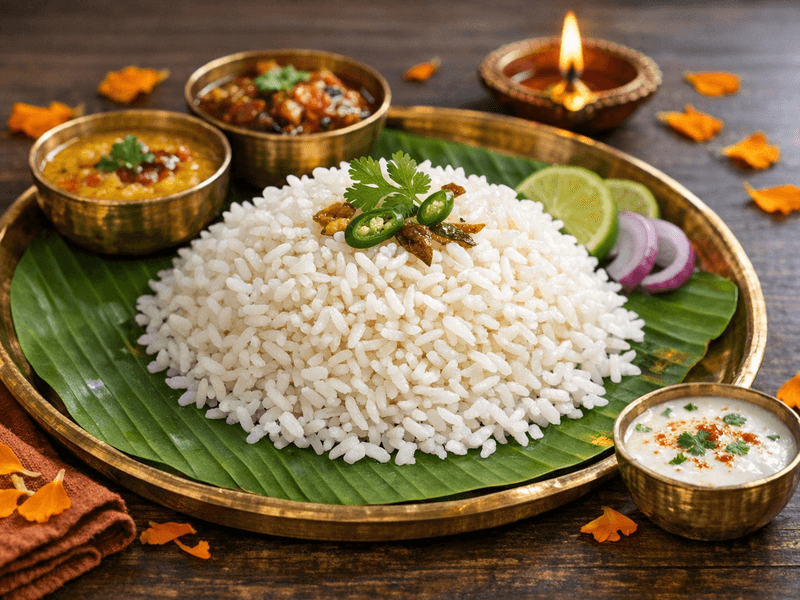
Boiled White Rice
Lunch • India
How to Make Boiled White Rice (Traditional & Healthy Version)
Boiled White Rice, known as 'Chawal' in Hindi, is a staple food in Indian households, enjoyed across regions from Punjab to Tamil Nadu. Revered for its simplicity and versatility, this dish forms the foundation of countless Indian meals, pairing beautifully with dals, sabzis (vegetable curries), and spicy gravies. The subtle aroma and fluffy texture of perfectly boiled rice make it a comforting choice for both everyday lunches and festive spreads such as Diwali or Pongal. Rooted in centuries-old culinary traditions, Boiled White Rice is valued for its neutrality, allowing it to absorb the distinctive flavors of Indian spices and accompaniments. Whether served with sambar in South India, rajma in the North, or as part of a temple prasad, rice is an essential component of India’s dietary culture. Its lightness and digestibility make it a favored choice for health-conscious individuals and those seeking balanced nutrition. Preparing rice the traditional Indian way ensures that it retains its nutrients and natural taste, making it suitable for every age group.
Ingredients(for 1 cup cooked rice (approx. 150g))
- 1 cup White rice (Chawal) (preferably short or medium grain; use local varieties like Sona Masuri or Kolam)
- 2.5 cups Water (filtered)
- 1/2 tsp Salt (as per taste) - optional
- 1/2 tsp Lemon juice (optional, prevents stickiness) - optional
- 1 Bay leaf (Tej patta) (adds subtle aroma) - optional
- 1/2 tsp Ghee (optional, for flavor and preventing stickiness) - optional
- 1/4 tsp Cumin seeds (Jeera) (optional, for flavor) - optional
- 1 tbsp Fresh coriander leaves (finely chopped, for garnishing) - optional
Instructions
- 1
Rinse the white rice thoroughly under running water 2-3 times to remove excess starch. Soak rice in enough water for 10-15 minutes.
15 minutes
Soaking helps achieve fluffier, separate grains.
- 2
Drain the soaked rice using a fine sieve. In a heavy-bottomed saucepan (patila), bring 2.5 cups of water to a boil on medium flame.
5 minutes
Use fresh water for boiling to preserve the rice’s aroma.
- 3
Add the drained rice to the boiling water. Stir gently to prevent sticking. Optionally, add a bay leaf, lemon juice, salt, and ghee or cumin seeds for flavor.
2 minutes
Do not over-stir; gentle mixing prevents breakage of grains.
- 4
Cook uncovered on medium flame for 8-10 minutes until the rice is 90% cooked (grains should feel tender but not mushy).
10 minutes
Check doneness by pressing a grain between fingers—it should be soft but firm.
Why This Dish is Healthy
This recipe uses minimal oil and no heavy masalas, making it light on the stomach and heart-friendly. By rinsing and soaking the rice, excess starch is removed, which helps manage blood sugar spikes. The addition of bay leaf, lemon, or cumin enhances digestion. Boiled rice, when served with vegetables or dal, forms a complete, nutritious plate suitable for weight management and well-being.
Boiled White Rice is a low-fat, gluten-free source of energy, making it suitable for most diets. Rich in carbohydrates, it provides sustained energy and is easy to digest, making it ideal for children, elders, and those recovering from illness. When paired with dals or sabzis, rice contributes to a balanced intake of protein, vitamins (like B-vitamins), and minerals such as magnesium and manganese. Using local varieties like Sona Masuri ensures lower glycemic load compared to polished basmati.
Pro Tips
- 💡Tip 1: Use local rice varieties for authentic flavor and lower glycemic impact.
- 💡Tip 2: Fluff with a fork instead of stirring with a spoon to keep grains separate.
- 💡Tip 3: Use a wide, heavy-bottomed vessel (patila) for even cooking and to prevent sticking.
Storage & Serving
Store leftover rice in an airtight container in the refrigerator for up to 2 days. Reheat by sprinkling a little water and steaming or microwaving. Avoid keeping cooked rice at room temperature for long to prevent spoilage.
Best served: Lunch
Nutrition Facts
| Nutrient | Per 100g |
|---|---|
| Energy | 130.0 kcal |