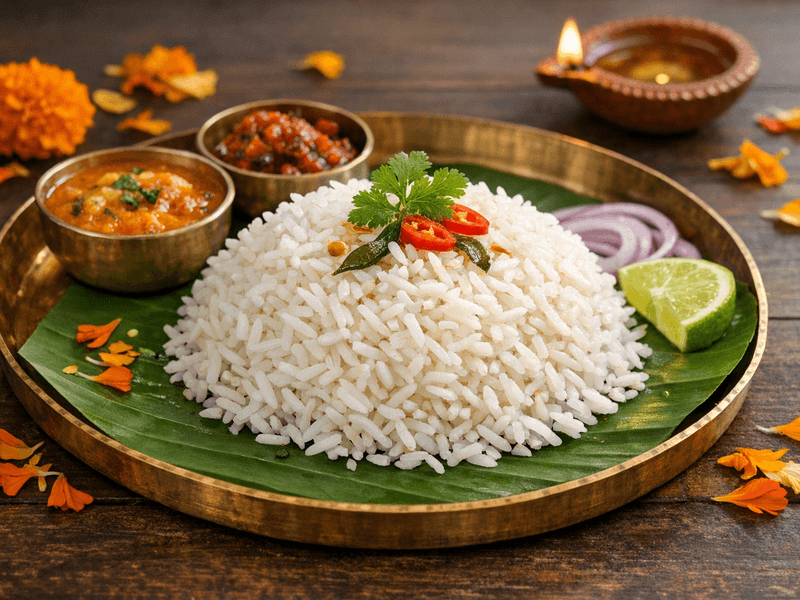
Boiled Jasmine Rice
Lunch • India
How to Make Boiled Jasmine Rice (Traditional & Healthy Version)
Boiled Jasmine Rice is a delicately fragrant rice dish that has gained popularity in India, especially in the eastern and northeastern regions where aromatic rice varieties are cherished. Jasmine rice, known locally as 'Chawal', is prized for its floral aroma and soft texture, making it a staple for festive lunches and everyday meals. Though its origins trace to Southeast Asia, Jasmine rice has found a special place in Indian kitchens, particularly among health-conscious cooks looking for lighter alternatives to traditional basmati. The subtle flavor complements a range of Indian curries, sabzis, and dal, making it a versatile addition to any Indian thali. This dish is especially popular during festivals like Durga Puja in Bengal and Bihu in Assam, where a simple, elegant rice is paired with rich vegetable or fish curries. Its gentle flavor appeals to both adults and children, and its easy preparation makes it ideal for busy families. Boiled Jasmine Rice is celebrated for its purity and minimalism, allowing the quality of the grain to shine. Whether served alongside spicy paneer tikka or a mild moong dal, it offers a healthy, gluten-free base for a nourishing meal.
Ingredients(for 1 bowl (approx. 150g cooked rice))
- 1 cup Jasmine rice (chawal) (preferably aged, aromatic)
- 2 cups Water (pani) (filtered)
- 1/4 tsp Salt (namak) (optional, to taste) - optional
- 1/2 tsp Ghee (optional, for flavor) - optional
- 1 Bay leaf (tej patta) (optional, for aroma) - optional
- 1/2 tsp Lemon juice (nimbu ras) (optional, prevents stickiness) - optional
- 2 tbsp Green peas (matar) (optional, for nutrition) - optional
- 1 tbsp Coriander leaves (dhaniya) (finely chopped, for garnish) - optional
- a pinch Black pepper (kali mirch) (optional, for mild spice) - optional
Instructions
- 1
Rinse the Jasmine rice (chawal) thoroughly under running water until the water runs clear. This removes excess starch and helps achieve fluffy rice.
5 minutes
Soaking rice for 10 minutes improves texture.
- 2
In a heavy-bottomed patila (pot), add the rinsed rice and 2 cups of filtered water. Optionally, add bay leaf (tej patta) for aroma.
2 minutes
A wide pot prevents boil-over and ensures even cooking.
- 3
Add salt (namak) and lemon juice (nimbu ras) to the pot. Lemon juice keeps grains separate.
1 minute
Salt is optional; skip for low-sodium diets.
- 4
Bring to a gentle boil over medium flame. Once boiling, reduce heat to low, cover with a lid, and simmer for 15 minutes.
15 minutes
Do not stir rice while cooking to prevent breaking grains.
Why This Dish is Healthy
This dish is an excellent choice for calorie-conscious eaters. The recipe uses minimal fat and salt, and includes optional vegetables for added nutrition. Boiled Jasmine Rice is light on the digestive system and suitable for diabetic, weight loss, and vegan diets. Its high carbohydrate content fuels active lifestyles, and the absence of heavy seasoning makes it easy to digest and ideal for lunch.
Boiled Jasmine Rice is naturally gluten-free and low in fat, making it suitable for those with dietary restrictions. It is a good source of carbohydrates which provide energy, and contains essential B vitamins like thiamine and niacin. Adding green peas increases the protein and fiber content, while coriander leaves offer antioxidants and vitamin C. Using minimal ghee keeps the dish heart-healthy. The simple preparation retains nutrients and avoids excess oil or spices.
Pro Tips
- 💡Tip 1: Soak rice for 10 minutes before cooking for fluffier grains.
- 💡Tip 2: Add lemon juice to keep rice non-sticky and bright.
- 💡Tip 3: Use a heavy-bottomed patila to prevent burning and ensure even cooking.
Storage & Serving
Store leftover boiled Jasmine rice in an airtight dabba in the refrigerator for up to 2 days. Reheat with a splash of water in a microwave or on tawa for best results. Avoid freezing as texture may change.
Best served: Lunch
Nutrition Facts
| Nutrient | Per 100g |
|---|---|
| Energy | 129.0 kcal |
| Protein | 2.0 g |
| Carbohydrates | 28.0 g |
| Total Fat | 0.0 g |
| Fiber | 0.0 g |