Bhindi Kurkuri
Lunch • India
How to Make Bhindi Kurkuri (Traditional & Healthy Version)
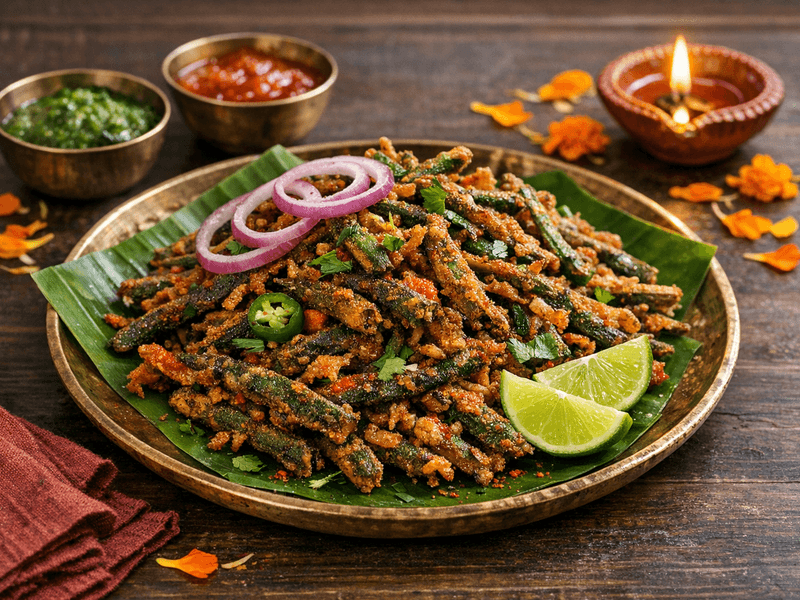
Bhindi Kurkuri, a beloved North Indian dish, is a crispy and flavorful preparation of okra (bhindi) that's perfect for lunch or as a festive side. Originating from the vibrant kitchens of Punjab and Uttar Pradesh, this dish transforms simple bhindi into a crunchy delight, making it a popular accompaniment during family gatherings and festivals like Diwali and Holi. The word 'kurkuri' in Hindi means crispy, which perfectly describes the texture of this dish. Traditionally deep-fried, Bhindi Kurkuri is now often made in healthier ways without compromising its irresistible crunch. The combination of gram flour (besan), rice flour (chawal ka atta), and a medley of Indian spices creates a tantalizing coating that enhances the natural flavor of bhindi. Each bite offers a symphony of spicy, tangy, and earthy notes, making it a favorite among both kids and adults. Health-conscious home cooks love Bhindi Kurkuri for its lower calorie profile compared to traditional fries, its gluten-free adaptability, and its ability to pair beautifully with dal, roti, or even as a crunchy snack with chai. Bhindi Kurkuri is a celebration of Indian flavors and textures, bringing regional authenticity and nutritional goodness to your table.
Ingredients(for 1 medium bowl (approx. 100g cooked bhindi kurkuri))
- 250 grams Bhindi (Okra) (fresh, tender)
- 3 tablespoons Besan (Gram Flour) (chickpea flour)
- 2 tablespoons Rice Flour (Chawal ka Atta) (for extra crispiness)
- 1/2 teaspoon Red Chilli Powder (lal mirch)
- 1/4 teaspoon Turmeric Powder (haldi)
- 1/2 teaspoon Coriander Powder (dhaniya powder)
- 1/2 teaspoon Amchur (Dry Mango Powder) (for tanginess)
- 1/4 teaspoon Cumin Powder (jeera powder)
- to taste Salt (namak)
- 2-3 teaspoons Oil (for shallow frying (use mustard oil for traditional flavor))
- 1/2 teaspoon Chaat Masala (for garnish) - optional
Instructions
- 1
Wash the bhindi thoroughly and dry completely with a clean kitchen towel. Trim the ends and slice each bhindi lengthwise into thin strips.
5 minutes
Ensure bhindi is fully dry to avoid sliminess and achieve maximum crispiness.
- 2
In a large mixing bowl, add sliced bhindi. Sprinkle besan, rice flour, red chilli powder, turmeric, coriander, cumin powder, amchur, and salt over the bhindi.
3 minutes
Mix gently with your hands to coat each bhindi strip evenly. Do not add water.
- 3
Let the mixture rest for 5 minutes. The natural stickiness of bhindi helps the flour and spices adhere well.
5 minutes
Resting enhances the binding and flavor absorption.
- 4
Heat oil in a heavy bottom tawa or kadhai on medium heat. Once hot, spread the coated bhindi in a single layer.
2 minutes
Use minimal oil and a non-stick pan for a healthier version.
Why This Dish is Healthy
This Bhindi Kurkuri recipe uses shallow frying and healthy flours, making it much lighter than traditional deep-fried variations. The high fiber content keeps you satiated, supports digestion, and helps manage blood sugar. With no refined flours or additives, this dish is ideal for those seeking a wholesome, home-cooked Indian lunch that delivers on both taste and nutrition.
Bhindi Kurkuri is rich in dietary fiber, vitamins A and C, and antioxidants from fresh okra. Using besan and rice flour adds plant-based protein and complex carbohydrates with a low glycemic index. Minimal oil ensures lower fat content compared to deep-fried snacks, making it suitable for calorie-conscious diets. The use of turmeric and cumin provides anti-inflammatory benefits, while amchur offers digestive support. It's naturally gluten-free if rice flour is used and provides essential minerals like potassium and magnesium.
Pro Tips
- 💡Slice bhindi thin and evenly for maximum crunch.
- 💡Coat bhindi immediately before frying to retain crispness.
- 💡Use mustard oil for authentic North Indian flavor and health benefits.
Storage & Serving
Store leftover bhindi kurkuri in an airtight container at room temperature for up to 1 day. Reheat in the oven or on a tawa to revive crispiness. Best enjoyed fresh.
Best served: Lunch
Nutrition Facts
| Nutrient | Per 100g |
|---|---|
| Energy | 220.0 kcal |
| Protein | 3.2 g |
| Carbohydrates | 17.5 g |
| Total Fat | 8.7 g |
| Fiber | 3.6 g |
| Sugars | 2.1 g |
| Iron | 1.1 mg |
| Calcium | 60.0 mg |