Bengali Payesh
Lunch • India
How to Make Bengali Payesh (Traditional & Healthy Version)
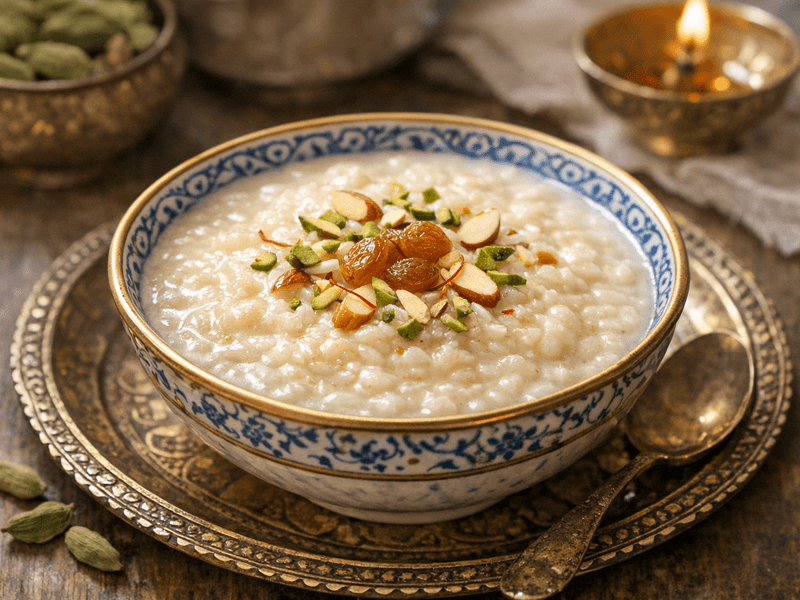
Bengali Payesh is a classic Indian rice pudding, hailing from the vibrant kitchens of Bengal. Known for its rich, creamy texture and subtle sweetness, Payesh is a staple in Bengali households, especially during auspicious occasions like birthdays, weddings, and festivals such as Poila Boishakh and Durga Puja. The essence of Payesh lies in its slow-cooked gobindobhog rice, simmered with full-fat milk, sweetened with jaggery (nolen gur) or sugar, and delicately flavored with cardamom and bay leaf. Traditional Payesh is not just a dessert but an emotion, symbolizing prosperity and togetherness. This health-conscious version of Bengali Payesh maintains its authentic taste and aroma while making smart ingredient choices. Using low-fat milk and jaggery as a natural sweetener, it offers a guilt-free indulgence for those who are calorie-conscious. Each spoonful delivers a luscious mouthfeel with hints of cardamom and the nutty bite of roasted almonds and pistachios. Ideal for lunch or festive meals, Payesh is both nourishing and soul-satisfying, making it a timeless Indian dessert loved across generations.
Ingredients(for 1 small katori (about 120 ml))
- 2 tbsp Gobindobhog rice (short-grain aromatic rice)
- 500 ml Low-fat milk (doodh)
- 3 tbsp Jaggery (nolen gur preferred)
- 1 Bay leaf (tej patta) - optional
- 2 pods Green cardamom (elaichi, lightly crushed)
- 5 Almonds (badam, sliced) - optional
- 5 Pistachios (pista, sliced) - optional
- 1 tbsp Raisins (kishmish) - optional
Instructions
- 1
Wash gobindobhog rice thoroughly and soak in water for 10 minutes. Drain and keep aside.
10 minutes
Soaking rice helps it cook faster and evenly.
- 2
Heat low-fat milk in a heavy-bottomed kadai. Bring it to a gentle boil on medium flame, stirring occasionally to prevent sticking.
4 minutes
Use a thick-bottomed vessel to avoid burning the milk.
- 3
Add soaked rice and bay leaf to the boiling milk. Reduce flame to low and simmer. Stir frequently to avoid lumps.
10 minutes
Continuous stirring yields a creamy consistency.
- 4
Once rice is soft and cooked, add crushed green cardamom. Mix well and continue simmering until the Payesh thickens.
3 minutes
Check rice doneness by pressing a grain between fingers.
Why This Dish is Healthy
This Payesh recipe is a healthier alternative to the traditional version as it uses low-fat milk and jaggery instead of full-cream milk and refined sugar. Jaggery is less processed and offers trace minerals, while the reduced fat content helps keep the calorie count in check. By controlling portion size and using nutrient-dense ingredients, Payesh can be enjoyed as a wholesome dessert even for those monitoring their weight or blood sugar levels.
Bengali Payesh, when made with low-fat milk and jaggery, provides a balanced combination of carbohydrates for energy, high-quality protein, and essential minerals like calcium and magnesium. Jaggery is a natural sweetener rich in iron, while nuts like almonds and pistachios add healthy fats, vitamin E, and dietary fiber. The use of gobindobhog rice ensures a moderate glycemic load, making this dessert more suitable for sustained energy release. Raisins contribute antioxidants and natural sweetness, minimizing the need for refined sugar.
Pro Tips
- 💡Tip 1: Use gobindobhog rice for authentic flavor and aroma.
- 💡Tip 2: Always add jaggery after removing from heat to prevent curdling.
- 💡Tip 3: Stir Payesh frequently while simmering to avoid burning or sticking.
Storage & Serving
Store Payesh in an airtight container in the refrigerator for up to 2 days. Serve chilled or gently reheat before serving. Stir well before each use.
Best served: Lunch
Nutrition Facts
| Nutrient | Per 100g |
|---|---|
| Energy | 230.0 kcal |
| Protein | 3.2 g |
| Carbohydrates | 23.5 g |
| Total Fat | 4.5 g |
| Fiber | 0.3 g |
| Sugars | 14.0 g |
| Iron | 0.2 mg |
| Calcium | 90.0 mg |