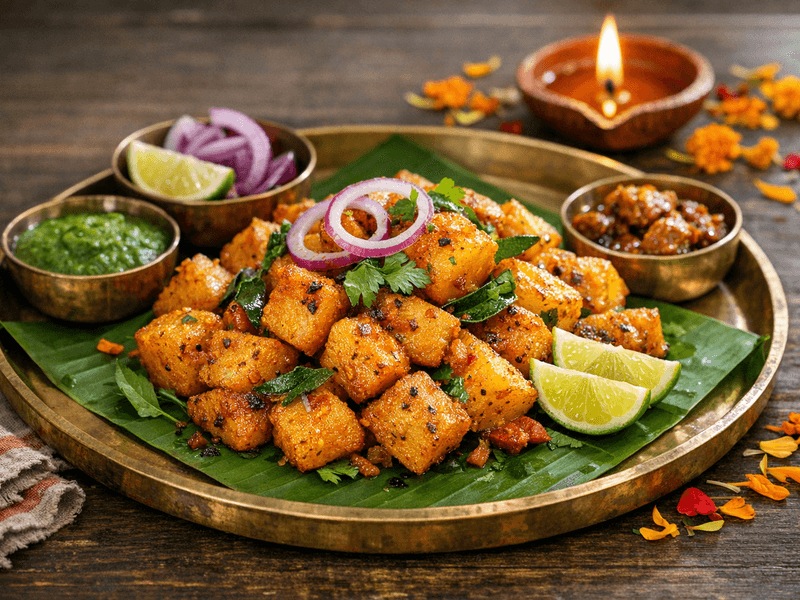
Bateta Fry
Lunch • India
How to Make Bateta Fry (Traditional & Healthy Version)
Bateta Fry, a cherished Gujarati lunch dish, embodies the soulful flavors of India’s western region. This simple yet delightful recipe highlights potatoes (bateta) tossed in aromatic spices, making it a staple in many Gujarati households. Bateta Fry is often enjoyed during festive occasions and family gatherings, especially with roti, phulka, or dal-rice, and is a favorite during Navratri and other local celebrations. The dish is known for its crispy texture and vibrant taste, with turmeric, mustard seeds, and green chillies infusing every bite with a burst of flavor. While traditional Bateta Fry is cooked on a tawa with ample oil, this healthier version uses minimal oil and incorporates fresh coriander, making it light yet satisfying. Its popularity stems from its versatility and ease of preparation, offering a perfect balance of spice and comfort. Whether served as a side or main, Bateta Fry stands out for its authentic regional taste and cultural significance. It’s an excellent choice for those seeking a wholesome, vegetarian, and easy-to-digest lunch option that celebrates the essence of Gujarati cuisine.
Ingredients(for 1 medium bowl per serving)
- 3 medium Potatoes (bateta) (peeled and cubed)
- 1/2 tsp Mustard seeds (rai)
- 1/2 tsp Cumin seeds (jeera)
- 1/2 tsp Turmeric powder (haldi)
- 1/2 tsp Red chilli powder (lal mirch) (adjust to taste)
- 2 Green chillies (slit)
- 8-10 Curry leaves (kadi patta)
- 1 tbsp Oil (preferably groundnut or sunflower)
- to taste Salt
- 2 tbsp Fresh coriander (dhaniya) (finely chopped) - optional
Instructions
- 1
Wash, peel, and cube the potatoes (bateta). Soak the cubes in water for 10 minutes to reduce excess starch, then drain.
10 minutes
Soaking helps make the dish lighter and prevents potatoes from sticking.
- 2
Heat oil in a tawa or thick-bottomed pan. Add mustard seeds (rai) and cumin seeds (jeera). Allow them to crackle.
2 minutes
Use a wide tawa for crispier potatoes.
- 3
Add curry leaves and green chillies. Saute for a minute till fragrant.
1 minute
Fresh curry leaves add authentic Gujarati aroma.
- 4
Add the drained potato cubes. Stir well and cook on medium heat.
3 minutes
Spread potatoes evenly for uniform cooking.
Why This Dish is Healthy
This Bateta Fry recipe uses less oil and fresh ingredients, making it a lighter, wholesome option. The absence of processed additives and the inclusion of spices like turmeric and cumin support metabolic health. By soaking potatoes, excess starch is reduced, lowering glycemic load. It’s a filling, nutritious dish ideal for calorie-conscious eaters, vegetarians, and those seeking a balanced Indian lunch.
Bateta Fry is rich in carbohydrates from potatoes, providing sustained energy for lunch. Potatoes offer potassium, vitamin C, and dietary fiber, supporting heart health and digestion. Using minimal oil reduces overall fat content, while turmeric and cumin seeds add antioxidants and anti-inflammatory benefits. Fresh coriander boosts vitamin A and K. The dish is naturally gluten-free and vegetarian, making it suitable for a wide range of dietary preferences.
Pro Tips
- 💡Tip 1: Soak potatoes before cooking to reduce starch and improve texture.
- 💡Tip 2: Use a thick-bottomed tawa for even heat distribution and crispiness.
- 💡Tip 3: Add coriander just before serving to retain aroma and nutrients.
Storage & Serving
Store Bateta Fry in an airtight container in the refrigerator for up to 2 days. Reheat on a tawa with a splash of water to restore freshness. Avoid freezing as potatoes may become soggy.
Best served: Lunch
Nutrition Facts
| Nutrient | Per 100g |
|---|---|
| Energy | 210.0 kcal |
| Protein | 2.2 g |
| Carbohydrates | 22.0 g |
| Total Fat | 7.5 g |
| Fiber | 2.5 g |
| Sugars | 1.2 g |
| Iron | 1.1 mg |
| Calcium | 18.0 mg |
| Sodium | 340.0 mg |
| Potassium | 370.0 mg |
| Cholesterol | 0.0 mg |
| Vitamin A | 8.0 IU |
| Vitamin C | 13.0 mg |
| Magnesium | 24.0 mg |
| Zinc | 0.4 mg |
| Phosphorus | 44.0 mg |
| Vitamin D | 0.0 IU |
| Vitamin B1 (Thiamine) | 0.1 mg |
| Vitamin B2 (Riboflavin) | 0.0 mg |
| Vitamin B3 (Niacin) | 1.1 mg |
| Vitamin B6 | 0.2 mg |
| Vitamin B12 | 0.0 µg |
| Folate | 18.0 µg |