Bagara Baingan
Lunch • India
About Bagara Baingan
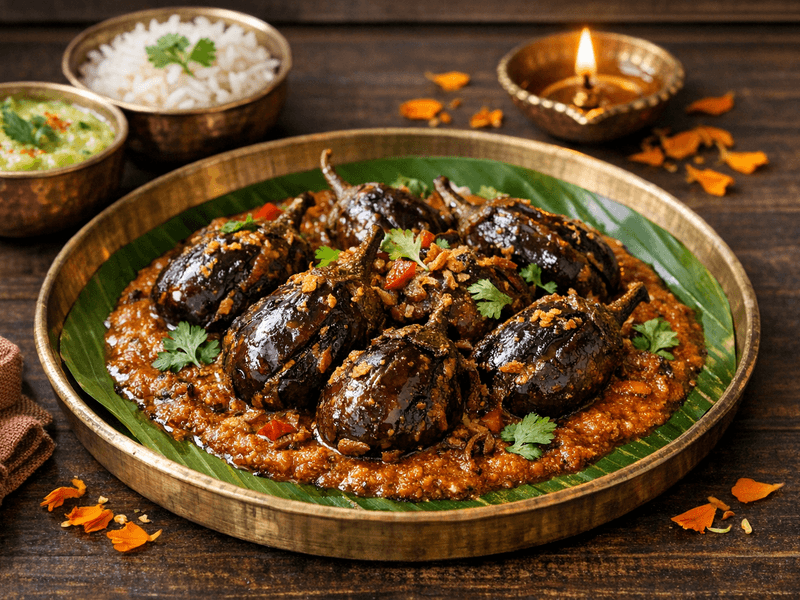
Whole baby eggplants in roasted peanut, sesame and tamarind gravy — Nizami palace dish.
How to Make Bagara Baingan (Traditional & Healthy Version)
Bagara Baingan is a celebrated South Indian dish, most famously enjoyed in the royal kitchens of Hyderabad and across Telangana and Andhra Pradesh. This aromatic curry features tender baby brinjals (baingan) cooked in a rich, nutty, and tangy sesame-peanut-coconut gravy, delicately spiced with traditional Indian masalas. The name ‘Bagara’ comes from the Urdu word for tempering, and ‘Baingan’ means eggplant in Hindi, making it a truly authentic Indian vegetarian delicacy. The dish is a staple at festive occasions, weddings, and during special family gatherings, often served with steaming hot bagara chawal (spiced rice) or fluffy jeera rice. Its creamy texture and bold flavors make it a favorite for lunch, particularly during festivals like Eid, Diwali, and Sankranti. Bagara Baingan stands out not only for its bold taste but also for its vegan and nutrient-rich ingredients, making it an excellent, health-conscious choice for anyone seeking authentic Indian cuisine without excess calories.
Ingredients(for 1 medium bowl per person (approx. 200g))
- 6-8 pieces Small brinjals (baingan) (baby eggplants)
- 1 medium Onion (finely chopped (pyaz))
- 1 medium Tomato (finely chopped (tamatar))
- 2 tablespoons Peanuts (moongphali, roasted)
- 1 tablespoon White sesame seeds (til)
- 1 tablespoon Desiccated coconut (nariyal)
- 1 teaspoon Ginger-garlic paste (adrak-lehsun paste)
- 1 teaspoon Coriander powder (dhaniya powder)
- 1/2 teaspoon Red chilli powder (lal mirch)
- 1/4 teaspoon Turmeric powder (haldi)
- 1/2 teaspoon Mustard seeds (rai)
- 8-10 Curry leaves (kadi patta)
- 2 teaspoons Tamarind pulp (imli ka ras)
- to taste Salt (namak)
- 1.5 tablespoons Cold-pressed groundnut oil (or use mustard oil for extra flavor)
- 2 tablespoons Fresh coriander (hara dhaniya, chopped (for garnish)) - optional
Instructions
- 1
Wash and slit each brinjal lengthwise, keeping the stems intact. Soak in salted water for 10 minutes to remove bitterness.
10 minutes
Soaking prevents discoloration and reduces bitterness.
- 2
Dry roast peanuts, sesame seeds, and desiccated coconut on a tawa until aromatic. Cool, then blend with a little water to make a smooth paste.
5 minutes
Stir continuously to prevent burning and enhance nutty flavor.
- 3
Heat 1 tablespoon oil in a kadhai. Add mustard seeds and let them splutter, then add curry leaves.
2 minutes
Adding curry leaves at this stage infuses oil with flavor.
- 4
Add chopped onions and sauté until golden brown. Stir in ginger-garlic paste and cook until raw aroma disappears.
3 minutes
Cook on medium heat for even browning.
Why This Dish is Healthy
This Bagara Baingan recipe is a wholesome, low-calorie option for lunch. Using cold-pressed oil and roasting the nuts and seeds enhances nutrition without adding unnecessary calories. The brinjals provide fiber that aids digestion, while the protein-rich peanut-sesame paste offers satiety and sustained energy. It contains no refined ingredients, is vegan, and is suitable for most dietary needs. Choosing this dish supports heart health and weight management.
Bagara Baingan is naturally rich in dietary fiber, plant-based protein, and healthy fats from peanuts, sesame, and coconut. Brinjals are a good source of antioxidants, potassium, and vitamins B and K. The use of minimal oil and the inclusion of anti-inflammatory spices like turmeric and ginger make this dish heart-healthy. Tamarind adds vitamin C, while the nut-seed paste boosts magnesium, iron, and calcium content. This vegan curry provides balanced macros (4g protein, 16g carbs, 18g fat per serving) and is free from dairy and gluten.
Pro Tips
- 💡Tip 1: Always use fresh, tender brinjals for the best texture and flavor.
- 💡Tip 2: Roasting the nut and seed mixture until golden enhances the curry's aroma.
- 💡Tip 3: Adjust the tamarind and chilli to suit your family's taste preference.
Storage & Serving
Store leftovers in an airtight container in the refrigerator for up to 2 days. Reheat gently on the stove, adding a splash of water if needed to loosen the gravy.
Best served: Breakfast or Lunch
Nutrition Facts
| Nutrient | Per 100g |
|---|---|
| Energy | 235.0 kcal |
| Protein | 4.0 g |
| Carbohydrates | 16.0 g |
| Total Fat | 18.0 g |
| Fiber | 5.0 g |