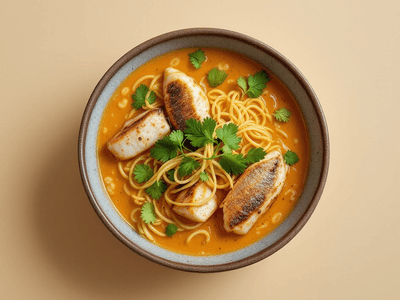
Assam Laksa with Mackerel
Lunch • India
How to Make Assam Laksa with Mackerel (Traditional & Healthy Version)
Assam Laksa with Mackerel is a vibrant, tangy noodle soup that finds its inspiration in the flavors of the North-East, particularly Assam. The dish combines rice noodles (chawal sevai) with a spicy, sour fish broth, loaded with fresh herbs and local spices. This healthy version uses mackerel (bangda), a common fish in Indian coastal kitchens, ensuring an authentic taste while keeping the calories in check. Assam Laksa is loved for its unique balance of spicy, sour, and savory notes, making it a refreshing meal, especially during monsoons or festive family gatherings. In Indian homes, this dish is often adapted to suit local palates. The use of tamarind (imli) gives the broth its characteristic tang, while fresh coriander (dhaniya) and mint (pudina) provide an aromatic finish. Assam Laksa with Mackerel is a delightful lunch option, perfect for those seeking a light yet protein-rich meal. It’s also a wonderful way to introduce regional fish varieties into your diet, promoting local produce and sustainable eating. This healthy noodle soup is sure to become a family favorite at your Indian dining table.
Ingredients(for 1 medium bowl (approx. 350 ml))
- 200 grams Bangda (Mackerel) fillets (fresh or frozen)
- 100 grams Chawal sevai (rice noodles) (thin or medium variety)
- 2 tablespoons Imli (tamarind) pulp (freshly extracted)
- 1 medium Pyaaz (onion) (thinly sliced)
- 1 inch Adrak (ginger) (grated)
- 3 cloves Lahsun (garlic) (finely chopped)
- 2 Hari mirch (green chilli) (slit)
- 1/2 teaspoon Haldi (turmeric powder)
- to taste Namak (salt)
- 2 tablespoons Dhanya patta (coriander leaves) (chopped)
- 1 tablespoon Pudina (mint leaves) (fresh, chopped) - optional
- 1 teaspoon Mustard oil (for authentic flavor) - optional
Instructions
- 1
Clean and cut the bangda fillets into bite-sized pieces. Marinate with a pinch of haldi and salt. Set aside.
5 minutes
Using fresh fish enhances the flavor and nutrition.
- 2
Boil chawal sevai (rice noodles) as per packet instructions. Drain, rinse under cold water, and keep aside.
5 minutes
Avoid overcooking noodles to retain a firm texture.
- 3
In a deep kadhai, heat mustard oil. Add sliced onions, ginger, and garlic. Sauté until onions turn translucent.
3 minutes
Use low heat to avoid burning the aromatics.
- 4
Add tamarind pulp, green chillies, haldi, and 500 ml water. Bring the mixture to a gentle boil.
4 minutes
Adjust imli for desired tanginess.
Why This Dish is Healthy
This version of Assam Laksa is healthy as it uses lean fish, minimal oil, and an abundance of fresh, local ingredients. The broth is light yet flavorful, offering a satisfying meal without excessive calories. Including mackerel ensures a good intake of omega-3s, which support brain and heart health. The fiber from rice noodles and micronutrients from herbs and spices further enhance its nutritional value, making it a wholesome lunch option.
Assam Laksa with Mackerel is a nutrient-dense meal. Mackerel (bangda) is rich in omega-3 fatty acids, high-quality protein, and essential vitamins such as B12 and D. The use of rice noodles keeps the dish light and gluten-free, making it suitable for those with gluten sensitivity. Tamarind (imli) provides antioxidants, and the fresh herbs offer vitamins A and C. With minimal oil and no deep frying, this dish supports heart health and maintains a balanced macronutrient profile.
Pro Tips
- 💡Tip 1: Always add fresh herbs at the end for maximum flavor.
- 💡Tip 2: If using frozen fish, thaw completely and pat dry before adding to broth.
- 💡Tip 3: Adjust imli and chillies to suit your family's taste preferences.
Storage & Serving
Store leftover broth and noodles separately in airtight containers, refrigerated for up to 2 days. Reheat the broth thoroughly before serving and assemble just before eating to maintain noodle texture.
Best served: Breakfast or Lunch
Nutrition Facts
| Nutrient | Per 100g |
|---|---|
| Energy | 450.0 kcal |