Aloo Parwal Dry
Lunch • India
How to Make Aloo Parwal Dry (Traditional & Healthy Version)
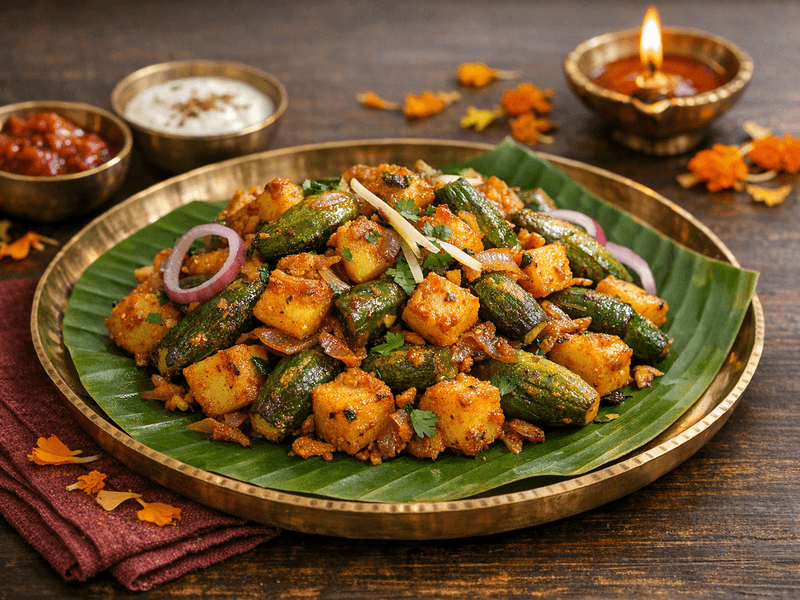
Aloo Parwal Dry is a beloved North Indian sabzi that combines the earthy flavors of aloo (potato) and parwal (pointed gourd), stir-fried with fragrant spices. This dish is especially popular in Uttar Pradesh and Bihar, where parwal is locally known as 'potol' and is a staple in many homes. Often served during lunch with roti (atta flatbread) or steamed rice, Aloo Parwal Dry is a vegetarian delight that fits perfectly into a balanced Indian meal. Its subtle yet vibrant spice blend, aromatic tadka, and melt-in-the-mouth vegetables make it a favorite during festivals like Navratri, when people seek sattvic and light food options. The dry preparation means it can be packed easily for tiffin, making it a practical and nutritious choice for busy families. Aloo Parwal Dry is known for its simple, rustic taste and the ability to highlight local produce. The dish is easy to prepare and uses everyday ingredients found in Indian kitchens. It provides a wholesome, filling lunch that is light on oil and heavy on flavor. The combination of potatoes and pointed gourd offers a pleasant contrast in texture and absorbs the masala beautifully, making each bite rich in traditional North Indian flavors. Its versatility and health benefits make it ideal for calorie-conscious individuals, as well as those seeking vegetarian meals for religious or cultural occasions.
Ingredients(for 1 medium bowl per person)
- 2 medium Aloo (potato) (peeled and diced)
- 200 grams Parwal (pointed gourd) (sliced lengthwise)
- 1 medium Onion (finely chopped)
- 1 small Tomato (finely chopped)
- 1 tablespoon Sarson ka tel (mustard oil) (for authentic flavor)
- 1/2 teaspoon Jeera (cumin seeds)
- 1/4 teaspoon Haldi (turmeric powder)
- 1 teaspoon Dhaniya powder (coriander powder)
- 1/2 teaspoon Lal mirch (red chili powder) (adjust to taste)
- to taste Salt
- a pinch Hing (asafoetida) (optional for aroma) - optional
- 1 tablespoon Fresh coriander leaves (chopped, for garnish) - optional
Instructions
- 1
Wash and peel aloo. Slice parwal lengthwise and keep both vegetables soaked in water to avoid oxidation.
5 minutes
Soaking keeps veggies crisp and prevents browning.
- 2
Heat sarson ka tel in a heavy-bottomed kadhai or tawa. Add jeera and let it splutter. Add hing for extra aroma.
2 minutes
Mustard oil gives authentic flavor; heat till it smokes slightly.
- 3
Add chopped onion and sauté until golden brown. Add tomatoes and cook till soft.
5 minutes
Cook onions on medium flame for best flavor.
- 4
Add diced aloo and parwal. Stir well. Add haldi, dhaniya powder, lal mirch, and salt. Mix to coat veggies evenly with masala.
3 minutes
Don't over-stir; gentle mixing preserves shape.
Why This Dish is Healthy
This recipe is a healthy choice because it uses minimal oil, relies on nutrient-rich vegetables, and skips processed ingredients. Parwal is known for its detoxifying properties, and the combination with aloo makes it filling yet light. High fiber content aids digestion, while the spices boost metabolism. It’s suitable for lunch, keeps you satiated, and supports wellness goals for weight loss, diabetes, and vegetarian diets.
Aloo Parwal Dry is rich in dietary fiber, vitamin C, and potassium from both potato and parwal. Parwal is low in calories and contains antioxidants, making it ideal for weight management. Mustard oil provides healthy fats and omega-3. No heavy cream or excess oil is used, keeping the dish light. Onions and tomatoes add vitamins and minerals, supporting immunity and digestion. The dish is gluten-free and can be made vegan by avoiding hing if it contains wheat.
Pro Tips
- 💡Tip 1: Use fresh parwal for best taste and texture.
- 💡Tip 2: Cook on low flame to preserve nutrients and prevent burning.
- 💡Tip 3: Mustard oil gives authentic flavor; don’t substitute unless necessary.
Storage & Serving
Store leftovers in an airtight container in the refrigerator for up to 2 days. Reheat on tawa or kadhai for best taste. Avoid freezing, as parwal texture may change.
Best served: Lunch
Nutrition Facts
| Nutrient | Per 100g |
|---|---|
| Energy | 160.0 kcal |
| Protein | 2.0 g |
| Carbohydrates | 16.0 g |
| Total Fat | 4.0 g |
| Fiber | 4.0 g |