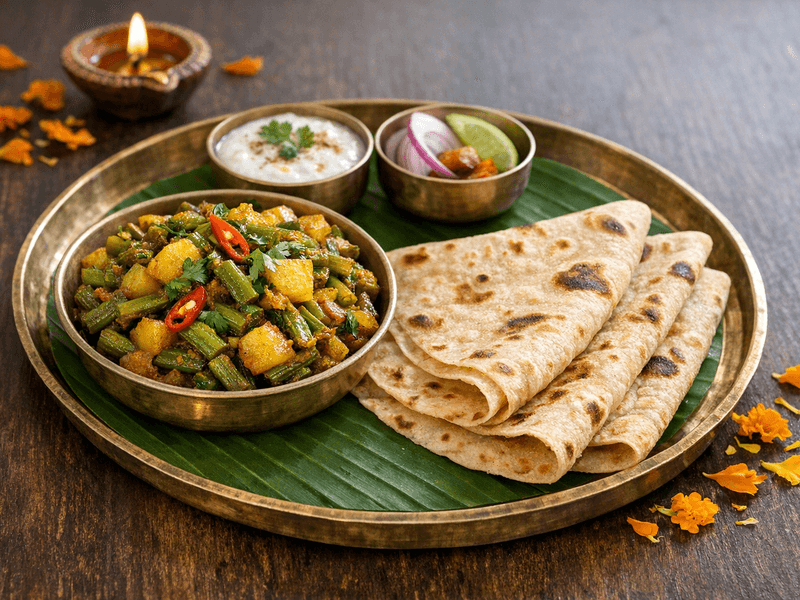
Aloo Gawar with Roti
Lunch • India
How to Make Aloo Gawar with Roti (Traditional & Healthy Version)
Aloo Gawar with Roti is a wholesome North Indian lunch dish featuring tender cluster beans (gawar phali) cooked with potatoes (aloo) and aromatic spices, served with freshly made whole wheat roti. This classic sabzi is especially popular in Punjabi and Rajasthani households, where seasonal vegetables are celebrated for their earthy flavors and nutritional value. The dish offers a delightful balance of textures—soft aloo and slightly crisp gawar—enveloped in a mildly spiced masala. Traditionally eaten during lunch, Aloo Gawar is valued for its simplicity and nourishment, making it a staple in everyday Indian cuisine. Cluster beans, locally known as Gawar or Gavar, are an important summer vegetable across North India and are often featured in festive thalis during Teej, Gangaur, and other regional celebrations. Combined with roti made from atta (whole wheat flour), this meal is perfect for health-conscious individuals and those looking for vegetarian options rich in fiber and plant-based protein. The subtle spicing ensures the natural flavors of the vegetables shine through, making it a comforting yet nutritious choice for families. Aloo Gawar with Roti is not just a meal but a reflection of India's agricultural diversity and culinary heritage. The use of local produce, traditional cooking methods, and minimal oil make it an ideal dish for those tracking calories without compromising on taste or authenticity. Its popularity stems from its ability to be easily adapted for various dietary needs and occasions, including festive lunches and everyday meals.
Ingredients(for 1 medium-sized plate with 2 rotis and 1 cup Aloo Gawar sabzi)
- 1 cup Gawar phali (cluster beans) (chopped)
- 1 medium Aloo (potato) (peeled and diced)
- 1 small Onion (finely chopped)
- 1 medium Tomato (finely chopped)
- 1 teaspoon Ginger-garlic paste (optional) - optional
- 1/2 teaspoon Jeera (cumin seeds)
- 1/4 teaspoon Haldi (turmeric powder)
- 1/2 teaspoon Red chili powder (adjust to taste)
- 1 teaspoon Coriander powder
- 1/4 teaspoon Garam masala
- to taste Salt
- 1 tablespoon Oil (preferably mustard oil)
- 1 cup Atta (whole wheat flour) (for roti)
- as needed Water (for dough and cooking)
Instructions
- 1
Wash and chop gawar phali and potatoes. Prepare all other vegetables and ingredients.
5 minutes
Cut cluster beans into small pieces for even cooking.
- 2
Heat oil in a kadhai (wok). Add jeera and let it splutter. Sauté onions until translucent.
3 minutes
Use mustard oil for authentic flavor; heat it till smoking point then cool slightly before adding onions.
- 3
Add ginger-garlic paste (if using), then tomatoes. Cook until tomatoes turn mushy.
3 minutes
Cover for faster softening of tomatoes.
- 4
Add chopped gawar and aloo. Sprinkle haldi, red chili powder, coriander powder, and salt. Mix well.
2 minutes
Stir well to coat veggies evenly with spices.
Why This Dish is Healthy
This recipe uses seasonal vegetables and whole wheat, which are key to healthy Indian eating. The high fiber content aids digestion and helps manage weight. Using minimal oil and avoiding refined grains keeps it low in calories and supports metabolic health. Ideal for calorie tracking, Aloo Gawar with Roti provides balanced macros and is suitable for vegetarians looking for wholesome, nutrient-dense meals.
Aloo Gawar with Roti is rich in dietary fiber, thanks to cluster beans and whole wheat atta. Cluster beans provide vitamins A, C, and folate, while potatoes contribute potassium and vitamin C. The use of minimal oil and whole grains boosts the nutritional profile, offering complex carbohydrates for sustained energy. This dish is low in saturated fat and free from cholesterol, making it suitable for heart health and digestion. It offers plant-based protein and micronutrients essential for daily wellness.
Pro Tips
- 💡Tip 1: Use fresh, tender gawar phali for best taste and nutrition.
- 💡Tip 2: For softer rotis, let the dough rest for at least 10 minutes before rolling.
- 💡Tip 3: Add a splash of water while cooking sabzi if it gets too dry.
Storage & Serving
Store leftover sabzi in an airtight container in the refrigerator for up to 2 days. Rotis are best consumed fresh but can be stored in a covered box for 12 hours and reheated on a tawa.
Best served: Lunch
Nutrition Facts
| Nutrient | Per 100g |
|---|---|
| Energy | 260.0 kcal |