Aloo Bhindi Dry
Lunch • India
How to Make Aloo Bhindi Dry (Traditional & Healthy Version)
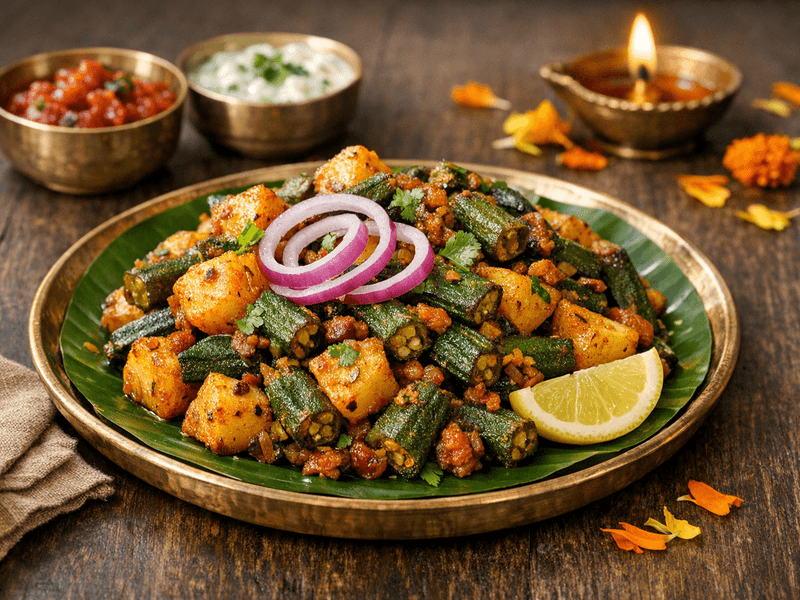
Aloo Bhindi Dry is a beloved North Indian sabzi that brings together the earthy flavors of aloo (potato) and bhindi (okra) in a simple, dry stir-fry. This classic vegetarian dish is a staple in many Indian households, especially across Uttar Pradesh, Punjab, and Delhi, where it is enjoyed as a wholesome lunch with roti, phulka, or paratha. The combination of tender bhindi and golden aloo, sautéed with aromatic spices like jeera (cumin), hing (asafoetida), and garam masala, makes this sabzi flavorful without being oily or heavy. Aloo Bhindi Dry is a dish that resonates with the comforting, home-cooked meals prepared during everyday lunches and festive occasions like Raksha Bandhan or Navratri, when simple vegetarian fare is preferred. Its dry texture makes it perfect for lunchbox meals, ensuring that the sabzi remains fresh and tasty even after several hours. Aloo Bhindi Dry is cherished for its balance of taste, nutrition, and ease of preparation, making it an excellent choice for busy families and health-conscious food lovers alike. This healthy recipe uses minimal oil and highlights the natural flavors of the vegetables. The spices used are not only traditional but also bring digestive and metabolic benefits. Whether you're tracking your calories or simply looking for a nutritious addition to your Indian lunch, this Aloo Bhindi Dry recipe promises an authentic taste of North Indian home cooking.
Ingredients(for 1 medium katori (bowl) per serving)
- 200 grams Bhindi (okra) (fresh, tender)
- 2 medium Aloo (potatoes) (peeled and diced)
- 1 small Onion (finely chopped (optional)) - optional
- 1 tablespoon Mustard oil (or cold-pressed vegetable oil)
- 1/2 teaspoon Jeera (cumin seeds)
- a pinch Hing (asafoetida)
- 1/4 teaspoon Haldi (turmeric powder)
- 1/2 teaspoon Red chilli powder (adjust to taste)
- 1 teaspoon Dhaniya powder (coriander powder)
- 1/4 teaspoon Garam masala (optional, for garnish) - optional
- to taste Salt
- 1 tablespoon Fresh coriander leaves (chopped, for garnish) - optional
Instructions
- 1
Wash and pat dry the bhindi thoroughly. Slice off both ends and cut into 1-inch pieces. Peel and dice the potatoes into small cubes.
5 minutes
Ensure bhindi is completely dry to prevent stickiness during cooking.
- 2
Heat mustard oil in a heavy-bottomed kadhai or non-stick pan on medium flame. Once oil is hot, add jeera and let it splutter. Add a pinch of hing.
2 minutes
Let mustard oil smoke lightly for authentic flavor, then reduce heat before adding spices.
- 3
Add diced potatoes and sauté for 2-3 minutes until they start to turn golden. Sprinkle haldi and a little salt.
3 minutes
Cut potatoes evenly for uniform cooking.
- 4
Add chopped bhindi and mix gently. Cook uncovered for 5 minutes, stirring occasionally to avoid sticking.
5 minutes
Do not cover the pan; this keeps bhindi crisp and prevents sliminess.
Why This Dish is Healthy
This Aloo Bhindi Dry recipe is a healthy choice because it uses minimal oil, fresh seasonal vegetables, and aromatic Indian spices that boost both taste and nutrition. The dry-cooked method preserves nutrients and avoids unnecessary calories from deep-frying. Including this dish in your lunch ensures a balanced intake of fiber, vitamins, and plant-based proteins, making it suitable for weight management, diabetes, and heart health. It is an excellent addition to a vegetarian diet and can be adapted to be vegan-friendly.
Aloo Bhindi Dry is a nutrient-rich dish, combining the dietary fiber and vitamin C of bhindi with the potassium and complex carbs of aloo. Bhindi is low in calories, high in antioxidants, and supports digestive health. Potatoes, when used in moderation and cooked with minimal oil, provide essential energy and micronutrients. The addition of spices like turmeric and cumin improves metabolism and aids digestion. This dish is naturally gluten-free, low in saturated fat, and supplies vitamins A, C, and B6 along with minerals like magnesium and iron.
Pro Tips
- 💡Tip 1: Always dry bhindi thoroughly after washing to avoid stickiness.
- 💡Tip 2: Use a heavy-bottomed kadhai for even cooking and to prevent burning.
- 💡Tip 3: Add spices gradually and adjust salt at the end for balanced flavor.
Storage & Serving
Store leftovers in an airtight container in the refrigerator for up to 2 days. Reheat in a pan or microwave before serving; avoid adding extra water to maintain dry texture.
Best served: Breakfast or Lunch
Nutrition Facts
| Nutrient | Per 100g |
|---|---|
| Energy | 180.0 kcal |
| Protein | 2.0 g |
| Carbohydrates | 15.0 g |
| Total Fat | 5.0 g |
| Fiber | 4.0 g |