Walnut Halwa
Desserts • India
How to Make Walnut Halwa (Traditional & Healthy Version)
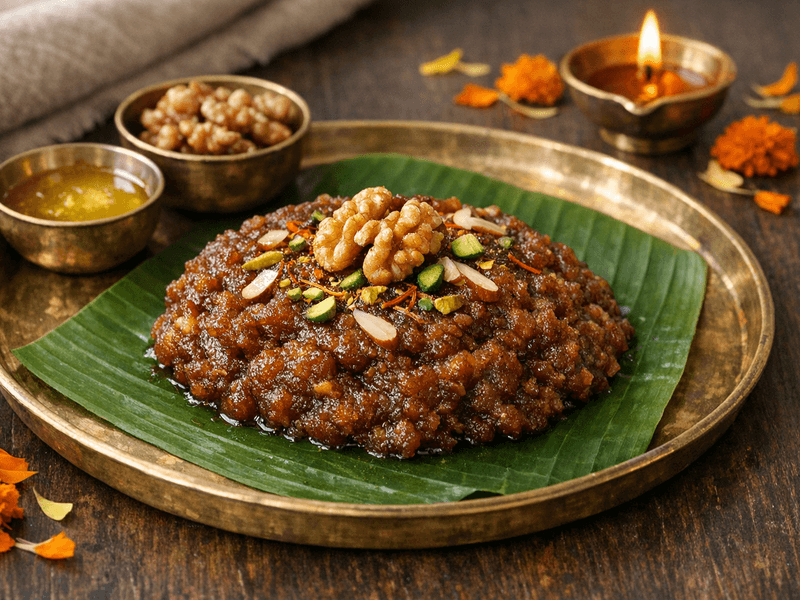
Walnut Halwa is a rich, decadent Indian dessert that brings together the earthy taste of akhrot (walnuts) with the comforting warmth of ghee and aromatic spices. Traditionally enjoyed during winter months and special occasions, this halwa is known for its delightful texture—slightly crunchy from the walnuts, lusciously soft from the slow-cooked milk, and perfectly sweetened. Originating from North India, particularly popular in Punjabi and Kashmiri households, Walnut Halwa has become a festive favorite during Diwali, Navratri, and wedding celebrations. What sets Walnut Halwa apart is its fusion of health and indulgence. Walnuts are revered in Ayurveda for their brain-boosting properties and are an excellent source of plant-based omega-3s. Unlike more common suji or atta halwa, this version uses minimal sugar and replaces khoya with low-fat milk for a lighter yet authentic taste. The aroma of cardamom (elaichi) and the crunch of dry fruits make this dessert both satisfying and nutritious, perfect for those seeking a guilt-free mithai option. Enjoy this Walnut Halwa as a prasad or as a wholesome sweet treat for your family!
Ingredients(for 1 medium katori (about 100g))
- 3/4 cup Walnuts (Akhrot) (coarsely ground)
- 1 cup Low-fat milk (doodh)
- 1.5 tbsp Desi ghee (clarified butter)
- 1/3 cup Jaggery powder (gur, can substitute with coconut sugar)
- 1/2 tsp Cardamom powder (elaichi)
- 1 tbsp Almonds (finely chopped, badam) - optional
- 1 tbsp Raisins (kishmish) - optional
- 6-8 strands Saffron strands (kesar, soaked in 1 tbsp warm milk) - optional
- 1/4 cup Water (for consistency if needed) - optional
Instructions
- 1
Dry roast the walnuts in a heavy-bottomed kadhai on low flame for 3-4 minutes until aromatic. Cool slightly and coarsely grind them.
5 minutes
Do not over-grind; keep the texture coarse for a nutty bite.
- 2
Heat desi ghee in the same kadhai. Add ground walnuts and sauté on low-medium flame for 5 minutes until they release a toasty aroma.
5 minutes
Stir continuously to prevent sticking and burning.
- 3
Add low-fat milk and keep stirring. Cook for 4-5 minutes until the mixture thickens and the milk is absorbed.
5 minutes
Scrape the sides to mix in the cream (malai) for richer flavor.
- 4
Stir in jaggery powder and continue to cook, allowing the jaggery to melt completely and mix well. If needed, add a little water for a softer halwa.
3 minutes
Add jaggery only after the milk is absorbed to prevent curdling.
Why This Dish is Healthy
This healthy Walnut Halwa is lighter than traditional versions due to the use of low-fat milk, reduced ghee, and natural sweetener jaggery. It’s free from refined flour and sugar, making it suitable for calorie-conscious eaters. With walnuts as the main ingredient, this halwa supports heart health, brain function, and keeps you fuller for longer—perfect for those looking for a nutritious Indian dessert without compromising on taste.
Walnut Halwa is packed with healthy fats, plant protein, and dietary fiber from akhrot, making it a more wholesome dessert option. Walnuts are a rich source of omega-3 fatty acids, antioxidants, vitamin E, and magnesium. The use of low-fat milk and jaggery instead of refined sugar helps lower the glycemic load and offers additional minerals like calcium and iron. Almonds and raisins boost the vitamin and mineral content, supporting bone health and immunity.
Pro Tips
- 💡Tip 1: Use fresh, good quality walnuts for best flavor and nutrition.
- 💡Tip 2: Adjust the quantity of jaggery to suit your preferred sweetness level.
- 💡Tip 3: For a richer taste, add a tablespoon of khoya if not calorie conscious.
Storage & Serving
Store leftover Walnut Halwa in an airtight container in the refrigerator for up to 3 days. Reheat gently on low flame or in the microwave before serving. Avoid freezing, as it may alter the texture.
Best served: Lunch or as a dessert after dinner
Nutrition Facts
| Nutrient | Per 100g |
|---|---|
| Energy | 210.0 kcal |