Vegan Chana Halwa
Desserts • India
How to Make Vegan Chana Halwa (Traditional & Healthy Version)
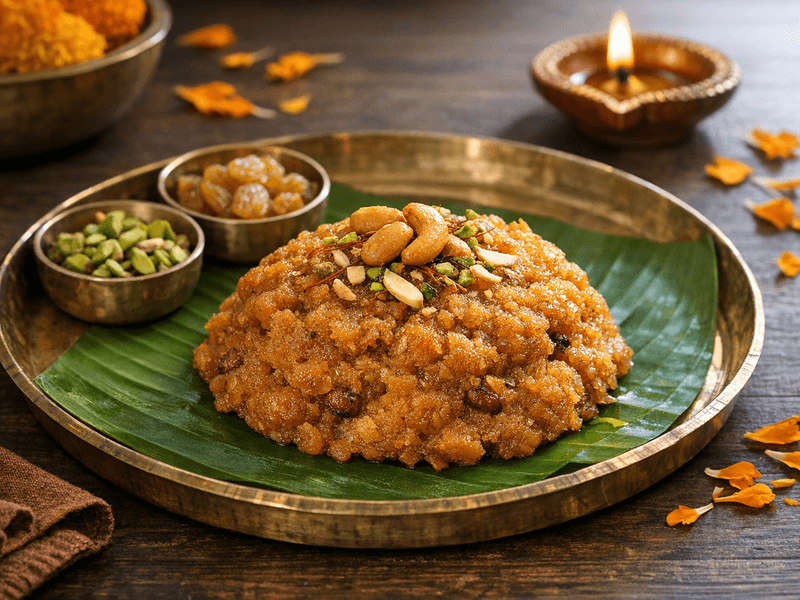
Vegan Chana Halwa is a classic North Indian dessert that transforms humble chana dal (split Bengal gram) into a luscious, nutritious sweet treat. This halwa is often prepared during festivals like Diwali and Holi, celebrated for its rich flavor and wholesome ingredients. The dish is rooted in the culinary traditions of Punjab and Uttar Pradesh, where chana dal is a staple in daily cooking, and halwa is a beloved dessert served during special occasions and family gatherings. The taste of Vegan Chana Halwa is a delightful balance of sweetness and nuttiness, with earthy undertones from roasted chana dal and aromatic hints of cardamom (elaichi). The use of plant-based ingredients makes it suitable for vegan diets, without compromising on authenticity or flavor. Traditionally, halwa is made with generous amounts of ghee and milk, but this healthy adaptation utilizes coconut oil and almond milk, ensuring a lighter yet equally delectable dessert. Enjoyed warm, Chana Halwa is perfect for those seeking an indulgent yet health-conscious option for festive meals or everyday sweets. With increasing awareness around nutrition and wellness, Vegan Chana Halwa stands out as a guilt-free dessert that celebrates Indian heritage. Its protein-rich base and mindful use of natural sweeteners make it ideal for anyone tracking calories or simply looking to eat cleaner. Whether for a festival or a cozy family meal, this halwa is sure to please the palate and honor tradition.
Ingredients(for 1 small katori (approximately 150g per serving))
- 1 cup Chana dal (split Bengal gram (चना दाल))
- 2 tablespoons Coconut oil (cold-pressed preferred)
- 1 cup Almond milk (unsweetened (बादाम दूध))
- 1/2 cup Jaggery powder (गुड़ पाउडर)
- 1/2 teaspoon Cardamom powder (elaichi (इलायची))
- 2 tablespoons Chopped almonds (बादाम)
- 1 tablespoon Chopped pistachios (पिस्ता) - optional
- 1 tablespoon Raisins (किशमिश) - optional
- 6-8 strands Saffron strands (केसर) - optional
- 1.5 cups Water (for boiling chana dal)
Instructions
- 1
Rinse chana dal thoroughly and soak for 1 hour. Drain and cook in a pressure cooker with water until soft (2-3 whistles).
10 minutes
Ensure dal is cooked well for a smooth halwa texture.
- 2
Drain cooked chana dal, cool slightly, and blend into a smooth paste using minimal water.
5 minutes
Pulse in batches for a uniform paste; do not add excess water.
- 3
Heat coconut oil in a heavy-bottomed kadhai (pan). Add chana dal paste and roast on medium flame until golden and fragrant.
7 minutes
Stir continuously to prevent sticking or burning.
- 4
Add almond milk gradually, stirring to combine. Cook till mixture thickens and oil starts to separate.
5 minutes
Keep flame low to avoid curdling almond milk.
Why This Dish is Healthy
This recipe is a healthy choice because it avoids refined sugar and ghee, using jaggery and coconut oil instead. Chana dal is low in glycemic index, making it suitable for weight watchers and diabetics. The dessert is nutrient-dense, with balanced macros and no artificial ingredients. Its high protein and fiber content support satiety and muscle repair, making it ideal for active lifestyles.
Vegan Chana Halwa is rich in plant-based protein and dietary fiber from chana dal, making it a filling dessert. The use of coconut oil provides healthy fats, while almond milk adds calcium and Vitamin E. Jaggery is a natural sweetener, offering minerals like iron and potassium. Almonds and pistachios contribute to heart-healthy fats and antioxidants. This halwa is free from cholesterol and dairy, making it suitable for lactose-intolerant individuals.
Pro Tips
- 💡Tip 1: Roast chana dal paste thoroughly for best flavor.
- 💡Tip 2: Use freshly ground cardamom for a stronger aroma.
- 💡Tip 3: Garnish with saffron and nuts to elevate presentation.
Storage & Serving
Store in an airtight container in the refrigerator for up to 3 days. Reheat gently in a pan before serving to restore moisture and flavor.
Best served: Breakfast or Lunch
Nutrition Facts
| Nutrient | Per 100g |
|---|---|
| Energy | 310.0 kcal |