Khoya Gulab Jamun
Desserts • India
How to Make Khoya Gulab Jamun (Traditional & Healthy Version)
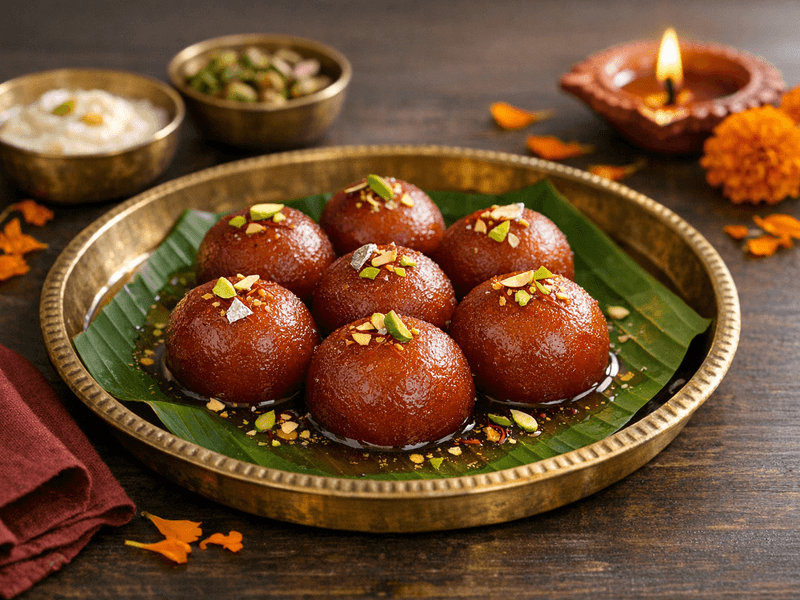
Khoya Gulab Jamun is a beloved North Indian dessert, renowned for its soft, melt-in-mouth texture and rich flavor. Made from khoya (mawa), a concentrated milk solid, these golden-brown balls are gently fried and soaked in fragrant sugar syrup infused with cardamom and rose water. Gulab Jamun holds a special place in Indian celebrations, especially during festivals like Diwali, Holi, and weddings, symbolizing sweetness and joy. The irresistible combination of khoya, atta, and aromatic syrup creates a dessert that pleases every palate. Traditionally, Gulab Jamun is prepared with khoya, making it authentic and richer in taste compared to instant mixes. This recipe adapts the classic method with health-conscious tweaks, using minimal ghee and moderate sugar, ensuring you enjoy the iconic taste without excess calories. The dish is vegetarian, making it suitable for a wide range of diets. Its delicate sweetness and soft texture make it an ideal treat for all ages, and it’s often served as a celebratory sweet across North Indian states, reflecting regional variations in preparation and syrup flavorings. Khoya Gulab Jamun not only satisfies dessert cravings but also brings families together during festive gatherings. With easy-to-follow steps and simple ingredients, this healthy recipe allows you to recreate the authentic North Indian experience at home, while enjoying a guilt-free indulgence. Perfect for those tracking calories, it delivers balanced nutrition and the unmistakable taste of traditional Indian sweets.
Ingredients(for 2 medium Gulab Jamuns with syrup)
- 1 cup Khoya (Mawa) (fresh, unsweetened)
- 2 tablespoons Atta (whole wheat flour) (for binding)
- 1 tablespoon Suji (semolina) (for texture)
- 2 tablespoons Milk (as needed for dough)
- 1/4 teaspoon Baking powder (for softness)
- 1 tablespoon Ghee (for frying (use minimal))
- 3/4 cup Sugar (for syrup)
- 1 cup Water (for syrup)
- 1/2 teaspoon Elaichi (cardamom powder) (for flavor)
- 1 teaspoon Rose water (optional, for aroma) - optional
- 1 tablespoon Pista (pistachios) (for garnish) - optional
Instructions
- 1
Crumble the khoya in a bowl. Add atta, suji, and baking powder. Mix gently, then gradually add milk to form a soft, smooth dough.
5 minutes
Do not over-knead to keep jamuns soft.
- 2
Divide the dough into small portions and roll into smooth, crack-free balls. Cover and set aside.
3 minutes
Ensure no cracks for even frying and texture.
- 3
In a pan, add sugar and water. Bring to a boil, then simmer for 7-8 minutes until slightly thick. Add elaichi and rose water. Keep the syrup warm.
8 minutes
Warm syrup absorbs better, enhancing flavor.
- 4
Heat ghee in a kadhai on low-medium heat. Fry jamuns gently, turning often, until evenly golden brown.
7 minutes
Fry on low heat to cook evenly without burning.
Why This Dish is Healthy
This healthy Gulab Jamun recipe uses whole wheat flour instead of refined maida, minimal ghee, and less sugar in the syrup. Khoya supplies natural protein and calcium, while suji adds texture without extra calories. These modifications make it suitable for calorie-conscious diets, offering all the taste of the traditional dessert with better nutritional value.
Khoya Gulab Jamun offers a good balance of protein from khoya and fiber from atta. Using whole wheat flour and minimal ghee reduces saturated fat and increases dietary fiber. Cardamom and rose water provide antioxidants. The recipe is moderate in calories, and portion control ensures guilt-free enjoyment. Pistachios add a dose of healthy fats, vitamins, and minerals, making this dessert both flavorful and nourishing.
Pro Tips
- 💡Tip 1: Use fresh khoya for authentic taste and perfect texture.
- 💡Tip 2: Fry jamuns on low heat for even cooking and softness.
- 💡Tip 3: Soak jamuns in warm syrup immediately after frying for juicy, flavorful results.
Storage & Serving
Store Khoya Gulab Jamun in an airtight container with syrup in the refrigerator for up to 3 days. Warm lightly before serving for best texture.
Best served: Lunch
Nutrition Facts
| Nutrient | Per 100g |
|---|---|
| Energy | 180.0 kcal |