Gulab Jamoon
Desserts • India
How to Make Gulab Jamoon (Traditional & Healthy Version)
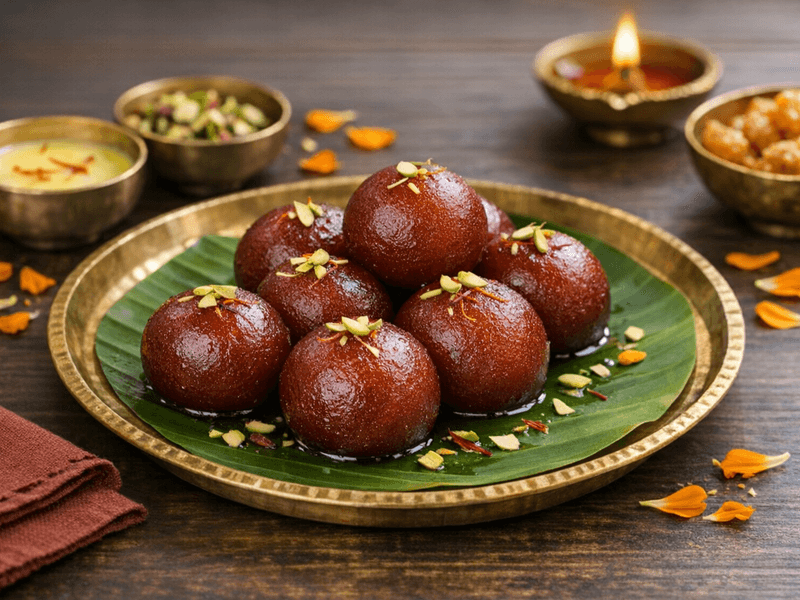
Gulab Jamoon, a timeless Indian dessert, is cherished for its melt-in-the-mouth texture and aromatic sweetness. Its name comes from 'gulab' (rose) and 'jamoon' (berry), reflecting the rose-flavored sugar syrup and the berry-sized dumplings it features. Traditionally prepared during Indian festivals like Diwali, Holi, and Eid, Gulab Jamoon is a symbol of celebration, warmth, and togetherness. Rich in culture and flavor, it is made using khoya (reduced milk), a staple in Indian sweets, but can be prepared in a healthier way by using low-fat milk powder and baking instead of deep frying. The soft, spongy balls are soaked in a light cardamom and rose water syrup, delivering a heavenly combination of floral, sweet, and rich notes with every bite. Gulab Jamoon transcends regions, from North to South, with each state adding its own twist—like the use of saffron in Rajasthan or coconut in certain South Indian variations. Whether served warm or chilled, this dessert brings joy to every occasion and is a must-have on festive thalis. Our health-conscious version ensures you can indulge guilt-free while savoring the authentic taste of India.
Ingredients(for 2 medium Gulab Jamoon with syrup (approx. 100g))
- 1/2 cup Low-fat milk powder (Use dairy or vegan milk powder)
- 2 tbsp Atta (whole wheat flour) (For binding)
- 1/4 tsp Baking powder
- 2 tbsp Low-fat dahi (curd) (Yogurt for softness)
- 1 tsp Ghee (For dough and light brushing)
- 2-3 tbsp Skimmed milk (Adjust for dough consistency)
- 1/2 cup Stevia or coconut sugar (For syrup; can use regular sugar)
- 3/4 cup Water (For syrup)
- 1/4 tsp Elaichi (cardamom) powder (For flavoring syrup)
- 1/2 tsp Rose water (Gulab essence)
- 1 tbsp Finely chopped pista or badam (Pistachios or almonds for garnish) - optional
Instructions
- 1
In a mixing bowl, combine low-fat milk powder, atta, and baking powder. Mix well. Add ghee and rub gently to form a breadcrumb texture.
3 minutes
Do not over-mix to keep jamoon soft.
- 2
Add dahi and gradually pour in skimmed milk to form a soft, smooth dough. Rest the dough for 5 minutes, covered.
5 minutes
The dough should be soft but not sticky.
- 3
Divide the dough into 8 equal portions and roll each piece into a smooth, crack-free ball.
3 minutes
Apply a little ghee on your palms to avoid sticking.
- 4
Preheat your oven to 180°C. Arrange the jamoon balls on a greased tray and lightly brush with ghee. Bake for 10-12 minutes until golden, turning them halfway for even baking.
12 minutes
Alternatively, air-fry for 10 minutes for an even healthier version.
Why This Dish is Healthy
Our baked Gulab Jamoon is lower in calories and saturated fat compared to the traditional deep-fried version, making it fit for weight management and heart health. Using atta and low-fat dairy boosts its nutritional value, while reducing refined sugar keeps blood sugar levels stable. This dessert lets you enjoy festive flavors without compromising on your health goals, making it ideal for mindful eaters.
This healthy Gulab Jamoon recipe uses low-fat milk powder and is baked instead of deep-fried, reducing both fat and calories. Whole wheat flour (atta) increases fiber, aiding digestion and providing sustained energy. The use of natural sweeteners like stevia or coconut sugar makes it suitable for calorie and sugar-conscious diets. Cardamom and rose water offer antioxidants and aid in digestion, while nuts add healthy fats, vitamin E, and magnesium.
Pro Tips
- 💡Tip 1: Ensure dough is soft and crack-free for perfect texture.
- 💡Tip 2: Always soak jamoon in warm syrup for even absorption.
- 💡Tip 3: Add a few saffron strands to syrup for extra aroma and color.
Storage & Serving
Store Gulab Jamoon in an airtight container with syrup in the refrigerator for up to 4 days. Warm slightly before serving for best texture, or enjoy chilled straight from the fridge.
Best served: Lunch
Nutrition Facts
| Nutrient | Per 100g |
|---|---|
| Energy | 250.0 kcal |