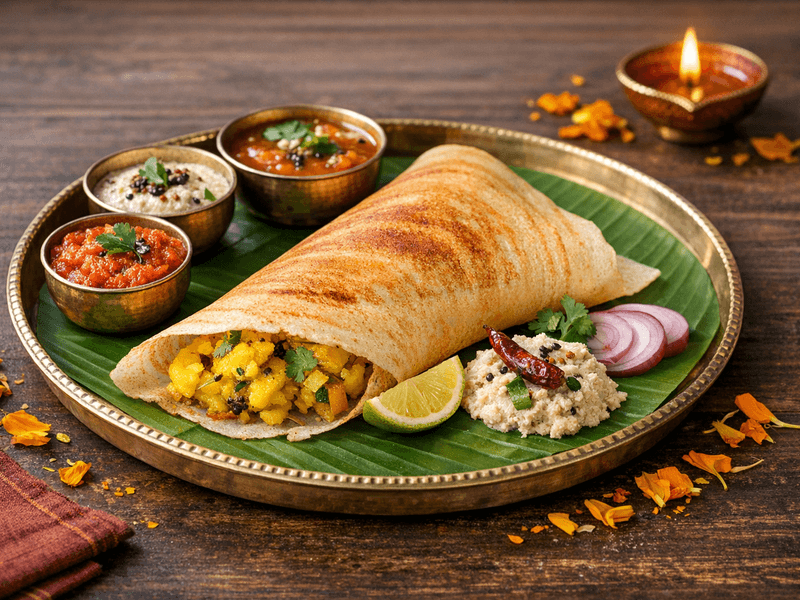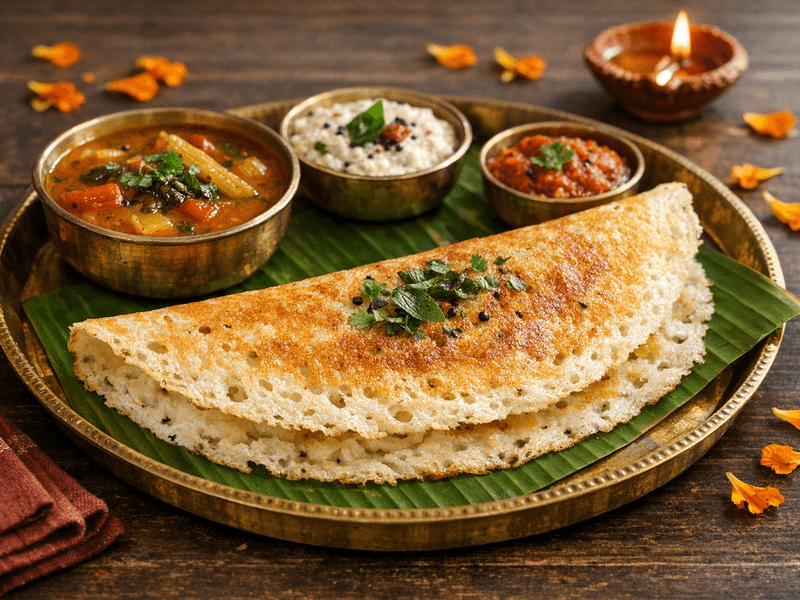
Urad Dosa with Sambhar
Breakfast • India
How to Make Urad Dosa with Sambhar (Traditional & Healthy Version)
Urad Dosa with Sambhar is a beloved South Indian breakfast dish, cherished for its crisp yet soft texture and comforting flavors. Originating from the states of Tamil Nadu and Karnataka, this classic combination graces tables from bustling Chennai to tranquil villages in Kerala. The dosa, made primarily from urad dal (split black gram) and rice, is naturally fermented, giving it a delightful tang and making it light on the stomach. Sambhar, a fragrant lentil and vegetable stew seasoned with a medley of South Indian spices, pairs perfectly with dosa, offering warmth and nutrition in every bite. This dish is a staple during Indian festivals like Pongal and is a popular choice for special occasions, temple offerings, and everyday meals alike. Its popularity stems from its balanced nutrition, easy digestibility, and the harmony of flavors—mildly tangy, spicy, and savory. Preparing Urad Dosa with Sambhar at home brings the authentic flavors of South India to your kitchen, making it an ideal choice for a wholesome, healthy breakfast that resonates with Indian culinary traditions.
Ingredients(for 2 medium dosas with 1 bowl sambhar per person)
- 1/2 cup Urad dal (split black gram) (उड़द दाल)
- 1 cup Rice (parboiled or idli rice) (चावल)
- 1/2 tsp Fenugreek seeds (मेथी दाना)
- to taste Salt (नमक)
- 2-3 tsp Oil (preferably sesame or sunflower) (तेल)
- 1/2 cup Toor dal (split pigeon peas) (अरहर दाल)
- 1 cup Mixed vegetables (carrot, drumstick, pumpkin, brinjal, etc.) (सब्ज़ियाँ)
- 1 tbsp Tamarind pulp (इमली का गूदा)
- 1 tbsp Sambhar powder (सांभर मसाला)
- 1/2 tsp Mustard seeds (राई)
- 8-10 Curry leaves (कड़ी पत्ता)
- a pinch Hing (asafoetida) (हींग)
- 1 small, sliced Onion (optional) (प्याज) - optional
Instructions
- 1
Wash and soak urad dal, rice, and fenugreek seeds together in enough water for 4-6 hours or overnight.
5 minutes
Longer soaking results in softer, fluffier dosa batter.
- 2
Drain and grind the soaked mixture into a smooth, thick batter using minimal water. Add salt and let ferment in a warm place for 8-10 hours.
5 minutes
Well-fermented batter gives the best flavor and texture.
- 3
Wash and pressure cook toor dal with a pinch of turmeric and enough water until soft. Mash well.
10 minutes
Adding a drop of oil while cooking dal prevents overflowing.
- 4
In a pan, add chopped vegetables, little water, and cook till just tender. Add tamarind pulp and simmer for 3-4 minutes.
5 minutes
Do not overcook vegetables; they should retain shape for better texture.
Why This Dish is Healthy
This dish is a healthy breakfast option due to its balanced combination of protein, fiber, and complex carbs, making it filling yet light on calories. The fermentation process in dosa batter aids digestion and gut health, while sambhar’s lentils and vegetables boost immunity and keep you satiated. Minimal oil usage and the absence of refined ingredients make Urad Dosa with Sambhar perfect for weight management and maintaining healthy blood sugar levels.
Urad Dosa with Sambhar is a powerhouse of nutrition. Urad dal and toor dal are excellent sources of plant-based protein, dietary fiber, and essential minerals like iron, potassium, and magnesium. Rice provides energy through complex carbohydrates, while the medley of vegetables in sambhar adds vitamins A, C, and K, plus antioxidants. Fermentation enhances the bioavailability of nutrients and supports gut health. Low in saturated fat and cholesterol-free, this meal satisfies daily macro and micronutrient needs.
Pro Tips
- 💡Tip 1: Ensure proper fermentation of dosa batter for the best taste and texture.
- 💡Tip 2: Use a cast iron tawa for extra crispy dosas.
- 💡Tip 3: Add a pinch of hing to sambhar for improved digestion and authentic flavor.
Storage & Serving
Dosa batter can be refrigerated for up to 3 days. Sambhar stays fresh in an airtight container in the fridge for 2 days. Reheat gently before serving. Prepared dosas are best eaten fresh.
Best served: Breakfast or Lunch
Nutrition Facts
| Nutrient | Per 100g |
|---|---|
| Energy | 200.0 kcal |