Urad Dosa
Breakfast • India
How to Make Urad Dosa (Traditional & Healthy Version)
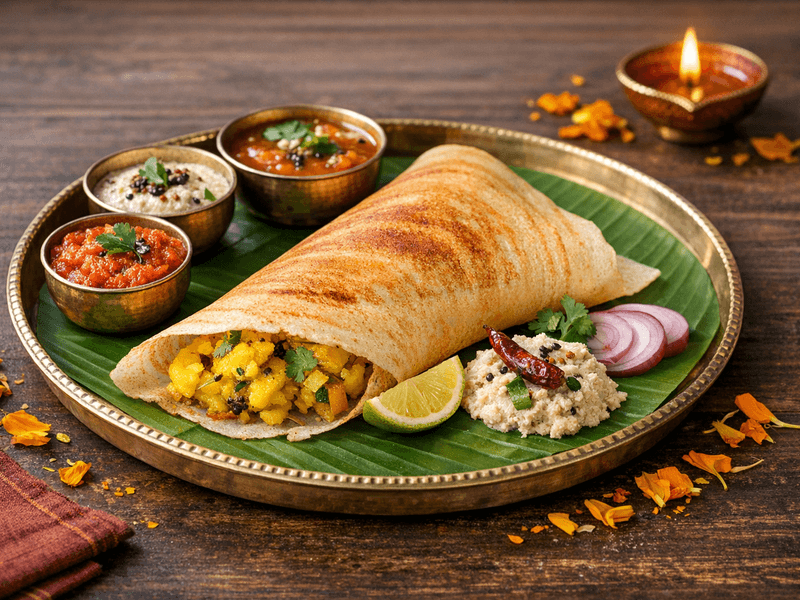
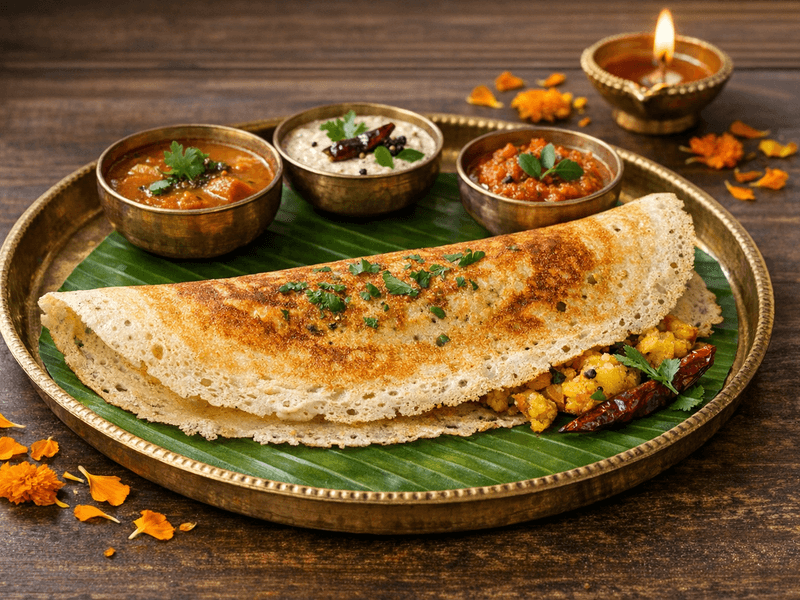
Urad Dosa, a cherished breakfast staple from South India, is a crispy and savory crepe made with urad dal (split black gram) as the primary ingredient. Rooted in the culinary traditions of Tamil Nadu, Andhra Pradesh, Karnataka, and Kerala, this dosa is valued for its simple ingredients and wholesome nutrition. Its mild, nutty flavor and golden-brown texture make it a favorite for all age groups, especially when served with coconut chutney or sambar. Urad Dosa is not just a delicious breakfast option but also forms an integral part of Indian festive meals, especially during Pongal and other harvest festivals. It is celebrated for its quick preparation compared to the classic rice dosa, making it ideal for busy mornings. The batter, naturally fermented, offers gut-friendly probiotics and a light, airy texture. Whether enjoyed plain or stuffed with spiced fillings, Urad Dosa is versatile, satisfying, and a delight to the palate, resonating with the warmth of Indian home kitchens.
Ingredients(for 2 medium-sized dosas per serving)
- 1 cup Urad dal (split black gram) (उड़द दाल)
- 1/4 cup Rice flour (chawal ka atta)
- 1/2 tsp Fenugreek seeds (methi dana)
- to taste Salt (namak)
- as needed Water (pani)
- 2 tsp Oil (til ka tel or any neutral oil)
- 1 sprig Curry leaves (kadi patta) - optional
- 1, finely chopped Green chilies (hari mirch) - optional
- 1/2 inch, grated Ginger (adrak) - optional
Instructions
- 1
Rinse urad dal and fenugreek seeds thoroughly. Soak them together in enough water for 4-6 hours or overnight.
5 minutes active, 4-6 hours soaking
Longer soaking leads to better fermentation and lighter dosas.
- 2
Drain the soaked dal and methi. Grind to a smooth batter using minimal water. The batter should be thick yet pourable.
5 minutes
Use cold water for grinding to prevent overheating.
- 3
Transfer the batter to a large bowl. Add rice flour and salt. Mix well. Cover and ferment in a warm place for 6-8 hours or until it doubles in volume.
10 minutes active, 6-8 hours fermenting
Fermentation time varies with weather—faster in summer.
- 4
Once fermented, stir gently. If desired, add chopped curry leaves, green chilies, and grated ginger for extra flavor.
2 minutes
Do not over-mix after fermentation to retain airiness.
Why This Dish is Healthy
This dosa recipe is health-conscious, using minimal oil and whole ingredients. Urad dal is high in protein and fiber, which helps with satiety and weight management. The absence of refined flours and the option to add fresh spices and herbs make it wholesome. Fermentation makes it easier to digest and improves nutrient absorption, making Urad Dosa an ideal choice for those seeking a balanced and nutritious Indian breakfast.
Urad Dosa is an excellent source of plant-based protein and dietary fiber, thanks to the urad dal. It is low in fat and provides complex carbohydrates, making it a sustained energy provider. Urad dal is rich in iron, magnesium, potassium, and B vitamins, supporting muscle health, energy levels, and metabolism. The fermentation process enhances bioavailability of nutrients and introduces beneficial probiotics for gut health.
Pro Tips
- 💡Tip 1: For extra crispness, add a tablespoon of semolina (sooji) to the batter before making dosas.
- 💡Tip 2: Always use a well-heated tawa and grease lightly to prevent sticking.
- 💡Tip 3: If the batter is too thick after refrigeration, add a splash of water to adjust consistency.
Storage & Serving
Store leftover batter in an airtight container in the refrigerator for up to 2 days. Stir gently before use. Cooked dosas are best eaten fresh but can be wrapped in a cloth and kept in a casserole for a few hours.
Best served: Breakfast or Lunch
Nutrition Facts
| Nutrient | Per 100g |
|---|---|
| Energy | 120.0 kcal |
| Protein | 6.0 g |
| Carbohydrates | 36.0 g |
| Total Fat | 2.0 g |
| Fiber | 2.0 g |