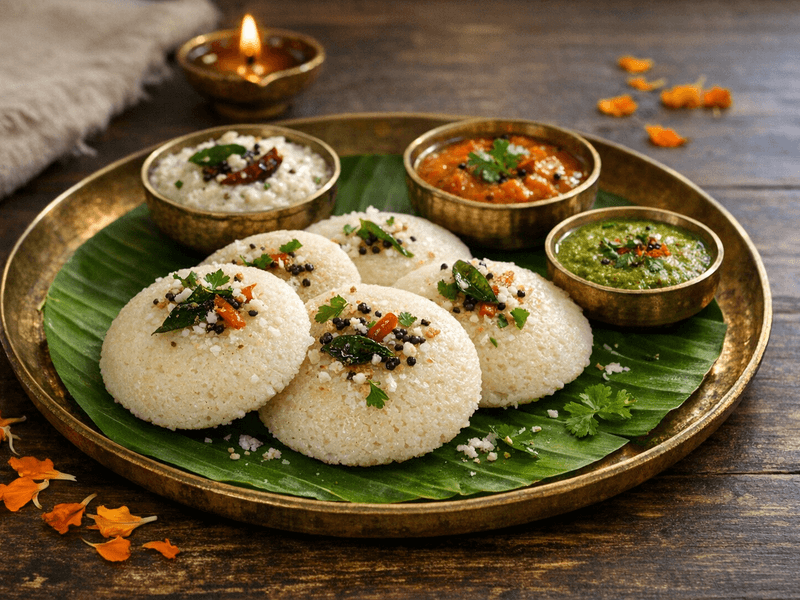
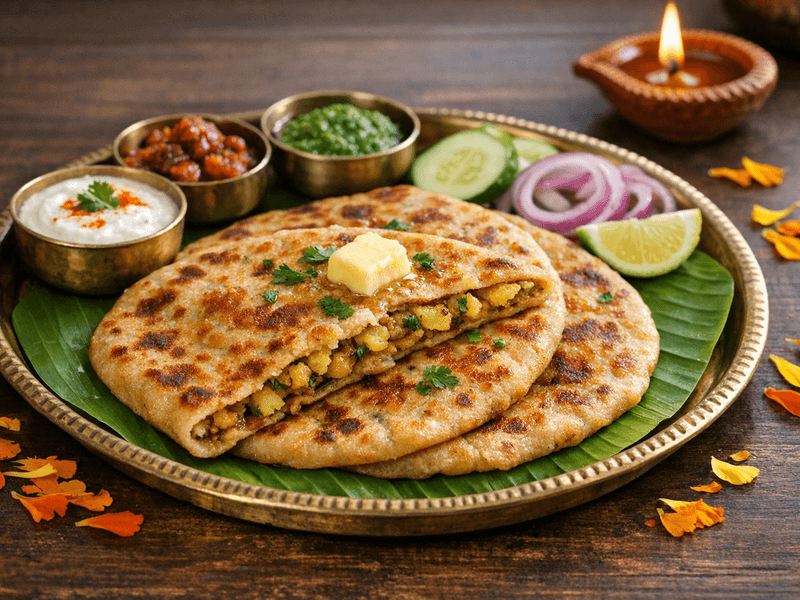
📸 Image coming soon for Plain Dosa with Coconut Chutney
Plain Dosa with Coconut Chutney
Breakfast • India
How to Make Plain Dosa with Coconut Chutney (Traditional & Healthy Version)
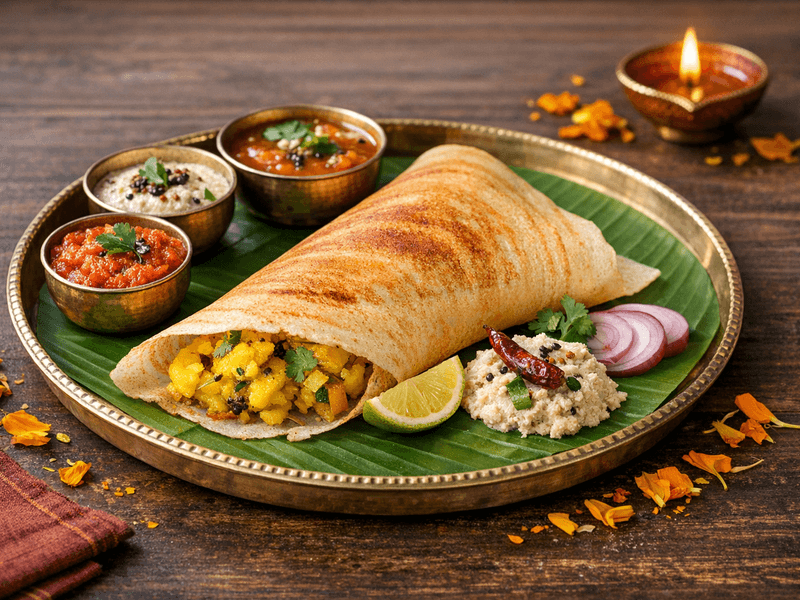
Plain Dosa with Coconut Chutney is an iconic South Indian breakfast that has delighted generations across India. Originating from the states of Tamil Nadu, Karnataka, Andhra Pradesh, and Kerala, this classic combination is cherished for its crispy, golden dosa paired with cool, creamy coconut chutney. Dosa is a fermented crepe made from rice (chawal) and urad dal (split black gram), cooked on a hot tawa (griddle) until delightfully crisp and aromatic. The subtle tang from fermentation and the nutty aroma of the dosa batter complement the smooth, mildly spiced coconut chutney, creating a perfect balance of flavors and textures. Served hot, this dish is a staple during festivals like Pongal and Ugadi, and is an everyday favorite in Indian households. Its simplicity makes it a crowd-pleaser, while its versatility allows for regional variations and healthy adaptations. Whether enjoyed with family on a lazy Sunday morning or served during festive celebrations, Plain Dosa with Coconut Chutney brings a taste of South Indian tradition to your table.
Ingredients(for 2 medium dosas with 2 tablespoons of coconut chutney)
- 1 cup Rice (chawal) (Short or medium-grain, soaked)
- 1/4 cup Urad dal (split black gram) (whole or split, soaked)
- 1/2 tsp Fenugreek seeds (methi dana) (for fermentation)
- to taste Salt (namak)
- as needed Water (for batter consistency)
- 3/4 cup Coconut (nariyal), grated (fresh or frozen)
- 2 tbsp Roasted chana dal (dalia) (for chutney)
- 1 Green chilli (adjust to taste)
- 1/2 inch Ginger (adrak)
- 6-8 Curry leaves (kadi patta, for tempering)
- 1/2 tsp Mustard seeds (rai, for chutney tempering)
- 1-2 tsp Oil (for dosa & chutney tempering)
Instructions
- 1
Rinse rice, urad dal, and fenugreek seeds, then soak together in water for 6 hours or overnight.
6 hours
Longer soaking improves fermentation and texture.
- 2
Drain and grind the soaked mixture to a smooth, thick batter using minimal water. Add salt and mix well.
10 minutes
Use cold water to prevent batter from overheating during grinding.
- 3
Ferment batter in a warm place for 8-12 hours until it doubles and turns bubbly.
8-12 hours
Cover with a lid and keep in a draft-free area for best results.
- 4
Heat a non-stick tawa on medium flame. Pour a ladleful of batter and spread into a thin circle. Drizzle a few drops of oil around the edges.
2 minutes
For extra crispiness, use a cast iron tawa.
Why This Dish is Healthy
This South Indian breakfast is naturally low in saturated fat and contains no preservatives or artificial ingredients. The fermentation process boosts gut health, and the combination of rice and dal provides a complete amino acid profile. Using minimal oil and fresh ingredients ensures the dish remains heart-healthy and suitable for weight management.
Plain Dosa with Coconut Chutney is a wholesome vegetarian breakfast, providing complex carbohydrates from rice, plant-based protein from urad dal, and healthy fats from coconut. Fermentation increases B-vitamins and improves digestibility, while coconut is rich in dietary fiber, manganese, and immune-supporting antioxidants. The chutney contains minimal oil and no refined sugars, making it a light, nourishing option.
Pro Tips
- 💡Tip 1: Ensure batter ferments well for the best taste and texture.
- 💡Tip 2: Clean tawa with a cut onion or cloth before each dosa for even cooking.
- 💡Tip 3: Use minimal oil for a healthier, crispy dosa.
Storage & Serving
Dosa batter can be refrigerated for up to 3 days in an airtight container. Coconut chutney is best consumed fresh but can be stored in the fridge for 1 day. Reheat dosa on a tawa to restore crispiness.
Best served: Breakfast or Lunch
Nutrition Facts
| Nutrient | Per 100g |
|---|---|
| Energy | 160.0 kcal |