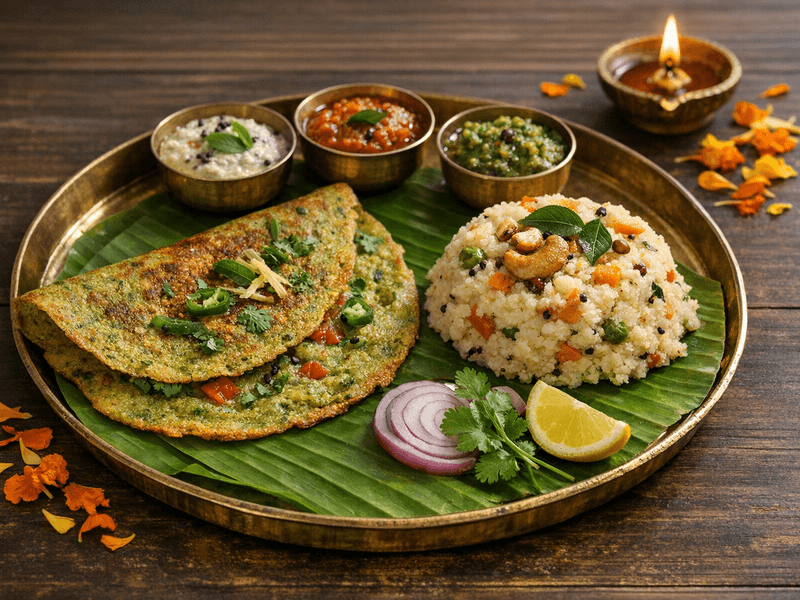
Pesarattu with Upma
Breakfast • India
How to Make Pesarattu with Upma (Traditional & Healthy Version)
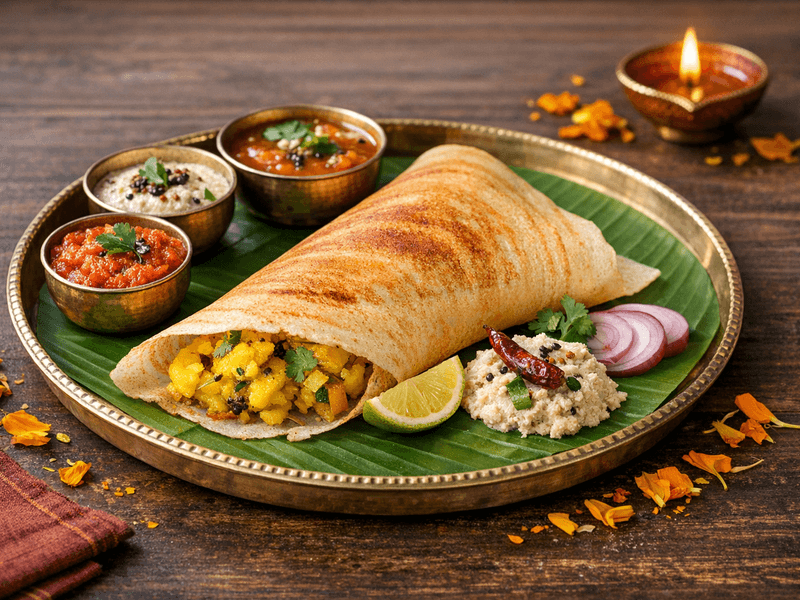
Pesarattu with Upma is a classic South Indian breakfast dish, especially beloved in the Telugu-speaking states of Andhra Pradesh and Telangana. This wholesome delicacy combines two nutritious components: Pesarattu, a savory green gram (moong dal) dosa, and Upma, a light semolina porridge. Traditionally served together, this combo is a popular choice at Andhra homes and tiffin centers, often featured at celebrations and family gatherings. The earthy flavor of moong dal in Pesarattu pairs beautifully with the mildly spiced, fluffy Upma, creating a satisfying meal that is both filling and easy to digest. Pesarattu is recognized for its high protein content and is naturally gluten-free, making it a staple for vegetarians and health-conscious individuals. Upma, known locally as 'uppittu' or 'khara bath', complements Pesarattu by adding texture and a subtle, aromatic taste. This duo is frequently enjoyed during special occasions, such as Sankranti, and is cherished by those seeking a nutritious start to their day. The combination of crispy Pesarattu enveloping soft Upma offers a delightful contrast in flavors and textures, making it a favorite for all age groups.
Ingredients(for 1 large pesarattu with 1/2 cup upma filling)
- 1 cup Whole green gram (moong dal) (soaked overnight)
- 2 tbsp Raw rice (adds crispness) - optional
- 2 Green chilies (hari mirch, chopped)
- 1 inch Ginger (adrak, chopped)
- 1 tsp Cumin seeds (jeera)
- 1 medium Onion (finely chopped, for topping)
- 1/2 cup Suji (semolina/rava) (for upma)
- 1/2 tsp Mustard seeds (rai)
- 8-10 Curry leaves (kadi patta)
- 2 tbsp Green peas (optional, for upma) - optional
- 1 small Carrot (grated, for upma) - optional
- 2 tsp Oil (preferably cold-pressed)
- to taste Salt (namak)
- as needed Water (for batter & upma)
Instructions
- 1
Rinse and soak whole green gram (moong dal) overnight or for at least 6 hours. Drain the water. In a mixer, grind soaked moong dal, raw rice (if using), green chilies, ginger, cumin seeds, and salt with enough water to make a smooth, thick batter.
8 minutes
Do not add too much water; batter should be slightly thicker than dosa batter.
- 2
Heat a non-stick tawa or iron griddle. Pour a ladleful of batter, spreading it in a circular motion to make a thin crepe. Drizzle a few drops of oil around the edges.
3 minutes
For a crispier pesarattu, cook on medium flame and don’t flip until edges lift easily.
- 3
Sprinkle finely chopped onions evenly over the pesarattu and press gently. Optionally, add a few chopped green chilies for extra spice.
2 minutes
Press onions lightly to help them stick to the batter.
- 4
To make Upma: Heat 1 tsp oil in a pan. Add mustard seeds; when they splutter, add curry leaves and sauté. Add green peas and grated carrots (if using); sauté for 2 minutes.
4 minutes
Roasting veggies enhances flavor and nutrition.
Why This Dish is Healthy
This dish is an excellent healthy breakfast for those who seek high protein, low fat, and balanced nutrition. Moong dal is easy to digest and supports muscle maintenance, while upma made with minimal oil and added vegetables provides fiber and essential nutrients. It is naturally gluten-free (if upma is made with gluten-free rava) and can be adapted for various dietary needs, making it ideal for weight management and diabetic-friendly diets.
Pesarattu with Upma is packed with plant-based protein from moong dal and dietary fiber from both dal and vegetables. It is low in saturated fat and contains complex carbohydrates for sustained energy. The dish supplies essential vitamins (like B-complex from dal and semolina) and minerals such as iron, magnesium, and potassium. The addition of vegetables in upma increases antioxidant and micronutrient content, making it a well-balanced meal.
Pro Tips
- 💡Tip 1: Soak moong dal well for a smooth, easy-to-digest batter.
- 💡Tip 2: Use a well-seasoned iron tawa for crispier pesarattu.
- 💡Tip 3: Add finely chopped coriander or mint to the batter for an extra burst of freshness.
Storage & Serving
Pesarattu batter can be refrigerated for up to 2 days. Upma is best consumed fresh but can be stored in an airtight container in the refrigerator for up to 24 hours. Reheat gently before serving. Prepared pesarattu with upma is best enjoyed immediately.
Best served: Breakfast or Lunch
Nutrition Facts
| Nutrient | Per 100g |
|---|---|
| Energy | 320.0 kcal |
| Protein | 6.0 g |
| Carbohydrates | 28.0 g |
| Total Fat | 3.0 g |
| Fiber | 3.0 g |