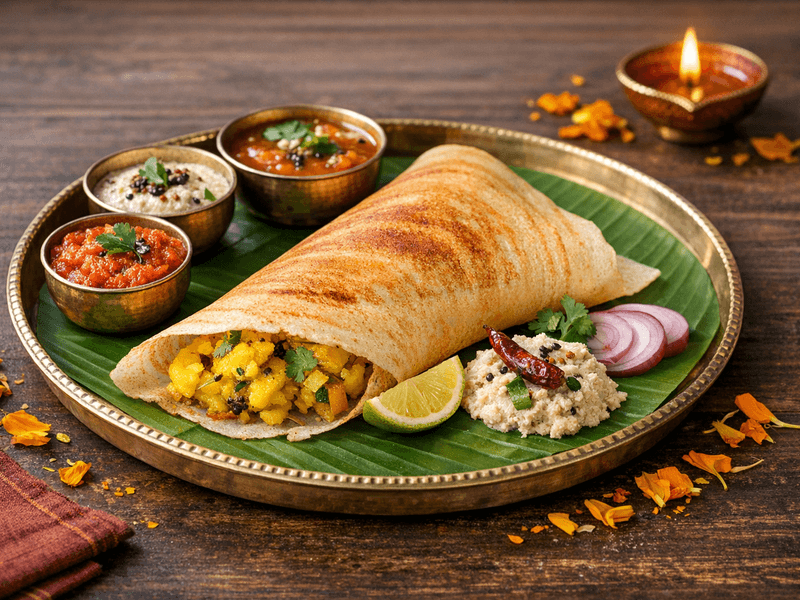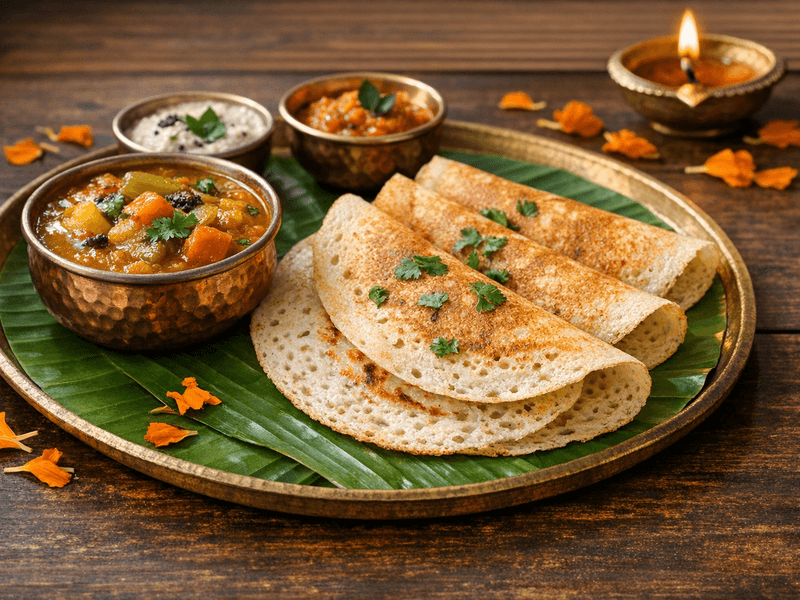
Kerala Dosa with Vegetable Sambar
Breakfast • India
How to Make Kerala Dosa with Vegetable Sambar (Traditional & Healthy Version)
Kerala Dosa with Vegetable Sambar is a beloved South Indian breakfast dish, celebrated for its crisp texture, tangy flavor, and wholesome nutrition. Originating from Kerala, this dish features paper-thin rice and urad dal crepes (dosa) paired with a hearty, spiced vegetable stew called sambar. The dosa is made on a hot tawa, resulting in a golden, lacy delight that complements the rich, tamarind-infused sambar perfectly. Kerala Dosa with Vegetable Sambar is a staple during festivals like Onam and Vishu and is often served in traditional Kerala sadya feasts. It’s a popular choice for breakfast across India, thanks to its balanced nutrition and comforting taste. The use of regional ingredients such as coconut oil, curry leaves (kadi patta), and fresh vegetables highlights the flavors unique to Kerala cuisine. This dish is not only tasty but also light on the stomach, making it ideal for those seeking a nutritious start to their day. Preparing dosa and sambar together brings families together and showcases the diversity and richness of South Indian culinary traditions. Whether enjoyed at home or in a bustling Kerala eatery, this meal is a true celebration of India’s vibrant food heritage.
Ingredients(for 2 medium dosas with 1 cup sambar per person)
- 1 cup Rice (short grain preferred)
- 1/4 cup Urad dal (split black gram)
- 1/2 tsp Fenugreek seeds (methi dana)
- as needed Salt (namak)
- as needed Water
- 2 tsp Coconut oil (for dosa and tempering)
- 1/3 cup Toor dal (arhar dal for sambar)
- 1.5 cups Mixed vegetables (carrot, drumstick, pumpkin, brinjal, beans)
- 1 tbsp Tamarind pulp (imli)
- 1 tbsp Sambar powder
- 1/2 tsp Mustard seeds (rai)
- 8-10 Curry leaves (kadi patta)
- 1/4 tsp Turmeric powder (haldi)
- 1 pinch Asafoetida (hing) - optional
- 1 Green chili (slit, adjust for spice) - optional
Instructions
- 1
Wash and soak rice, urad dal, and fenugreek seeds in water for at least 4 hours. Drain and grind to a smooth batter, adding water gradually. Add salt and let it ferment overnight or 8 hours.
10 minutes active, overnight ferment
Ferment in a warm place for best results. The batter should double in volume.
- 2
Rinse toor dal and cook in a pressure cooker with turmeric powder and 1.5 cups water until soft (2-3 whistles).
10 minutes
Mash dal lightly after cooking for a creamy sambar.
- 3
Chop all vegetables evenly. In a pan, add vegetables, tamarind pulp, sambar powder, salt, and cooked dal. Add water as needed and simmer for 10-12 minutes.
12 minutes
Add quick-cooking vegetables like brinjal later to prevent them from becoming mushy.
- 4
Heat coconut oil in a small pan. Add mustard seeds, curry leaves, asafoetida, and green chili for tempering. Pour tempering over sambar and mix well.
2 minutes
Tempering (tadka) enhances aroma and flavor—don’t skip this step.
Why This Dish is Healthy
This dish is a healthy choice for breakfast because it combines whole grains, protein-rich lentils, and a variety of vegetables, making it high in fiber and beneficial for digestion. The fermentation process boosts nutrient absorption and probiotic content. Minimal oil is used, and the recipe is free from refined ingredients, making it suitable for weight management and heart health.
Kerala Dosa with Vegetable Sambar is a nutritious, balanced meal rich in plant-based protein, fiber, and complex carbohydrates. The dosas provide sustained energy, while the sambar's mixed vegetables supply vitamins A, C, and essential minerals like potassium and magnesium. Fermented batter enhances gut health, and coconut oil adds healthy fats. This meal is naturally low in cholesterol and can be made gluten-free if needed.
Pro Tips
- 💡Tip 1: Use well-fermented batter for the best dosa texture and flavor.
- 💡Tip 2: For an extra-crispy dosa, add a teaspoon of rice flour to the batter before cooking.
- 💡Tip 3: Use seasonal vegetables for sambar to maximize nutrition and taste.
Storage & Serving
Store leftover dosa batter in the refrigerator for up to 2 days. Sambar can be refrigerated in an airtight container for 2-3 days. Reheat before serving.
Best served: Breakfast or Lunch
Nutrition Facts
| Nutrient | Per 100g |
|---|---|
| Energy | 200.0 kcal |