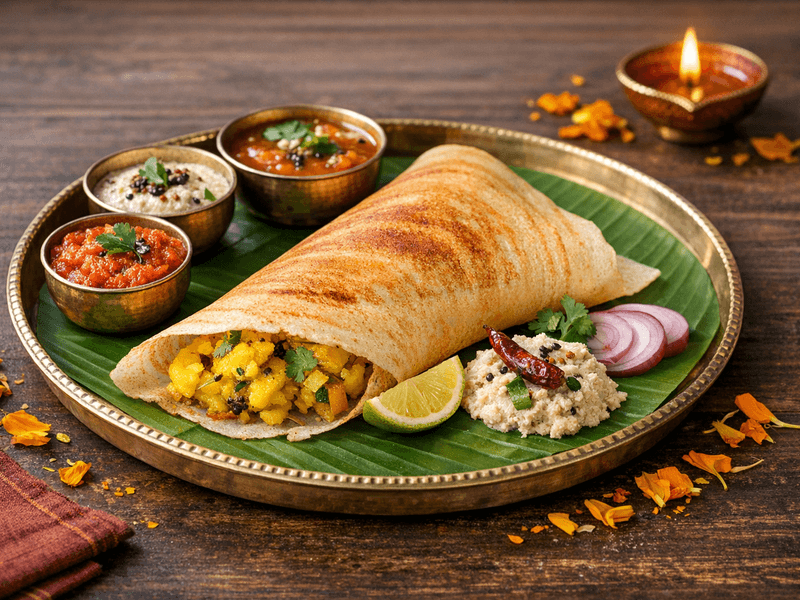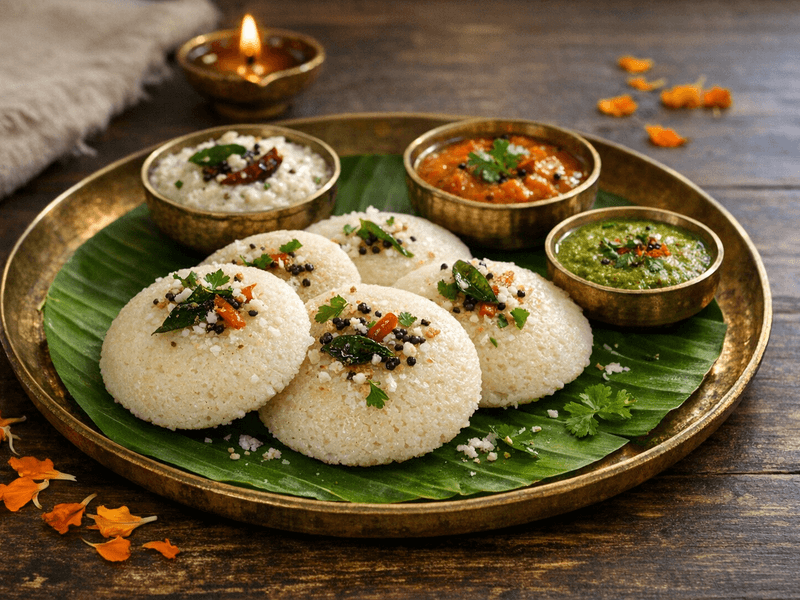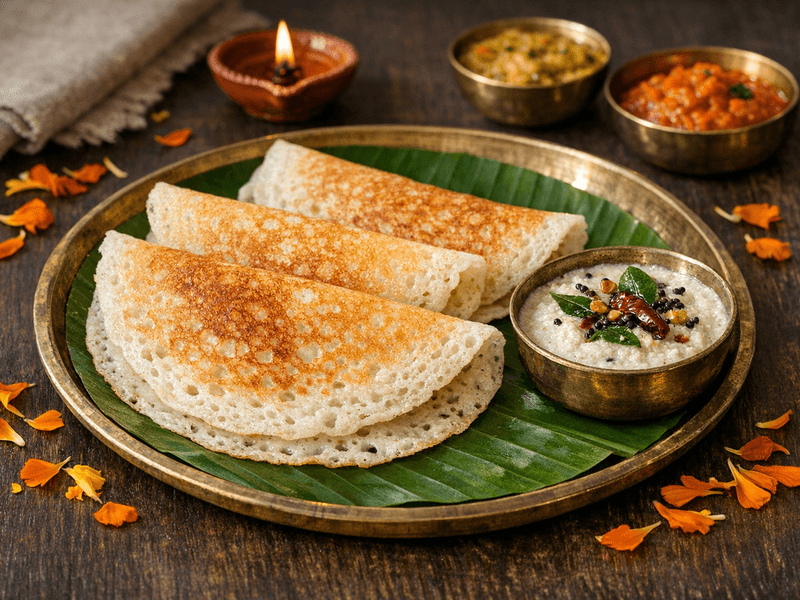
Kerala Dosa with Coconut Chutney
Breakfast • India
How to Make Kerala Dosa with Coconut Chutney (Traditional & Healthy Version)
Kerala Dosa with Coconut Chutney is a cherished South Indian breakfast that brings together the delicate crispness of dosa (fermented rice and urad dal crepes) with the creamy, aromatic flavors of coconut chutney. This classic combination is a staple in Kerala households and is often enjoyed during breakfast or as a light meal. The dosa batter, fermented naturally overnight, results in a dish that is easy to digest and rich in probiotics. The accompanying coconut chutney, made with freshly grated coconut, green chillies, and tempered mustard seeds, reflects the coastal flavors unique to Kerala cuisine. Kerala Dosa is known for its signature golden, lace-like edges and soft center, offering a delightful texture with each bite. The subtle tang from fermentation and the nutty, sweet, and mildly spicy notes of the chutney create a harmonious taste experience. This dish is not only a favorite during everyday breakfasts but also finds its place on festive tables during Onam, Vishu, and family gatherings in Kerala. It's an ideal choice for those seeking wholesome, home-cooked Indian food that is both nourishing and packed with authentic regional flavor.
Ingredients(for 2 medium Kerala Dosas with 3 tbsp Coconut Chutney)
- 1 cup Rice (sona masoori or idli rice) (chawal)
- 1/4 cup Split urad dal (dhuli urad dal)
- 1/2 tsp Fenugreek seeds (methi dana)
- to taste Salt (namak)
- as needed Water (pani)
- 1 tsp per dosa Oil (cold-pressed coconut or sunflower)
- 1 cup Fresh grated coconut (nariyal ka choora)
- 1-2 Green chillies (hari mirch)
- 1/2 inch Ginger (adrak) - optional
- 6-8 Curry leaves (kadi patta)
- 1/2 tsp Mustard seeds (rai)
- a pinch Asafoetida (hing) - optional
- 2 tbsp Yogurt (dahi, for chutney optional) - optional
Instructions
- 1
Wash rice and urad dal separately. Soak rice and fenugreek seeds together in water and urad dal separately for 4-6 hours.
5 minutes
Soaking improves fermentation and batter texture.
- 2
Drain the soaked ingredients. Grind urad dal with some water to a fluffy smooth paste. Grind rice and fenugreek to a slightly coarse paste.
10 minutes
Use minimal water for airy dosa batter.
- 3
Mix both batters, add salt, cover, and ferment overnight (8-10 hours) in a warm place.
10 minutes (excluding fermentation)
Fermentation time may vary based on climate; batter should double in volume.
- 4
For coconut chutney, grind grated coconut, green chillies, ginger, salt, and a little water to a smooth paste. Add yogurt for extra creaminess (optional).
5 minutes
Fresh coconut yields best flavor; adjust chilli to taste.
Why This Dish is Healthy
This recipe uses wholesome, minimally processed ingredients and relies on natural fermentation for better digestion. The combination of rice and urad dal delivers complete protein, supporting muscle health. The chutney adds healthy fats and micronutrients without extra calories. It is filling yet light, making it an excellent choice for energy-boosting breakfasts or light meals while supporting overall wellness.
Kerala Dosa with Coconut Chutney is naturally gluten-free (if made with pure rice) and provides a good balance of complex carbohydrates and plant-based protein. Fermentation increases bioavailability of nutrients and adds beneficial probiotics for gut health. Coconut is rich in dietary fiber, healthy fats, manganese, and antioxidants, while curry leaves supply iron and vitamins. The dish is low in saturated fat if minimal oil is used, making it suitable for heart health and weight management.
Pro Tips
- 💡Tip 1: Use filtered water for soaking and grinding to ensure batter ferments well.
- 💡Tip 2: Spread batter thinly for crispier dosas; thicker batter yields softer dosas.
- 💡Tip 3: Always serve dosas hot with freshly ground chutney for best taste.
Storage & Serving
Fermented batter can be stored in the refrigerator for up to 3 days. Coconut chutney should be consumed within 24 hours and kept refrigerated. Dosas are best enjoyed fresh but can be wrapped and stored for a few hours.
Best served: Breakfast or Lunch
Nutrition Facts
| Nutrient | Per 100g |
|---|---|
| Energy | 180.0 kcal |