Kerala Dosa
Breakfast • India
How to Make Kerala Dosa (Traditional & Healthy Version)
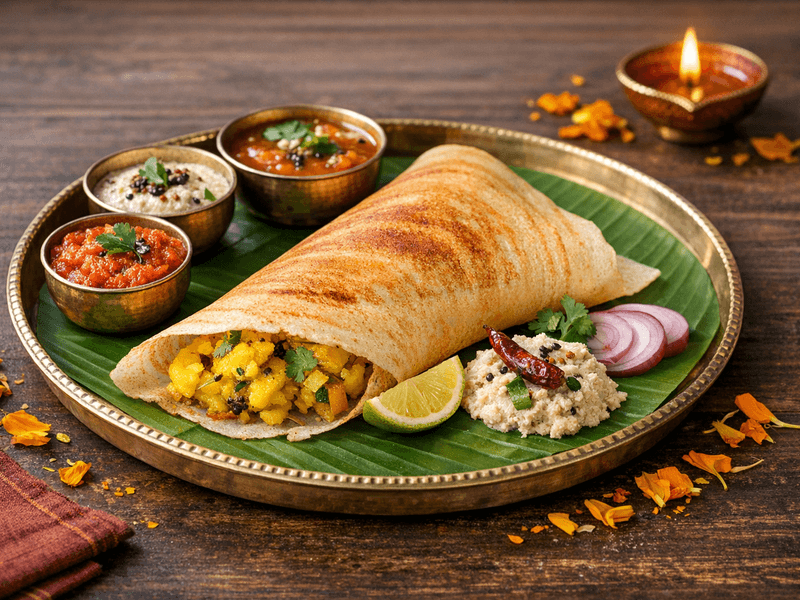
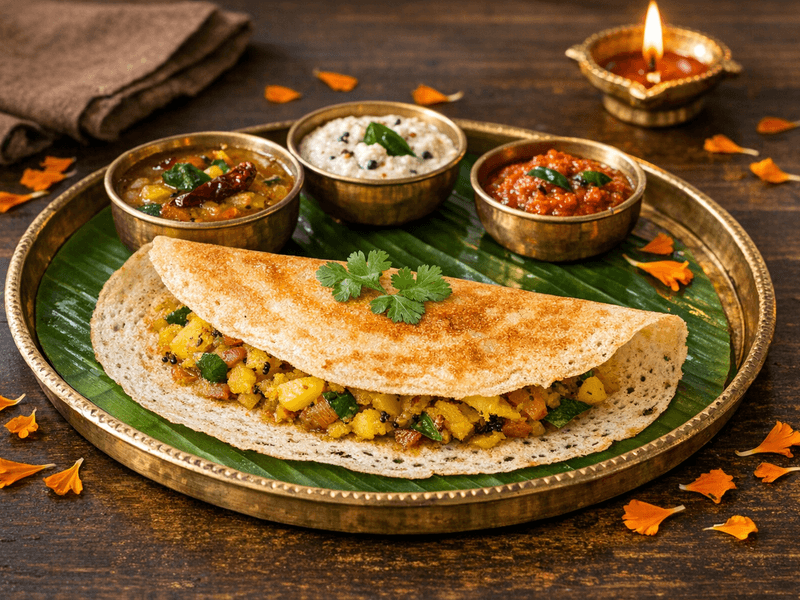
Kerala Dosa, a staple South Indian breakfast, is a cherished dish in Kerala households and across India. Traditionally made with rice and urad dal (split black gram), this dosa is known for its subtle tangy flavor, crisp edges, and soft center. The fermentation process gives Kerala Dosa its signature taste, making it light on the stomach and easy to digest. Served with coconut chutney or sambar, this dish is a common sight at breakfast tables, especially during Onam and Vishu festivals. Kerala Dosa stands out for its simplicity and versatility. Unlike the Masala Dosa of Karnataka or the paper-thin versions from Tamil Nadu, Kerala Dosa is slightly thicker and often enjoyed plain or with a sprinkling of coconut oil. Its golden-brown surface, achieved on a hot tawa (griddle), makes it both visually appealing and delicious. Kerala Dosa is an ideal choice for those seeking wholesome, vegetarian breakfast options packed with authentic regional flavors.
Ingredients(for 2 medium dosas per person)
- 1 cup Raw rice (known locally as pachari)
- 1/4 cup Urad dal (split black gram) (white urad dal)
- 1/2 teaspoon Fenugreek seeds (methi dana)
- 2 tablespoons Cooked rice (adds softness) - optional
- to taste Salt (namak)
- as needed Water (for batter consistency)
- 1-2 teaspoons Coconut oil (for greasing tawa)
Instructions
- 1
Wash and soak the raw rice and urad dal together with fenugreek seeds in water for at least 4-6 hours.
5 minutes (plus soaking)
Use filtered water for the best fermentation.
- 2
Drain and grind the soaked mixture along with cooked rice (if using) into a smooth batter, adding water gradually.
10 minutes
A wet grinder or mixie works best; batter should be slightly thick but pourable.
- 3
Transfer the batter to a large bowl, cover, and let it ferment overnight or for 8-10 hours in a warm place.
8 hours (fermentation)
In winters, place the batter near a warm stove or wrapped in a towel.
- 4
Once fermented, gently mix the batter and add salt to taste. Do not overmix.
2 minutes
The batter should be airy and have small bubbles.
Why This Dish is Healthy
Fermented foods like Kerala Dosa support gut health and metabolism. The use of minimal oil and wholesome, plant-based ingredients ensures this dish is light yet satisfying. By avoiding excessive fats and processed ingredients, Kerala Dosa becomes a heart-healthy breakfast option that fits well into weight management and diabetic diets.
Kerala Dosa is low in fat and provides a good balance of carbohydrates and protein, making it suitable for a healthy breakfast. The fermentation process enhances B vitamins and improves digestibility, while urad dal adds dietary fiber, potassium, and iron. Using coconut oil provides healthy medium-chain triglycerides (MCTs), and the absence of heavy fillings keeps the calorie count moderate. This dosa contains no added sugar and is naturally gluten-free if made with only rice and lentils.
Pro Tips
- 💡Tip 1: Use slightly aged batter for extra tang and softness.
- 💡Tip 2: Grease the tawa lightly to prevent sticking but avoid excess oil.
- 💡Tip 3: Maintain medium flame to cook dosas evenly without burning.
Storage & Serving
Dosa batter can be stored in the refrigerator for up to 3 days. Always ferment before chilling. Cooked dosas are best enjoyed fresh, but leftovers can be wrapped and refrigerated for a day; reheat on a tawa before serving.
Best served: Breakfast or Lunch
Nutrition Facts
| Nutrient | Per 100g |
|---|---|
| Energy | 120.0 kcal |