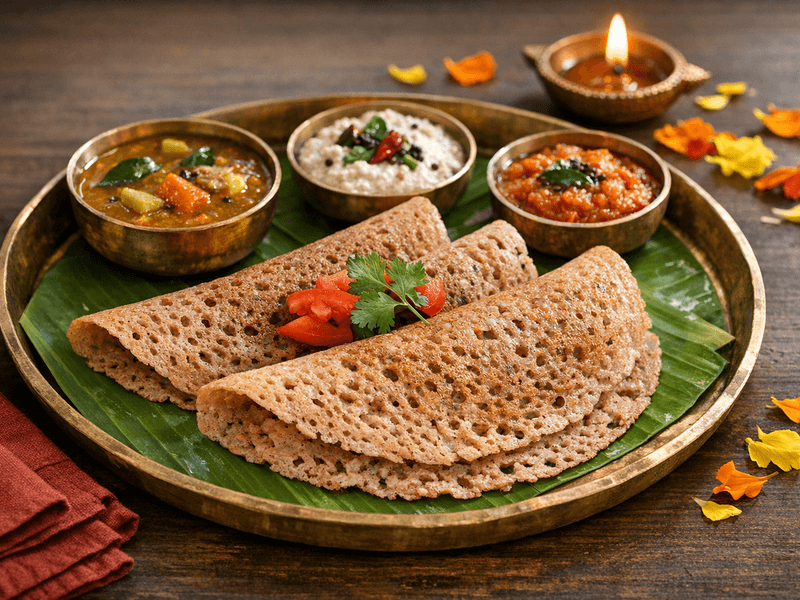
Kerala Brown Rice Dosa
Breakfast • India
How to Make Kerala Brown Rice Dosa (Traditional & Healthy Version)
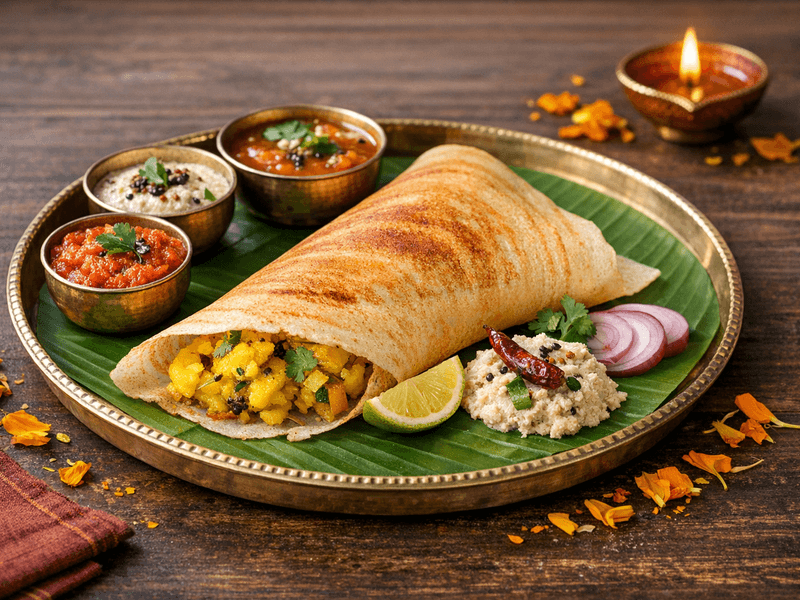
Kerala Brown Rice Dosa is a wholesome, traditional South Indian breakfast dish, celebrated for its nutty flavor, crispy texture, and nutritional value. Originating from the lush, coconut-rich state of Kerala, this dosa uses unpolished brown rice, offering a fiber-rich alternative to the classic white rice dosa. The subtle, earthy notes of Kerala's local ingredients and the fermentation process give this dosa a naturally tangy taste and a light, airy texture. In Kerala households, dosas are more than just food—they are a symbol of sharing and togetherness, often enjoyed hot off the tawa with coconut chutney or sambar. Brown rice dosa is especially favored among health-conscious families and is a staple during Onam and Vishu festivals, reflecting the region’s emphasis on wholesome, natural ingredients. This dosa is a perfect choice for anyone looking to enjoy authentic Indian cuisine while supporting a healthy lifestyle, making it a popular recipe in modern Indian kitchens. Unlike regular dosas, the brown rice version provides a complex carbohydrate base, making it ideal for sustained energy release. Its preparation is a delightful kitchen ritual—a practice that connects generations through the shared art of soaking, fermenting, and cooking on a hot tawa. Whether you’re new to Indian cooking or a seasoned home chef, Kerala Brown Rice Dosa is an easy yet rewarding dish to master.
Ingredients(for 2 medium dosas per serving)
- 1 cup Brown rice (Unpolished, Kerala pachari or matta rice preferred)
- 1/4 cup Urad dal (split black gram) (Whole urad preferred for better fermentation)
- 1/2 tsp Fenugreek seeds (methi) (For flavor and fermentation)
- 2 tbsp Poha (flattened rice) (Adds softness) - optional
- as needed Salt (to taste)
- as needed Water (for soaking and grinding)
- 2 tsp Sesame oil or coconut oil (For greasing the tawa)
Instructions
- 1
Rinse the brown rice, urad dal, and fenugreek seeds separately in water. Soak the brown rice and poha together in a bowl, and the urad dal and fenugreek seeds in another bowl, for at least 6 hours or overnight.
6 hours
Soaking overnight ensures better fermentation and a lighter dosa.
- 2
Drain the soaked ingredients. Grind urad dal and fenugreek seeds with minimal water to a fluffy, smooth batter. Then grind brown rice and poha to a slightly coarse texture. Combine both batters in a large bowl.
15 minutes
Use chilled water to prevent the mixer from heating, which can affect fermentation.
- 3
Add salt and mix the batters thoroughly with clean hands. Cover and ferment in a warm place for 8-10 hours or until the batter rises and turns slightly bubbly.
8-10 hours
In cooler climates, ferment inside the oven with the light on.
- 4
Once fermented, gently stir the batter. Adjust consistency with a little water; it should be pourable but not runny.
2 minutes
Do not overmix the fermented batter as it can deflate.
Why This Dish is Healthy
This dosa is a healthy breakfast choice because it uses whole brown rice, which is higher in fiber and nutrients compared to polished white rice. The fermentation process aids in digestion and increases the absorption of vitamins and minerals. Using minimal oil and no refined flour keeps calories in check. It's filling, energizing, and supports weight management, blood sugar control, and digestive wellness—perfect for anyone tracking their calories or aiming for a balanced diet.
Kerala Brown Rice Dosa is packed with complex carbohydrates, dietary fiber, and plant-based protein from urad dal, making it a sustained energy source. Brown rice provides B vitamins, magnesium, and antioxidants, while urad dal boosts iron and calcium content. Fermentation enhances bioavailability of nutrients and promotes gut health. Sesame or coconut oil adds healthy fats without excess calories, supporting heart health. This dosa is naturally gluten-free, cholesterol-free, and suitable for vegetarian diets.
Pro Tips
- 💡Tip 1: For the best fermentation, use a ceramic or glass bowl and keep the batter in a warm spot.
- 💡Tip 2: If the batter is too thick, add water gradually to reach the right pouring consistency.
- 💡Tip 3: Always use a well-heated tawa and spread the batter quickly for even, crisp dosas.
Storage & Serving
Fermented batter can be stored in the refrigerator for up to 3 days. Stir well before use. Cooked dosas are best enjoyed hot but can be refrigerated for 1 day and reheated on the tawa.
Best served: Breakfast or Lunch
Nutrition Facts
| Nutrient | Per 100g |
|---|---|
| Energy | 110.0 kcal |