Dosa with Coconut Chutney
Breakfast • India
About Dosa with Coconut Chutney
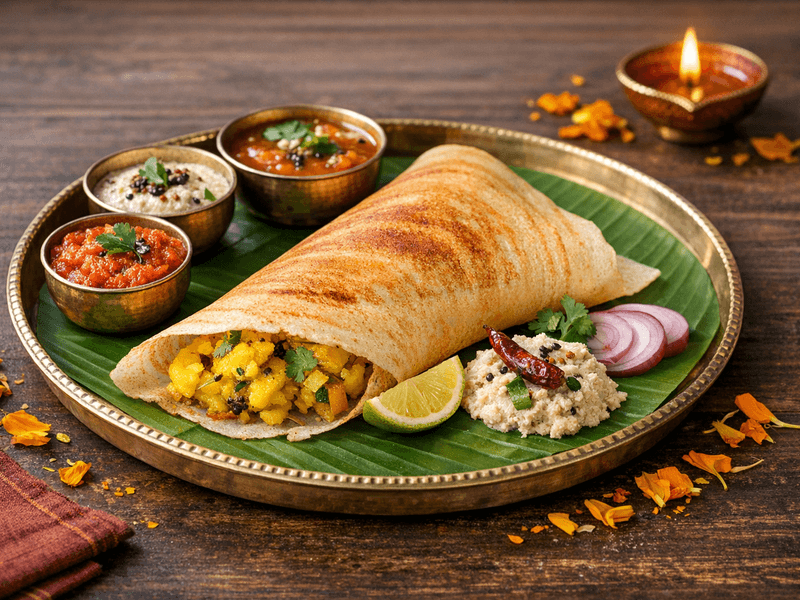
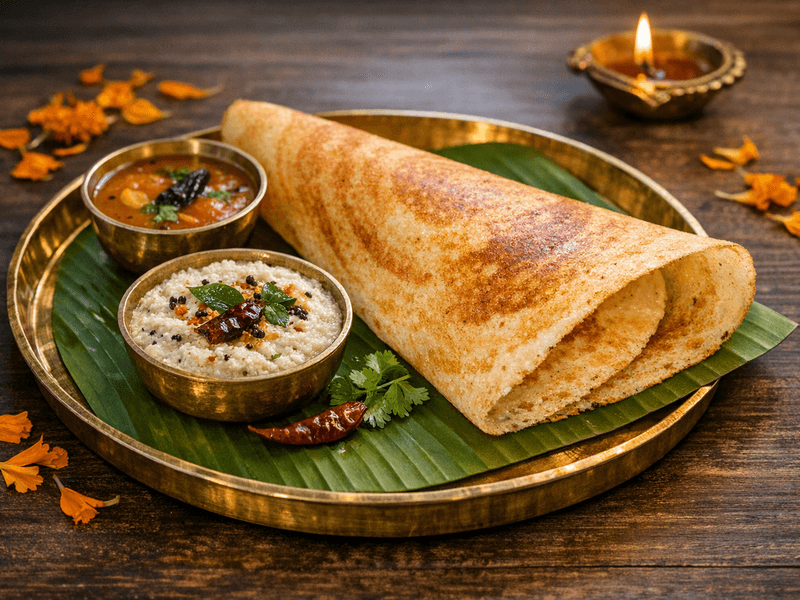
Plain dosa served with coconut chutney — a classic South Indian breakfast combo with fermented batter.
How to Make Dosa with Coconut Chutney (Traditional & Healthy Version)
Dosa with Coconut Chutney is a beloved Indian breakfast classic, known for its crispy texture and delicious pairing with creamy chutney. Originating from South India, dosa is a thin, golden crepe made from fermented rice and urad dal (black gram), expertly cooked on a tawa. Coconut chutney, with its fresh grated coconut, roasted chana dal, and aromatic tempering of mustard seeds and curry leaves, perfectly complements the dosa’s mild flavors. This wholesome dish is not just a staple in Tamil Nadu, Kerala, Karnataka, and Andhra Pradesh, but has become a global favorite, often featured in Indian households and restaurants. Its versatility makes it suitable for festive mornings like Pongal or casual family breakfasts, and its combination of taste and nutrition is unmatched. The fermentation process enhances flavor and digestibility, making it a healthy choice for all age groups. Dosa with Coconut Chutney is enjoyed for its crispiness, softness, and the burst of coconut flavor, making every meal memorable.
Ingredients(for 1 dosa with a small bowl of coconut chutney)
- 1 cup Rice (chawal)
- 1/4 cup Urad dal (black gram)
- 1/2 tsp Fenugreek seeds (methi dana)
- 1 tsp Salt (namak)
- as needed Water (for soaking and batter)
- 1 tbsp Oil (for greasing tawa)
- 1/2 cup Fresh grated coconut (nariyal)
- 2 tbsp Roasted chana dal (daliya)
- 1 Green chilli (hari mirch)
- 1/2 inch Ginger (adrak)
- 6-8 Curry leaves (kadi patta)
- 1/2 tsp Mustard seeds (rai)
- a pinch Asafoetida (hing) - optional
- 1/2 tsp Salt (for chutney)
Instructions
- 1
Wash rice, urad dal, and fenugreek seeds. Soak in water for at least 6 hours or overnight.
5 minutes
Soaking overnight enhances fermentation and digestibility.
- 2
Drain water and grind soaked rice and dal into a smooth batter using minimal water. Add salt and mix well.
5 minutes
Consistency should be pourable, not runny.
- 3
Ferment the batter in a warm place for 8 hours or until it doubles in volume.
8 hours
Fermentation improves taste and nutritional value.
- 4
For coconut chutney: Blend grated coconut, roasted chana dal, green chilli, ginger, salt, and water to a smooth paste.
5 minutes
Adjust water for desired thickness.
Why This Dish is Healthy
This dish is a healthy choice due to its low saturated fat content, balanced macros, and natural ingredients. The fermentation process enhances digestibility and gut health. Coconut chutney adds plant-based fats and fiber, supporting heart health and sustained energy. No refined flour or artificial additives are used, making it a wholesome breakfast for calorie-conscious individuals.
Dosa with Coconut Chutney is rich in complex carbohydrates, protein, and dietary fiber from rice and urad dal. Fermentation increases B vitamins, improves mineral absorption, and supports gut health. Coconut offers healthy fats, minerals like magnesium and potassium, and antioxidants. Ginger and green chillies add anti-inflammatory properties. This meal is gluten-free and can be adapted to vegan diets, making it ideal for healthy Indian breakfasts.
Pro Tips
- 💡Tip 1: Ferment batter overnight in a warm spot for best texture.
- 💡Tip 2: Use a non-stick tawa for easier dosa making and less oil.
- 💡Tip 3: Prepare chutney just before serving for maximum freshness.
Storage & Serving
Store dosa batter in the refrigerator for up to 3 days. Chutney is best consumed fresh, but can be refrigerated for 24 hours in an airtight container. Avoid storing cooked dosa as it loses crispiness.
Best served: Breakfast or Lunch
Nutrition Facts
| Nutrient | Per 100g |
|---|---|
| Energy | 180.0 kcal |
| Protein | 5.0 g |
| Carbohydrates | 26.0 g |
| Total Fat | 6.0 g |
| Fiber | 2.0 g |