Milk Kesari
Beverages • India
How to Make Milk Kesari (Traditional & Healthy Version)
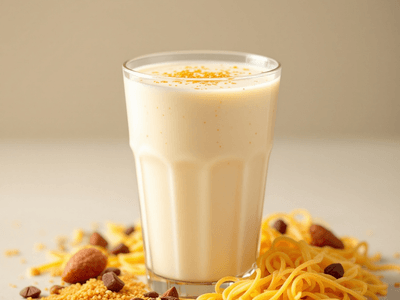
Milk Kesari, also known as Paal Kesari in South India, is a classic Indian sweet beverage renowned for its creamy texture, vibrant saffron hue, and delicate aroma of cardamom. Originating from the southern states of Tamil Nadu and Karnataka, Milk Kesari is traditionally prepared during special occasions, festivals like Diwali and Navaratri, and family gatherings. Unlike the regular Kesari (rava kesari) made with water, Milk Kesari is enriched with wholesome milk, lending it a rich mouthfeel and nutritional boost. The dish combines roasted suji (semolina), pure milk (doodh), a touch of ghee, and aromatic spices such as saffron (kesar) and cardamom (elaichi). The addition of golden raisins and crunchy cashews makes every sip an indulgent experience. While it is decadent in taste, this healthy version uses less sugar and ghee, focusing on maintaining authentic flavors while being mindful of calories. Milk Kesari’s smooth texture and subtle sweetness make it a delightful treat for all ages, perfect for festive mornings or as a comforting drink on cool evenings.
Ingredients(for 1 glass (about 200 ml))
- 2 cups Full-fat milk (doodh)
- 1/4 cup Fine semolina (suji/rava)
- 1 tablespoon Pure ghee (desi ghee)
- 2 tablespoons Sugar (adjust to taste)
- 1/4 teaspoon Cardamom powder (elaichi)
- 10-12 strands Saffron strands (kesar)
- 6-8 Cashew nuts (kaju, chopped)
- 8-10 Raisins (kishmish)
- 2 tablespoons Warm milk (for soaking saffron)
- 1/2 teaspoon Rose water (optional) - optional
Instructions
- 1
Soak saffron (kesar) strands in 2 tablespoons of warm milk and set aside for at least 10 minutes to allow the flavor and color to infuse.
10 minutes
Use freshly boiled milk for a deeper saffron infusion.
- 2
Heat ghee in a thick-bottomed kadhai or non-stick pan. Add chopped cashews and raisins, sauté until cashews turn golden and raisins puff up. Remove and keep aside.
3 minutes
Roast on low flame to avoid burning and bring out maximum flavor.
- 3
In the same pan, add semolina (suji) and roast on low heat until it emits a nutty aroma and turns light golden. Stir continuously to prevent lumps or burning.
4 minutes
Even roasting ensures a smooth, lump-free Kesari.
- 4
Gently pour in the milk while stirring to avoid lumps. Mix well, ensuring semolina absorbs the milk evenly.
2 minutes
Add milk in batches for best texture.
Why This Dish is Healthy
This Milk Kesari recipe is a healthy choice due to its use of wholesome ingredients like milk, suji, and nuts, offering a good balance of protein, carbs, and healthy fats. Unlike traditional versions loaded with sugar and ghee, this recipe keeps both to a minimum, making it suitable for calorie-conscious individuals. It’s naturally gluten-free (if gluten-free suji is used) and can be adapted for various dietary needs.
Milk Kesari provides a balanced mix of proteins from milk, healthy carbohydrates from semolina, and healthy fats from ghee and nuts. Milk is rich in calcium, vitamin D, and B12, supporting bone health and immunity. The nuts and raisins provide micronutrients like magnesium, potassium, and iron. Saffron and cardamom are natural antioxidants, aiding digestion and reducing inflammation. By moderating ghee and sugar, this version remains light on calories while delivering essential nutrients.
Pro Tips
- 💡Tip 1: Always use full-fat or fresh cow’s milk for the richest flavor.
- 💡Tip 2: Constant stirring while adding milk prevents lumps and ensures a smooth drink.
- 💡Tip 3: For a vegan version, substitute milk with almond or oat milk and use coconut oil in place of ghee.
Storage & Serving
Store leftover Milk Kesari in an airtight container in the refrigerator for up to 2 days. Reheat gently on a low flame, adding a splash of milk to restore creaminess before serving.
Best served: Breakfast or Lunch
Nutrition Facts
| Nutrient | Per 100g |
|---|---|
| Energy | 270.0 kcal |