Chai
Beverages • India
How to Make Chai (Traditional & Healthy Version)
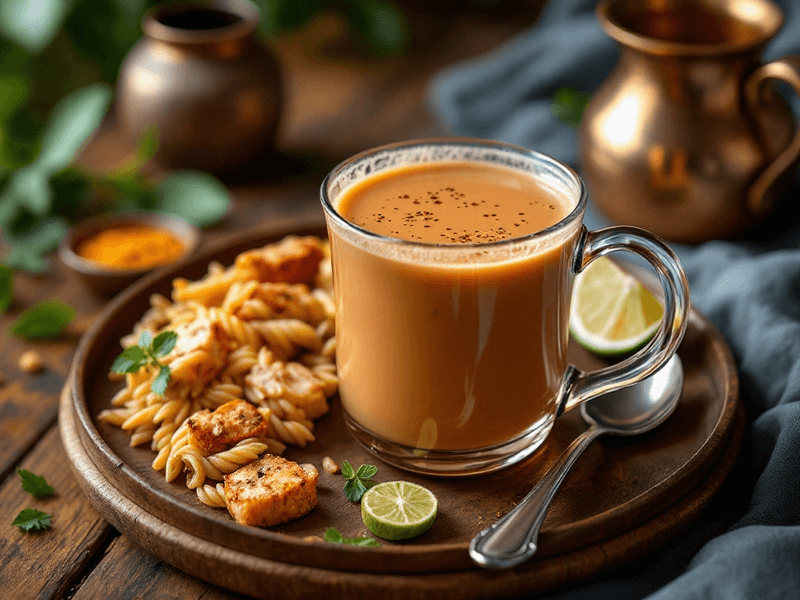
Chai, the quintessential Indian tea, is more than just a beverage — it is an emotion deeply woven into the fabric of daily life across India. Originating from the heartland of India, chai has evolved over centuries, with each region lending its unique touch to this invigorating drink. Made by brewing robust black tea leaves (chai patti) with aromatic spices such as adrak (ginger), elaichi (cardamom), and dalchini (cinnamon), chai is often enjoyed with friends and family, making every gathering lively and comforting. The rich aroma and warm flavors make it a popular choice during monsoons, chilly winters, and festive mornings. Chai is commonly served in kullads (earthen cups) at roadside chai tapris, adding to its rustic charm and cultural significance. Its adaptability allows for endless variations, from the sweet and creamy Punjabi chai to the spicy masala chai of Mumbai. Consumed across India, chai acts as a pick-me-up snack, especially during festivals like Diwali, Holi, or simple everyday breaks, making it a symbol of togetherness and hospitality. Opting for a health-conscious approach, this recipe reduces sugar and uses low-fat milk, ensuring you savor the traditional taste without guilt.
Ingredients(for 1 medium cup chai per person)
- 1 cup Water (pani)
- 1 cup Low-fat milk (doodh)
- 2 teaspoons Black tea leaves (chai patti)
- 1 inch piece, crushed Fresh ginger (adrak)
- 2, crushed Cardamom pods (elaichi)
- 1 small stick Cinnamon stick (dalchini) - optional
- 2, optional Cloves (laung) - optional
- 2, crushed Black peppercorns (kali mirch) - optional
- 1-2 teaspoons Sugar (adjust as per taste) - optional
- 2 leaves Tulsi leaves (optional, for herbal flavor) - optional
Instructions
- 1
In a saucepan, add water and bring to a gentle boil on medium flame.
3 minutes
Use fresh, filtered water for best flavor.
- 2
Add crushed ginger, cardamom, cinnamon, cloves, black peppercorns, and tulsi leaves. Allow the spices to simmer for 5-6 minutes until fragrant.
6 minutes
Crush spices just before use to release maximum aroma.
- 3
Add black tea leaves (chai patti) and simmer for another 2-3 minutes.
3 minutes
Do not over-boil the tea leaves to prevent bitterness.
- 4
Pour in low-fat milk (doodh) and bring the mixture to a gentle boil. Reduce heat and let it simmer for 5 minutes.
5 minutes
Stir occasionally to avoid milk sticking to the bottom.
Why This Dish is Healthy
By using low-fat milk and minimal sugar, this chai recipe is lighter on calories and fat compared to traditional versions. The inclusion of Indian spices like adrak and elaichi not only enhances taste but also provides health benefits such as improved immunity and digestion. This makes it a smart option for those watching their weight, blood sugar, or seeking a wholesome, energizing beverage.
This healthy chai recipe uses low-fat milk, reducing saturated fat content while retaining calcium and protein. The spices such as ginger and cardamom offer natural antioxidants, support digestion, and add micronutrients like magnesium and potassium. Black tea contains flavonoids that may help heart health and boost metabolism. A controlled sugar portion keeps calorie content in check, making this an excellent choice for balanced nutrition.
Pro Tips
- 💡Tip 1: Always use fresh spices for the most aromatic chai.
- 💡Tip 2: Simmer spices before adding tea leaves to extract maximum flavor.
- 💡Tip 3: Serve chai in kullads for an authentic taste and eco-friendly experience.
Storage & Serving
Chai is best enjoyed fresh and hot. Leftover chai can be stored in a covered container in the refrigerator for up to 24 hours and reheated gently before serving.
Best served: Breakfast or Lunch
Nutrition Facts
| Nutrient | Per 100g |
|---|---|
| Energy | 90.0 kcal |
| Protein | 2.0 g |
| Carbohydrates | 12.0 g |
| Total Fat | 3.0 g |
| Fiber | 0.1 g |
| Sugars | 6.5 g |
| Sodium | 38.0 mg |
| Potassium | 110.0 mg |
| Cholesterol | 8.0 mg |
| Vitamin A | 55.0 IU |
| Vitamin C | 0.5 mg |
| Calcium | 120.0 mg |
| Iron | 0.1 mg |
| Magnesium | 12.0 mg |
| Zinc | 0.4 mg |
| Phosphorus | 95.0 mg |
| Vitamin D | 0.1 IU |
| Vitamin B1 (Thiamine) | 0.0 mg |
| Vitamin B2 (Riboflavin) | 0.2 mg |
| Vitamin B3 (Niacin) | 0.1 mg |
| Vitamin B6 | 0.0 mg |
| Vitamin B12 | 0.4 µg |
| Folate | 5.0 µg |