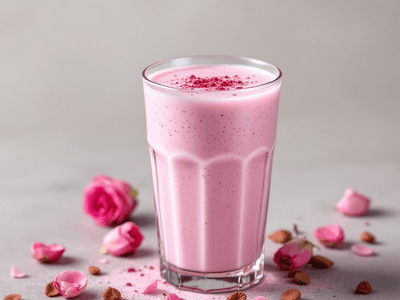
Rose Milk
South India • halal_safe
How to Make Rose Milk (Traditional & Healthy Version)
Rose Milk, locally known as Gulab Doodh, is a refreshing and aromatic beverage cherished across South India, especially in Tamil Nadu. This soothing drink combines the delicate flavor of rose with creamy milk, offering a cooling respite during the hot summer months. Traditionally served in homes and at roadside stalls (thanni kadai), Rose Milk has become synonymous with South Indian hospitality and is often enjoyed during festivals, celebrations, and family gatherings. Its beautiful pink hue and subtle floral notes make Rose Milk a favorite among both children and adults. The drink is not only visually appealing but also packs a gentle sweetness, making it an ideal alternative to heavier, sugary desserts. Rose Milk is a popular choice during regional festivals like Pongal and Tamil New Year, where it is served as a welcome drink to guests. With easy-to-find ingredients and a simple preparation method, this beverage is perfect for those seeking an authentic taste of South India while being mindful of their health and calorie intake. Opting for natural rose syrup and low-fat milk ensures that Rose Milk remains a health-conscious choice, retaining all the traditional flavors without excess calories. Whether enjoyed for breakfast, lunch, or as a mid-day refresher, Rose Milk brings a touch of Indian festivity and flavor to your everyday diet.
Ingredients(for 1 tall glass (200 ml) per serving)
- 2 cups Full-fat milk (doodh)
- 3 tablespoons Rose syrup (gulab sharbat)
- 1 teaspoon Sabja seeds (basil seeds) - optional
- 1/4 teaspoon Cardamom powder (elaichi) - optional
- 1 tablespoon Honey (shahad) - optional
- as needed Ice cubes - optional
- for garnish Rose petals (fresh or dried) - optional
- 2 cups Low-fat milk (for weight loss version) - optional
- 1 teaspoon Stevia (for diabetic-friendly version) - optional
- 1 scoop Whey protein powder (for high protein version) - optional
Instructions
- 1
Soak sabja (basil) seeds in water for 10 minutes until they swell. Drain and set aside.
10 minutes
Use cold water for faster swelling.
- 2
Boil milk (doodh), then cool it completely. Refrigerate for a chilled drink.
15 minutes
Skim off any malai (cream) for a lighter texture.
- 3
Mix rose syrup (gulab sharbat) into the chilled milk and stir well until fully combined.
2 minutes
Adjust syrup quantity for desired sweetness and color.
- 4
Add cardamom powder (elaichi) and honey (shahad) to enhance flavor and natural sweetness.
1 minute
Skip honey for a lower calorie version.
Why This Dish is Healthy
This Rose Milk recipe is a healthy choice because it relies on natural ingredients like milk, sabja seeds, and honey for flavor and nutrition. The absence of artificial colors or preservatives ensures purity, while the option to use low-fat milk and natural sweeteners helps keep calories in check. Sabja seeds provide fiber and healthy fats, supporting digestion and satiety. With protein from milk, antioxidants from cardamom, and hydrating properties, Rose Milk is an ideal refreshment for those tracking calories and aiming for balanced nutrition.
Rose Milk provides a good source of calcium, protein, and vitamins from milk, making it a nutritious beverage. Sabja seeds add fiber, omega-3 fatty acids, and aid digestion. Using honey or natural sweeteners instead of refined sugar helps lower the glycemic index, making it suitable for health-conscious individuals. Cardamom offers antioxidants and supports gut health, while rose syrup (in moderation) brings a gentle sweetness and aroma. The drink is low in saturated fat when made with low-fat milk, and can be adapted for higher protein or diabetic-friendly diets.
Pro Tips
- 💡Tip 1: Use homemade rose syrup for the purest flavor and fewer additives.
- 💡Tip 2: Always chill the milk before mixing to enhance the refreshing taste.
- 💡Tip 3: Soak sabja seeds well in advance for optimal texture and cooling effect.
Storage & Serving
Store prepared rose milk in the refrigerator for up to 24 hours. Stir well before serving as sabja seeds may settle. Best consumed fresh for optimal flavor and nutrition.
Best served: Breakfast or Lunch
Nutrition Facts
| Nutrient | Per 100g |
|---|---|
| Energy | 180.0 kcal |