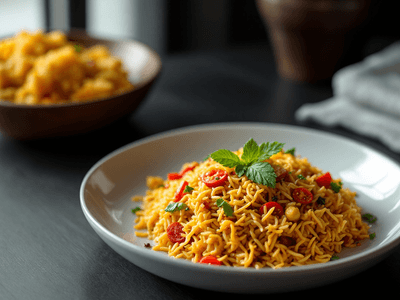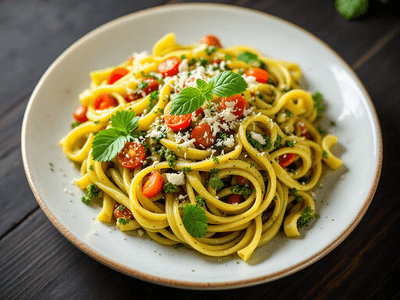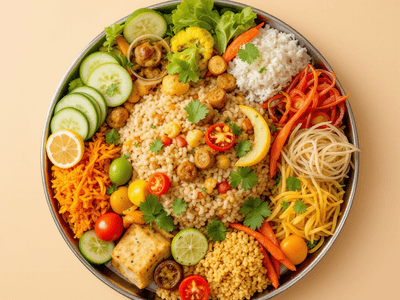
Mixed Vegetable Thali
Global • veg
How to Make Mixed Vegetable Thali (Traditional & Healthy Version)
Mixed Vegetable Thali is a vibrant and wholesome Indian lunch platter that brings together a variety of regional sabzis (vegetable curries), dal, roti (flatbread), steamed rice, salad, and homemade dahi (curd). Originating from the traditional Indian practice of serving balanced meals on a single plate, thali is a staple across India, especially in family gatherings and festive occasions. The thali not only showcases India's diversity but also ensures a mindful balance of nutrients, colors, and flavors. Each component is thoughtfully selected to provide a burst of taste—spicy, tangy, and mildly sweet notes—making it a delightful experience for the palate. A Mixed Vegetable Thali is often enjoyed during festivals like Holi and Navratri, where families come together to celebrate with a variety of seasonal vegetables, pulses, and grains. Its flexibility allows home cooks to use locally available produce, making it both practical and sustainable. The thali is also a symbol of Indian hospitality, where every guest is served a hearty, nutrient-rich meal that reflects the warmth and generosity of Indian culture. Whether for a festive lunch or a nourishing everyday meal, this thali brings India's culinary heritage to your table.
Ingredients(for 1 thali plate per person (includes 2 rotis, 1/2 cup sabzi, 1/2 cup dal, 1/2 cup rice, 1/4 cup salad, 1/4 cup curd))
- 2 cups Mixed vegetables (carrot, beans, peas, cauliflower, potato) (chopped, seasonal)
- 1 medium Onion (finely chopped, pyaz)
- 1 large Tomato (finely chopped, tamatar)
- 1 tablespoon Ginger-garlic paste (adrak-lehsun)
- 1/2 teaspoon Turmeric powder (haldi)
- 1 teaspoon Cumin seeds (jeera)
- 1 cup Atta (whole wheat flour) (for roti)
- 1/2 cup Split yellow moong dal (washed)
- 1 cup Steamed rice (chawal)
- 1/2 cup Low-fat curd (dahi)
- 2 tablespoons Fresh coriander leaves (hara dhania, chopped)
- to taste Salt (namak)
- 2 teaspoons Mustard oil or sunflower oil
- 1/2 cup Mixed salad (cucumber, carrot, onion, tomato) (sliced)
Instructions
- 1
Prepare all vegetables by washing, peeling, and chopping them into small pieces. Rinse dal and soak for 10 minutes. Knead atta with water to form a soft dough for rotis.
10 minutes
Use seasonal veggies for best flavor and nutrients.
- 2
Heat 1 teaspoon oil in a kadhai. Add cumin seeds, let them splutter, then add onions and sauté until golden. Add ginger-garlic paste and sauté till fragrant.
3 minutes
Keep the flame medium to prevent burning the spices.
- 3
Add chopped tomatoes, turmeric, and salt. Cook until tomatoes turn soft. Add chopped mixed vegetables, stir well, and cover. Cook on low flame till soft but not mushy.
7 minutes
Sprinkle a little water if veggies start sticking.
- 4
Meanwhile, pressure cook soaked moong dal with turmeric, salt, and 1.5 cups water for 2 whistles. Temper the cooked dal with 1 teaspoon oil, cumin, and chopped coriander.
8 minutes
For extra flavor, add a pinch of asafoetida (hing) to the tadka.
Why This Dish is Healthy
This thali offers a perfect balance of macro and micronutrients, supporting sustained energy and satiety. It’s high in fiber, moderate in protein, and includes good carbohydrates, making it suitable for weight management and a heart-healthy diet. The use of whole grains, legumes, and seasonal vegetables ensures that the meal is both nourishing and filling without excess calories.
Mixed Vegetable Thali is packed with essential vitamins such as vitamin A and C from fresh vegetables, protein from dal and curd, complex carbohydrates from whole wheat roti and rice, and healthy fats from minimal oil usage. The inclusion of salad and curd adds digestive enzymes, calcium, and fiber, supporting gut health and immunity. This meal is naturally rich in antioxidants and low in saturated fats when prepared with minimal oil.
Pro Tips
- 💡Tip 1: Use a wide variety of seasonal vegetables for maximum nutrition.
- 💡Tip 2: Knead atta with a spoon of curd for softer rotis.
- 💡Tip 3: Prepare dal and sabzi with minimal oil for a lighter thali.
Storage & Serving
Store leftover sabzi and dal in airtight containers in the refrigerator for up to 2 days. Rotis are best consumed fresh, but can be wrapped in a cloth and kept for a few hours. Reheat sabzi and dal before serving.
Best served: Breakfast or Lunch
Nutrition Facts
| Nutrient | Per 100g |
|---|---|
| Energy | 500.0 kcal |
| Protein | 15.0 g |
| Carbohydrates | 80.0 g |
| Total Fat | 15.0 g |