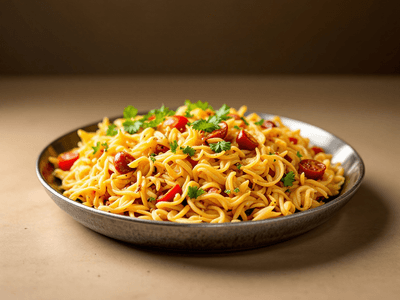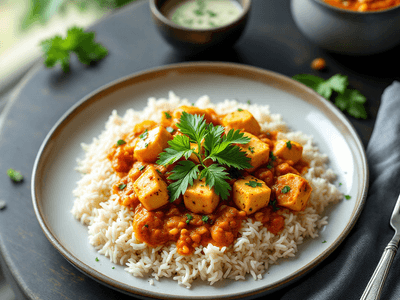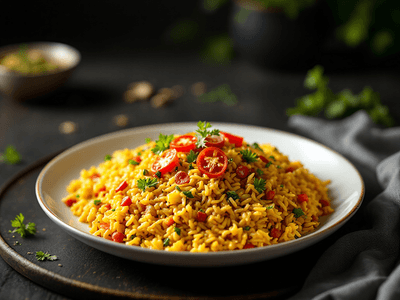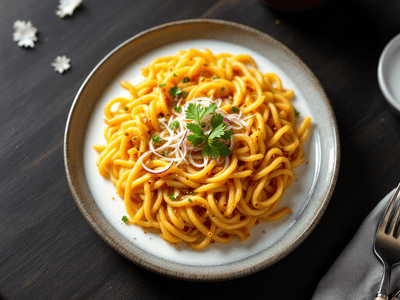
Cauliflower and Potato Curry
Lunch • India
How to Make Cauliflower and Potato Curry (Traditional & Healthy Version)
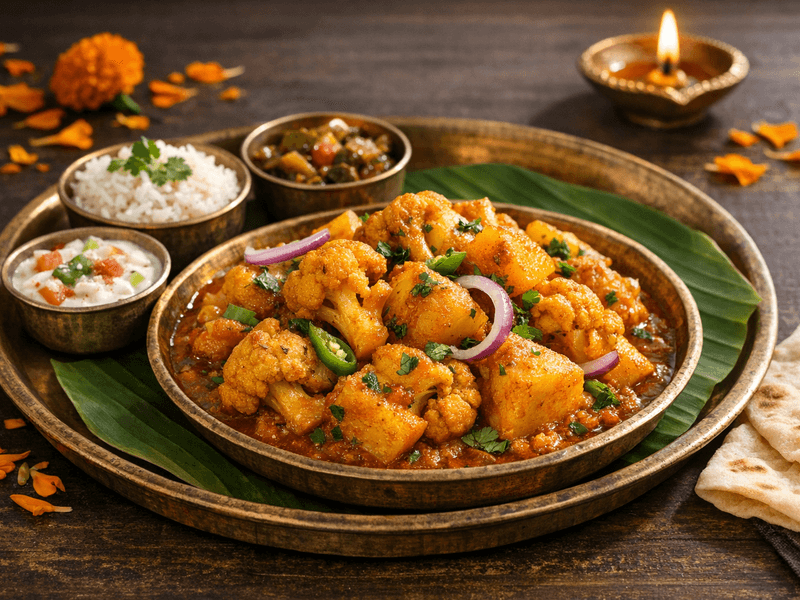
Cauliflower and Potato Curry, locally known as Aloo Gobi ki Sabzi, is a classic vegetarian dish from the heart of North India. This flavorful curry combines tender cauliflower florets (gobi) and soft potatoes (aloo) simmered in a medley of aromatic Indian spices. Often enjoyed with chapati (roti), jeera rice, or as part of a festive thali, this dish stands out for its comforting flavors and wholesome appeal. Aloo Gobi is deeply rooted in Indian culinary traditions, especially in states like Punjab and Uttar Pradesh. It’s a staple during family lunches and is frequently prepared during festivals such as Holi and Diwali, when light yet satisfying vegetarian dishes are preferred. The combination of turmeric, cumin, and ginger-garlic paste not only elevates the taste but also brings out the vibrant yellow hue that makes this curry visually enticing. Its simplicity, versatility, and nutrient-rich ingredients make it a go-to choice for health-conscious food lovers. Whether you’re new to Indian cuisine or a seasoned cook, this Cauliflower and Potato Curry recipe is a wonderful way to explore traditional North Indian flavors. It’s naturally vegetarian, easily vegan-adaptable, and can be made with everyday pantry staples. Prepare it for a nourishing lunch or pack it for your tiffin – it’s sure to become a favorite in your healthy Indian recipe collection.
Ingredients(for 1 medium bowl (approx. 200g))
- 2 cups Cauliflower florets (gobi) (cut into bite-sized pieces)
- 1 cup Potatoes (aloo) (peeled and diced)
- 1 medium Onion (finely chopped)
- 1 medium Tomato (finely chopped)
- 1 tsp Ginger-garlic paste
- 1 Green chili (slit (hari mirch)) - optional
- 1/2 tsp Cumin seeds (jeera)
- 1/4 tsp Turmeric powder (haldi)
- 1/2 tsp Red chili powder (lal mirch)
- 1 tsp Coriander powder (dhaniya powder)
- 1/2 tsp Garam masala
- to taste Salt
- 1.5 tbsp Cooking oil (preferably mustard oil or sunflower oil)
- 2 tbsp Fresh coriander leaves (chopped, for garnish) - optional
Instructions
- 1
Heat oil in a kadhai or deep pan on medium flame. Add cumin seeds and let them splutter.
2 minutes
Use mustard oil for authentic Punjabi flavor.
- 2
Add chopped onion and sauté until golden brown. Stir in ginger-garlic paste and green chili; sauté for another minute.
4 minutes
Keep stirring to avoid burning the onions.
- 3
Mix in the chopped tomatoes, turmeric, red chili, and coriander powders. Cook until the tomatoes turn soft and oil separates from the masala.
4 minutes
Mash the tomatoes with the spatula for a smoother gravy.
- 4
Add diced potatoes and cauliflower florets. Mix well so the veggies are coated with the masala.
2 minutes
Cut vegetables evenly for uniform cooking.
Why This Dish is Healthy
This Cauliflower and Potato Curry is a healthy choice because it uses fresh vegetables, limited oil, and no processed ingredients. It’s rich in fiber, plant-based vitamins, and minerals that help manage weight, improve digestion, and boost immunity. The dish can be adapted for different dietary needs, making it perfect for those seeking healthy Indian lunch options.
Cauliflower and potatoes are excellent sources of dietary fiber, vitamin C, potassium, and antioxidants. This curry is low in saturated fat and cholesterol, making it heart-healthy. The inclusion of turmeric and ginger supports anti-inflammatory benefits, while tomatoes provide lycopene and vitamin A. With minimal oil and no heavy cream, this dish offers a balanced mix of complex carbohydrates, moderate protein, and essential micronutrients, supporting overall wellness.
Pro Tips
- 💡Tip 1: Blanch cauliflower florets in hot water before cooking for extra tenderness and to remove impurities.
- 💡Tip 2: Sprinkle kasuri methi (dried fenugreek leaves) at the end for an aromatic finish.
- 💡Tip 3: Add peas (matar) for color and extra nutrition.
Storage & Serving
Store leftovers in an airtight container in the refrigerator for up to 2 days. Reheat on a tawa or in the microwave. Add a splash of water if the curry looks too dry.
Best served: Breakfast or Lunch
Nutrition Facts
| Nutrient | Per 100g |
|---|---|
| Energy | 160.0 kcal |